


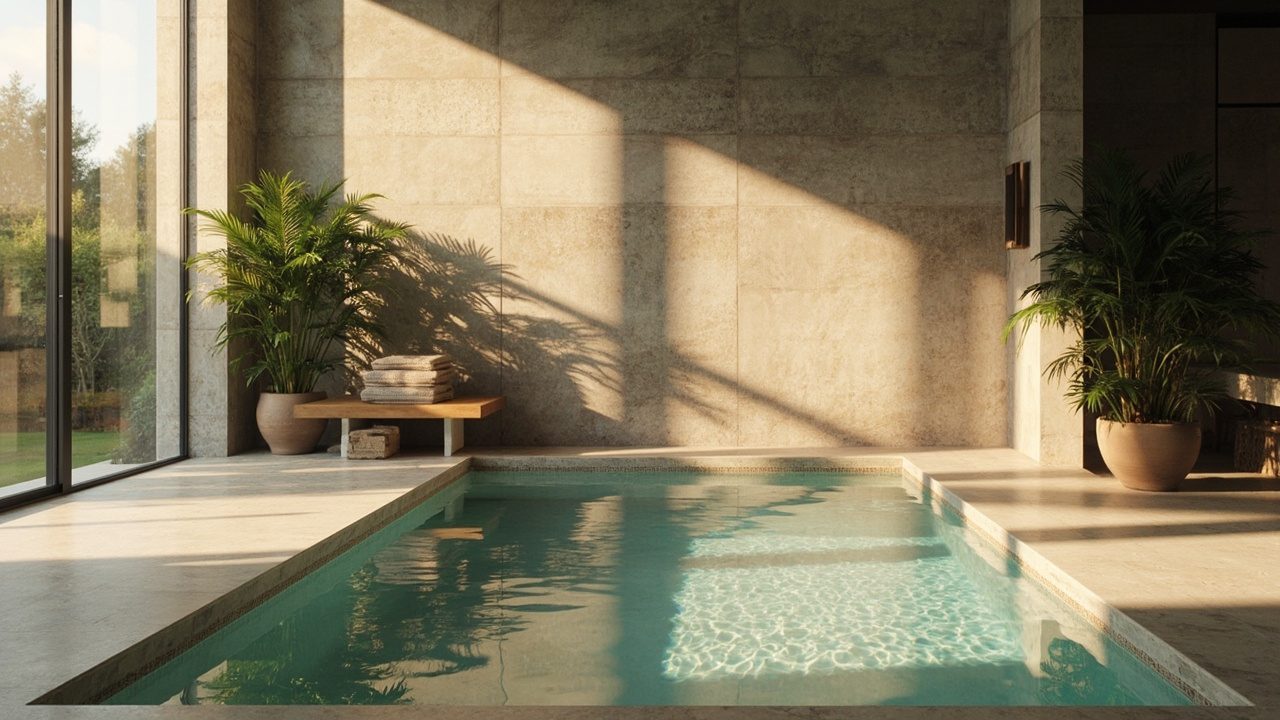
Make a plunge pool feel like a private resort, even when your footprint is tiny. Focused design choices, smart materials, and a few high-impact features will lift a compact water feature from functional to fabulously tactile and serene.
Think proportion first, then finish. Keep the pool width between 6 and 10 feet for a true plunge, orient it to maximize sun and privacy, and use a clear circulation plan so equipment fits into a closet or bench without eating yard space. Budget-minded clients can choose prefabricated shells from reputable makers for predictable costs, while custom tiled options deliver a couture finish.
- 1. Compact Plunge Pool Layouts for Small Yards
- 2. Integrated Sun Ledge and Wading Combos
- 3. Raised Plunge Pools with Seating Walls
- 4. L-Shaped Plunge Pools for Tight Corners
- 5. Infinity Edge Mini Pools for Views
- 6. Built-In Planters for Natural Screening
- 7. Heat-Efficient Plunge Pool Heating Options
- 8. Low-Maintenance Filtration Systems
- 9. Multi-Use Plunge Pools with Spa Jets
- 10. Underwater Benches for Relaxation
- 11. LED Lighting Schemes for Ambiance
- 12. Durable Materials for High-Traffic Use
- 13. Privacy Solutions: Screens and Fencing
- 14. Eco-Friendly Plunge Pool Designs
- FAQ
- Final Thoughts
1. Compact Plunge Pool Layouts for Small Yards
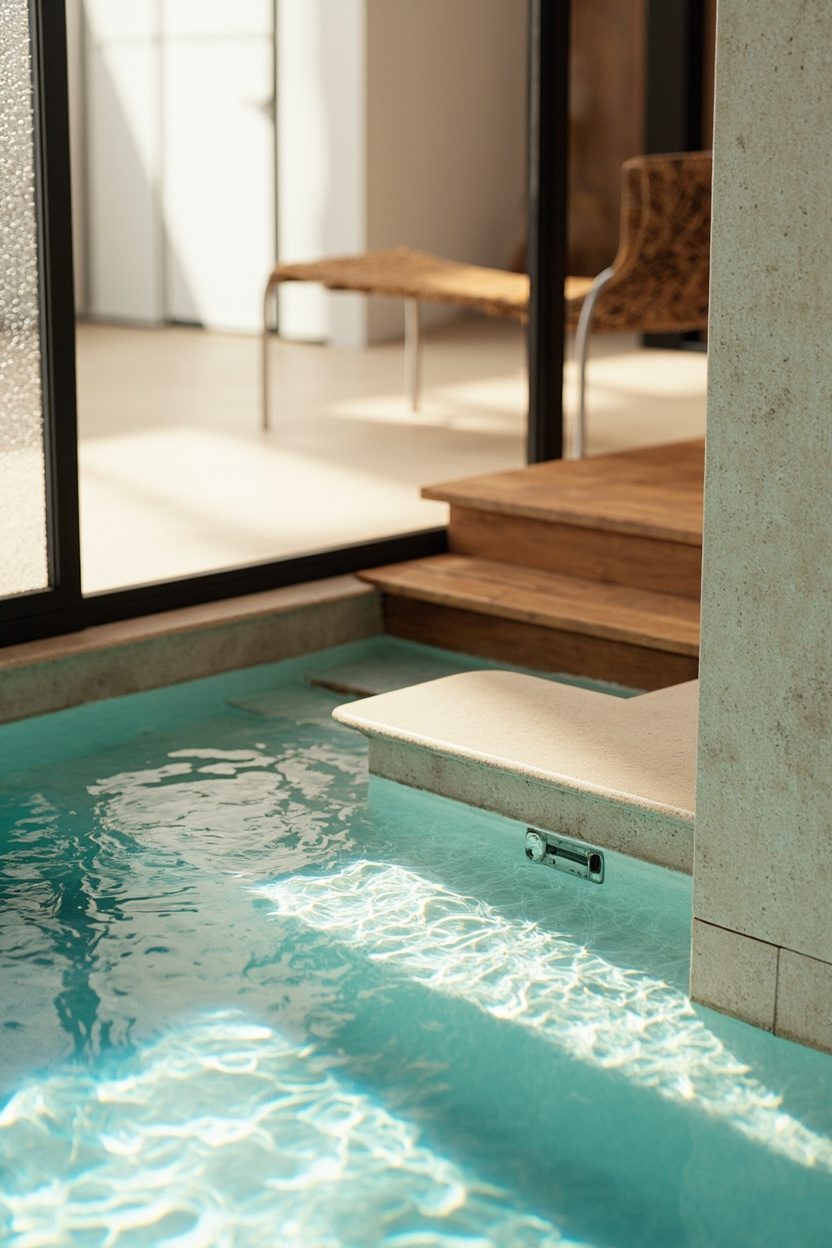
Place the pool along a property line or adjacent to the back of the house to free up usable patio space, aim for a rectangular or gently curved 6×10 foot footprint to preserve circulation. Use a narrow deck band of 2 to 3 feet of non-slip pavers or wood to make the pool read as an intentional architectural element, not an afterthought.
Keep mechanicals tucked into a built bench or under the adjacent deck to avoid a bulky equipment shed, and opt for a low-maintenance finish like pebblecrete or porcelain tile to balance luxury with longevity.
For inspiration on compact luxury placement and trending layouts, the Master Pools Guild overview captures the industry shift toward smaller, high-end pools.
2. Integrated Sun Ledge and Wading Combos
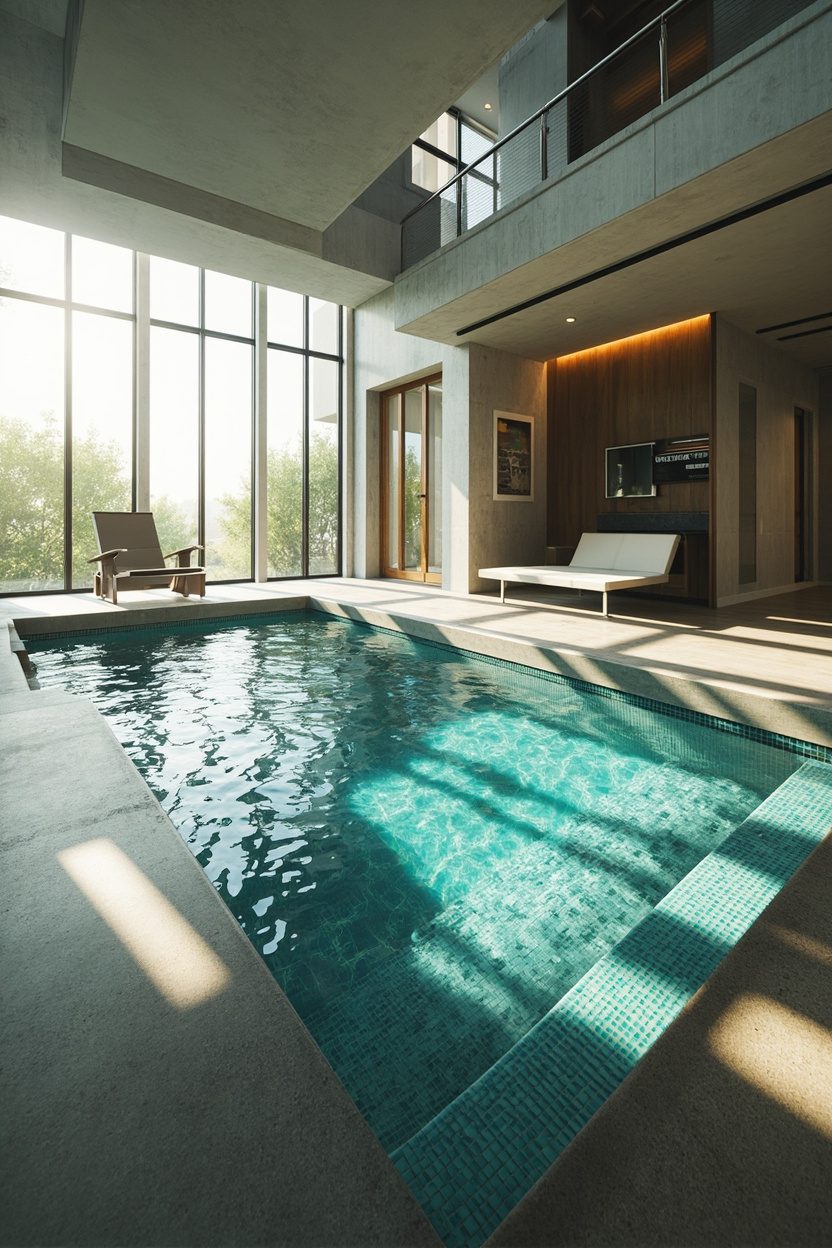
An integrated sun ledge adds lounging functionality without increasing pool footprint, specify a ledge depth of 10 to 14 inches to support a chaise or shallow tread, and place it along the long edge to keep circulation efficient. Use contrasting tile or a different finish on the sun ledge to visually separate the lounging zone, consider heated perimeter jets for year-round comfort.
Combine a narrow wading area with a deeper central plunge, use a graded slope from 1.5 to 4 feet so the profile stays compact, and place removable slatted covers or a roll-up shade over the ledge to control sun exposure. For visual continuity, select materials for the ledge that match the adjacent patio, such as honed limestone or wide plank composite decking.
3. Raised Plunge Pools with Seating Walls
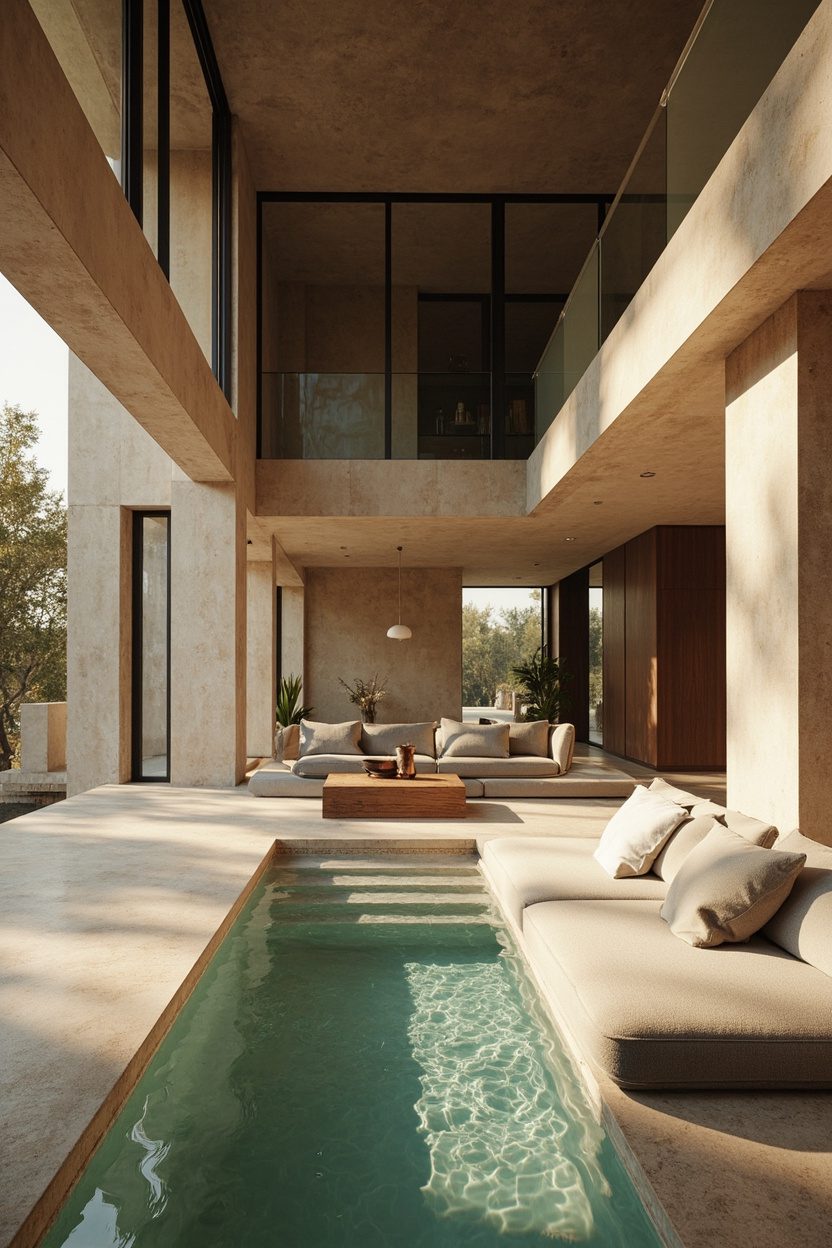
Raising the pool on a simple masonry or concrete plinth creates drama and allows for integrated seating walls that double as storage and equipment enclosures, plan for a 12 to 18 inch outward seat height and 16 to 18 inch wall thickness for durability.
Clad the raised face in a premium material like natural stone or textured tile to read as built-in furniture, and mount LED strip lighting beneath the lip for a floating effect at night.
To save budget, build the seating wall as a cantilevered concrete bench with a waterproof membrane and tile finish, keep circulation access panels discreetly placed under the bench, and specify compact variable-speed pumps to reduce noise and energy use.
4. L-Shaped Plunge Pools for Tight Corners
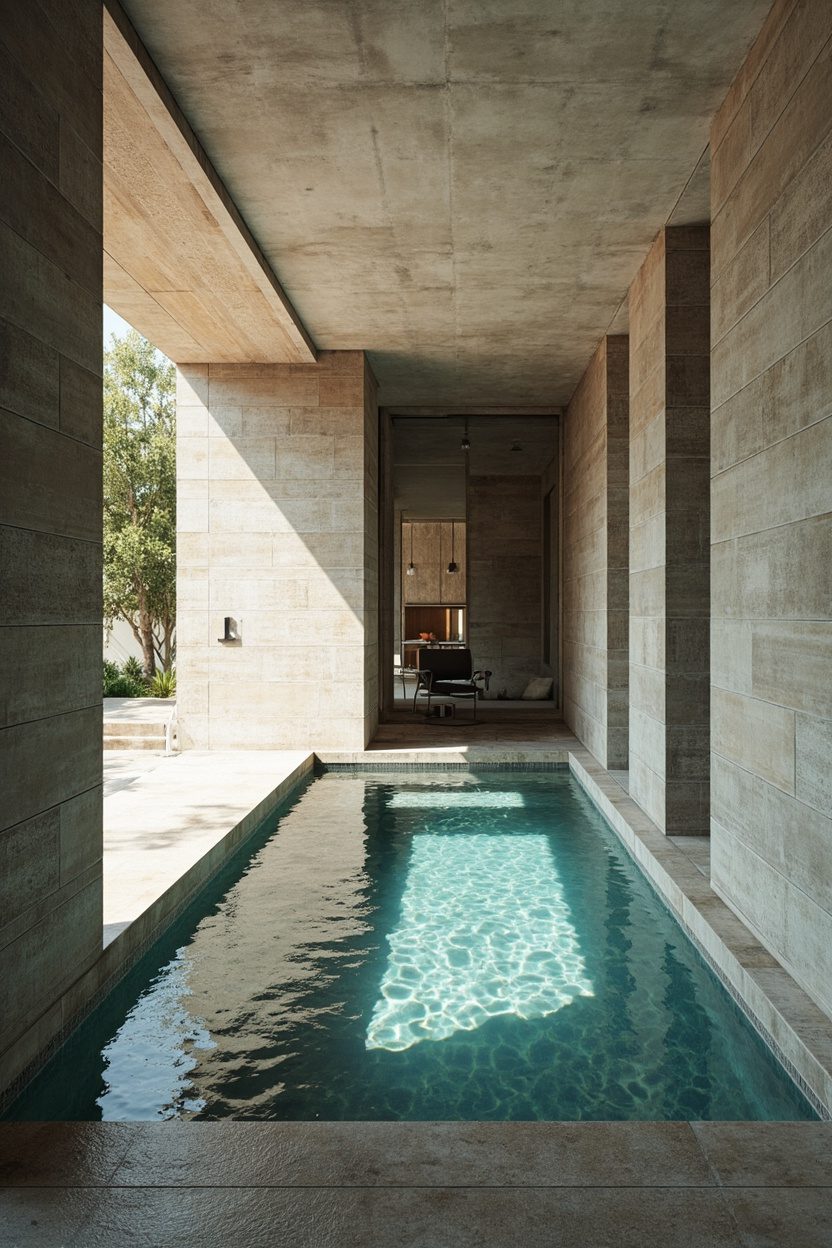
An L-shaped plunge tucks into awkward corners and creates separate zones for lounging and cooling off, use a narrow 4 to 6 foot width for the shorter leg to preserve yard circulation. Specify a shallow sun ledge of about 12 to 18 inches on one arm for towels and a low chaise, and finish the coping in large-format stone to visually expand the footprint.
Place the filtration equipment behind a planted screen or within the longer leg’s built-in bench to save space, budget about 15 to 25 percent more for custom geometry, and avoid overly steep steps that reduce usable water area.
5. Infinity Edge Mini Pools for Views
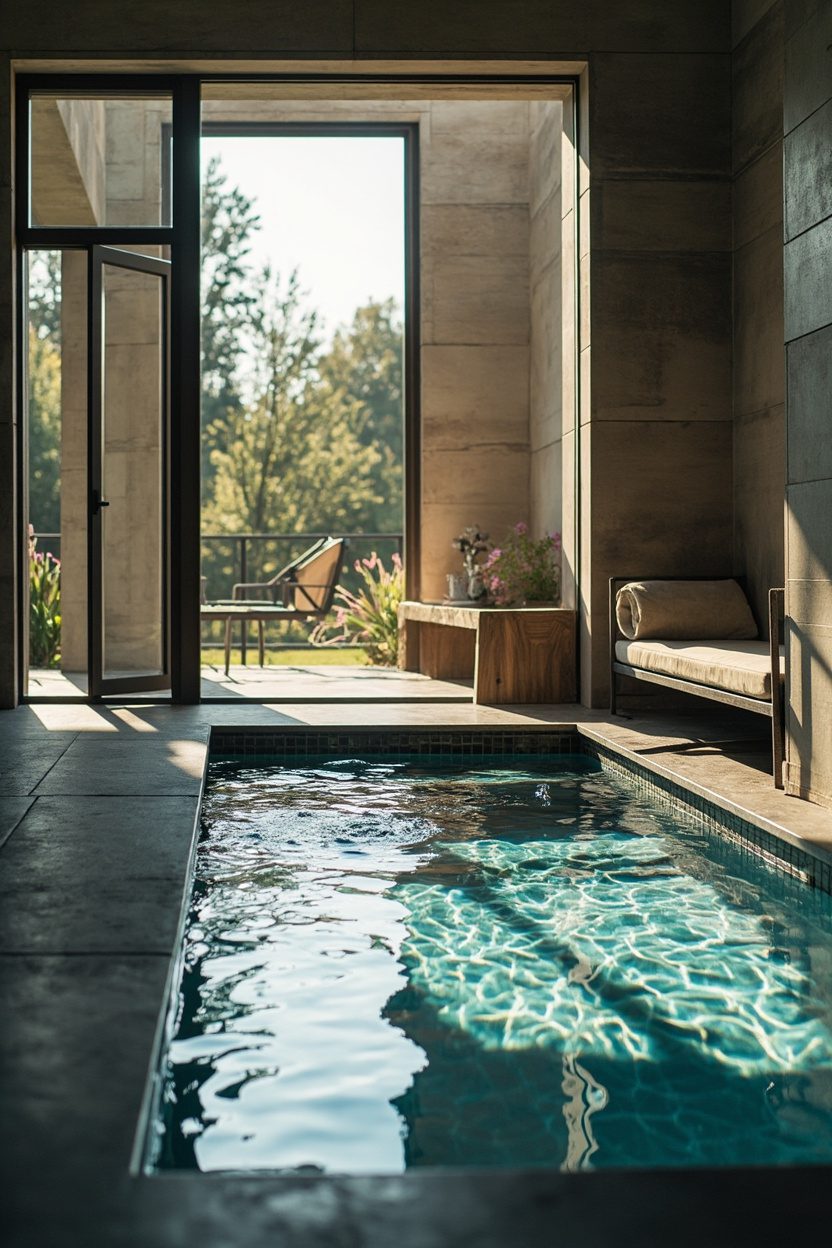
A single-edge infinity detail makes even a tiny plunge feel expansive when sited toward a street or landscape vista, center the spillover on the view side and use a narrow catch basin hidden beneath a raised deck.
Opt for a compact scupper or 6 to 12 inch overhang rather than a wide trough, stone or linear tile at the waterline keeps the visual seam clean and reduces splash.
For performance choose variable-speed pumps sized to circulate the smaller volume efficiently, and plan for a discrete access panel for the vault; this prevents costly dismantling if mechanical maintenance is needed.
6. Built-In Planters for Natural Screening
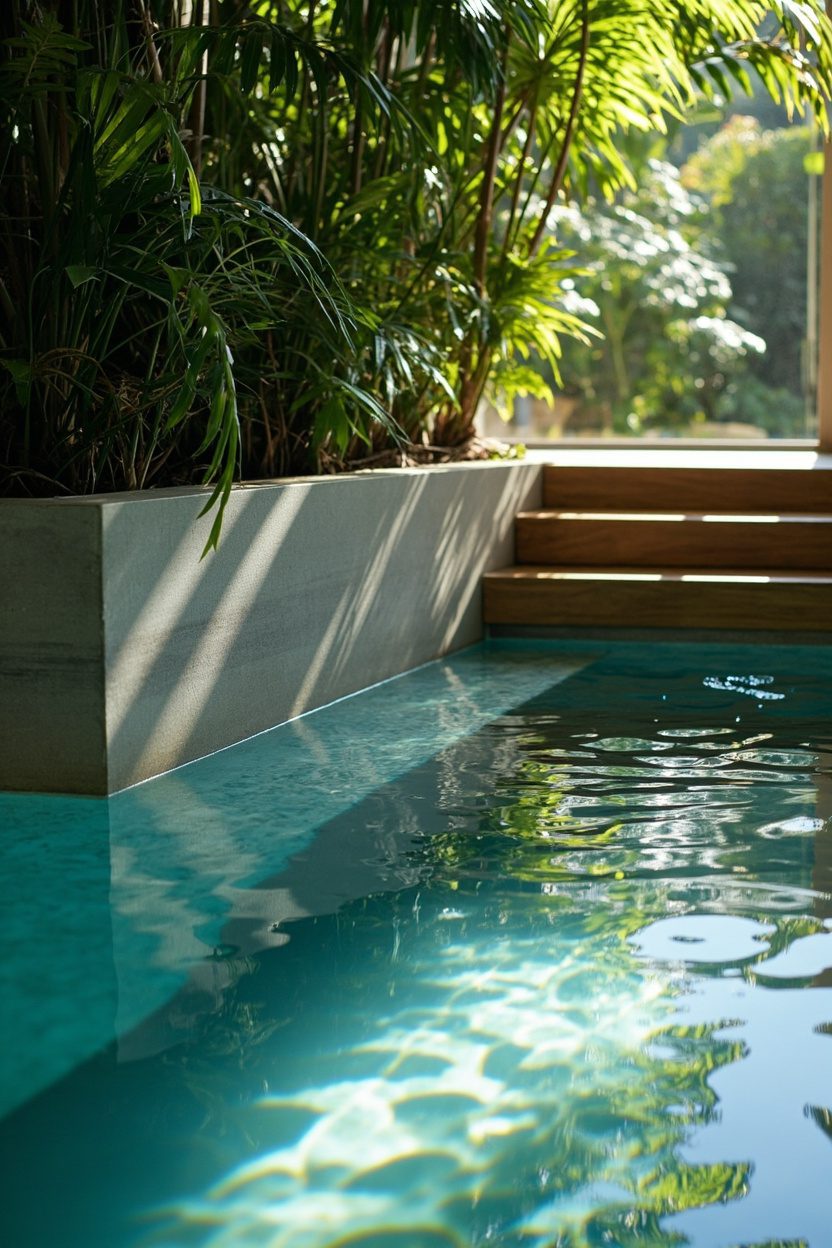
Integrating planters into the pool perimeter creates instant privacy and softens hard edges, build planters at least 18 inches deep for small shrubs or evergreen grasses to ensure year-round coverage.
Use waterproofing membranes and a root barrier between the planter and pool shell, select compact species like dwarf bamboo or holly to avoid overstressing small soil volumes.
Place planters on the downhill side to hide equipment and help with drainage, and choose lightweight soil mixes to limit load on decking, this keeps construction costs reasonable while delivering maximum green impact.
7. Heat-Efficient Plunge Pool Heating Options
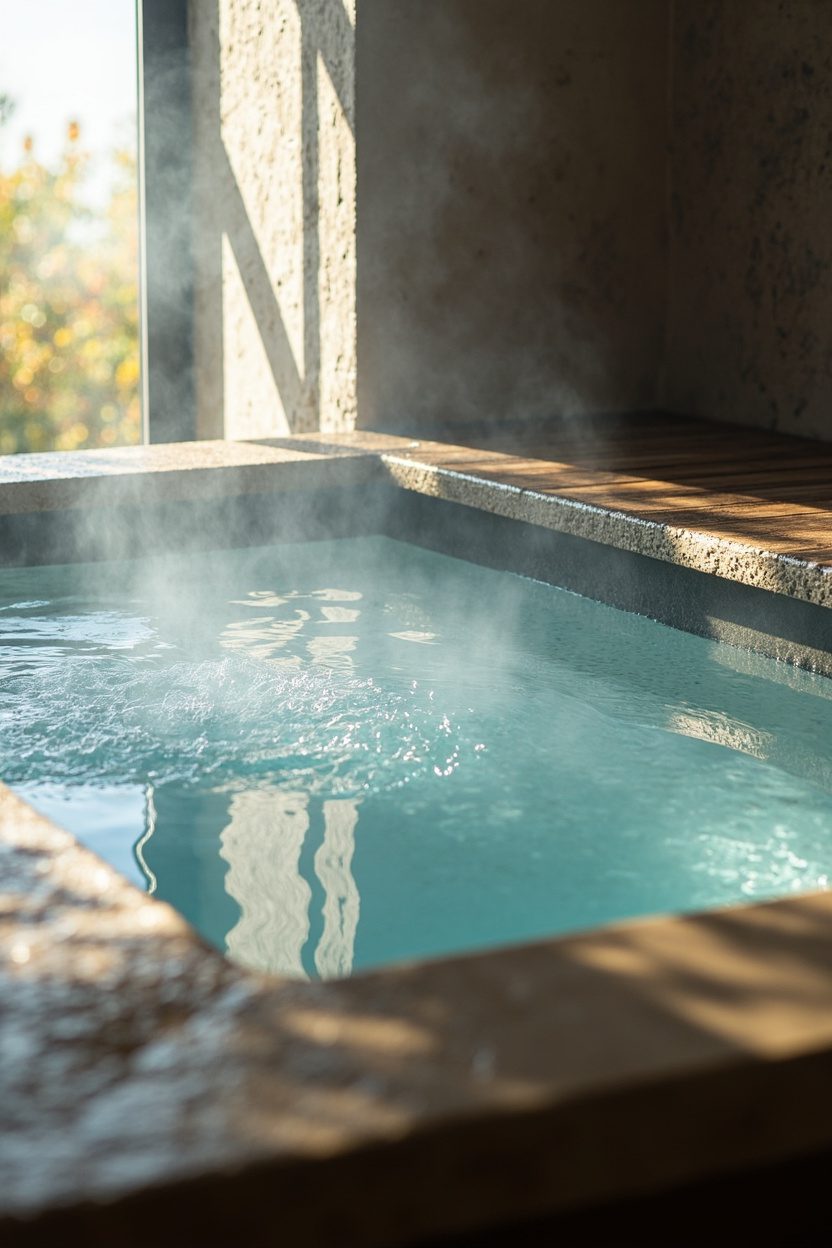
Choose a variable-speed heat pump sized to your pool volume, it uses far less electricity than electric resistance heaters and warms water steadily without extreme running costs. For a typical 10,000, 15,000 litre plunge pool, specify a unit with 6, 10 kW output, and position it close to the pool equipment pad to minimise heat loss through plumbing runs.
Solar thermal panels paired with a smart controller are another low-operating-cost choice, place panels on a south-facing roof at a 20, 35 degree pitch for best year-round gain, and include a small electric booster for overcast days.
8. Low-Maintenance Filtration Systems
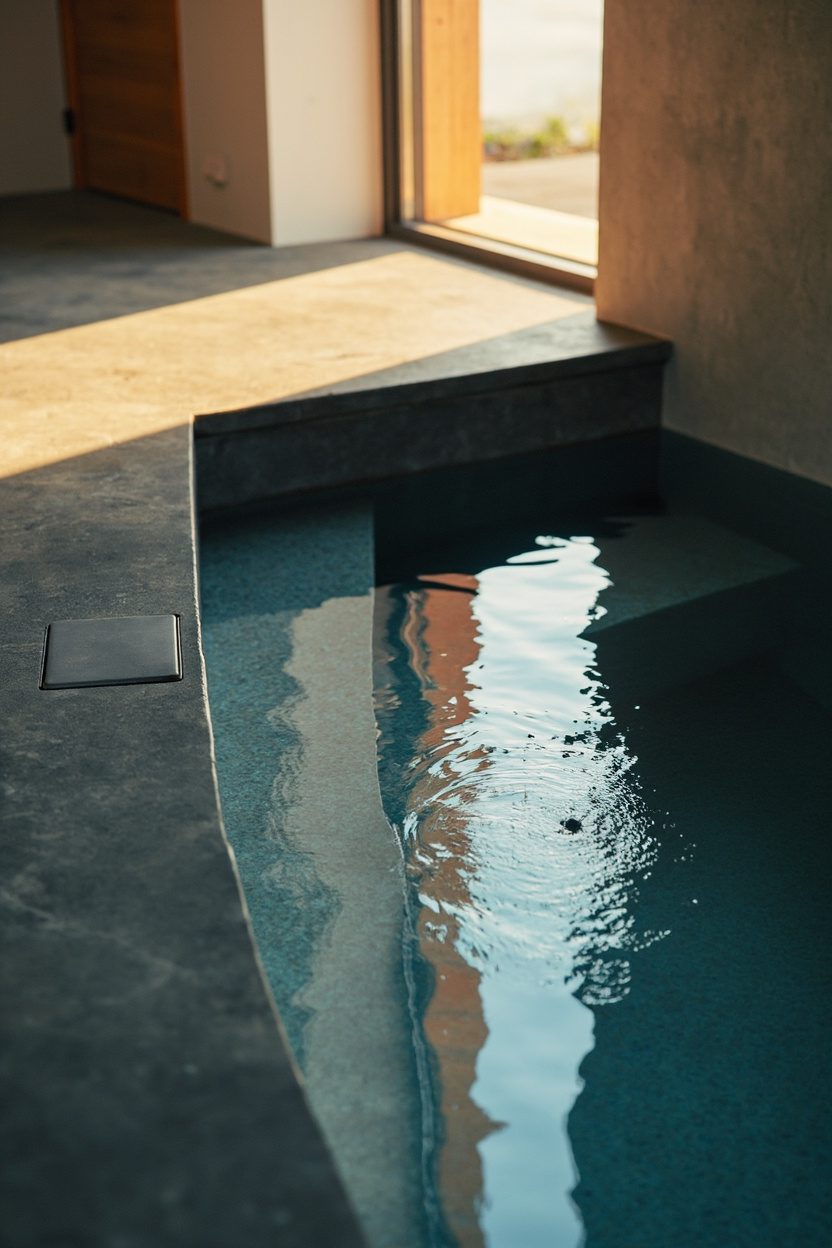
Cartridge filters are compact and ideal for small backyards, they cut run time and use no backwash water, so select a filter rated for at least 1.5 times your pool’s flow to avoid premature clogging.
Consider a compact, energy-efficient variable-speed pump configured with a multiport valve, that pairing reduces filter strain and lets you run long, low-speed filtration cycles for crystal clear water.
Add a built-in automatic chlorinator or salt system sized to the plunge pool capacity, place it within the equipment bay for easy access, and set weekly maintenance tasks to 10, 15 minutes to keep chemistry balanced without constant attention.
9. Multi-Use Plunge Pools with Spa Jets
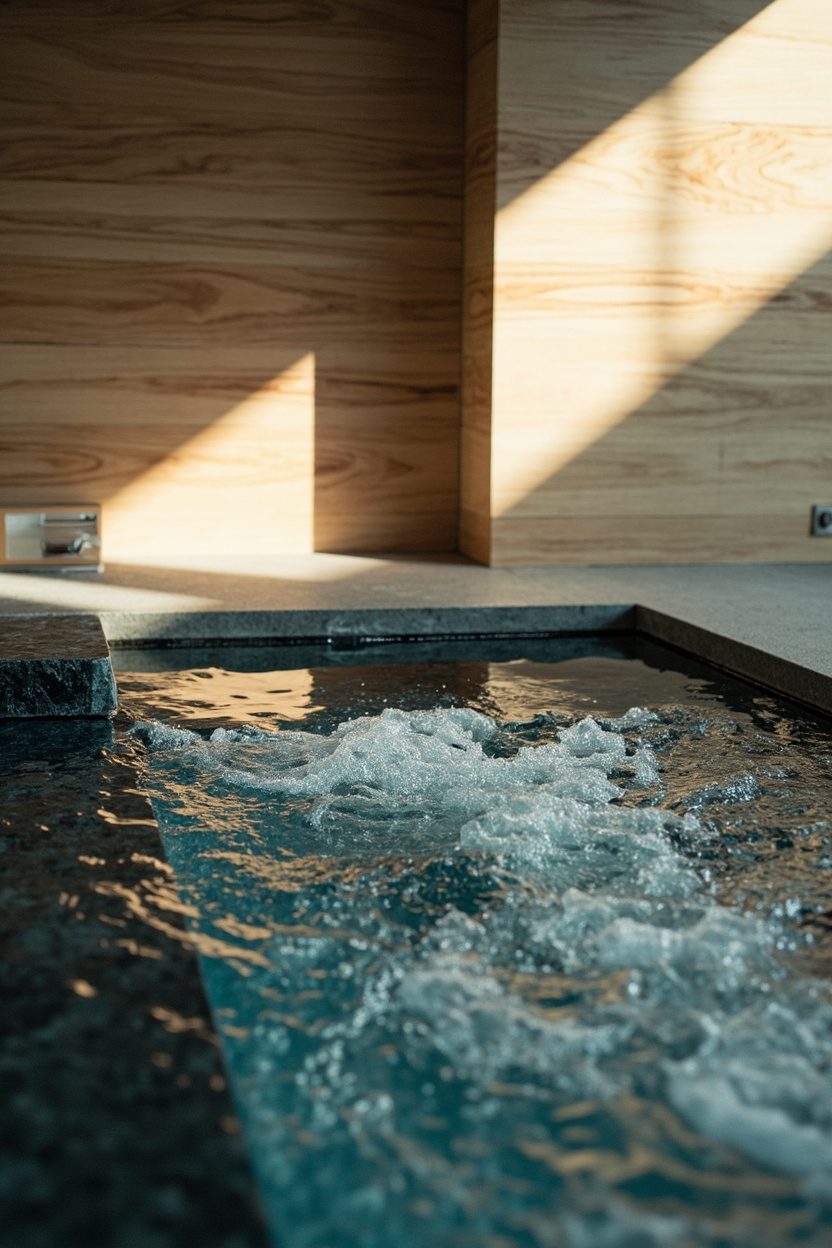
Integrate adjustable hydrotherapy jets along one bench or wall to switch between calm soak and vigorous massage, specify 2, 4 directional jets for a small plunge to avoid overpowering the space.
Provide a separate low-volume circulation loop for the jets, include a diverter valve near the controls so jets operate independently of the main skimmer return, this prevents sudden temperature drops when both systems run.
Finish the seating with non-slip, slightly contoured acrylic or tiled benches at 40, 45 cm seat height for ergonomic comfort, and use a modest heat-conserving cover to maintain temperature between sessions, saving on heating and reducing evaporation.
10. Underwater Benches for Relaxation
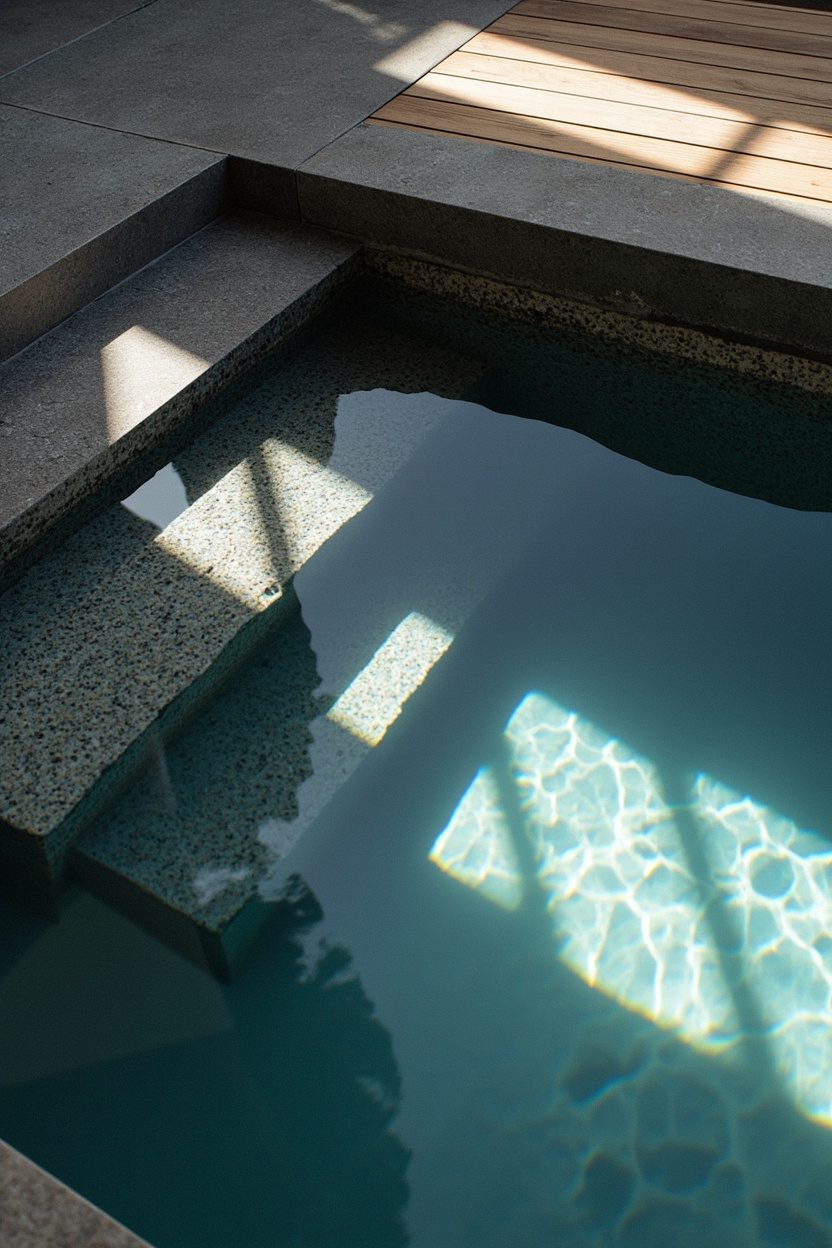
Integrate a submerged bench along one side of the pool to create a permanent lounging zone, specify a 16 to 20 inch seat height so knees stay comfortably above water for most adults. Choose smooth, slip-resistant materials like brushed stone or textured porcelain tile, and leave a 6 to 8 inch toe space below the bench edge to avoid awkward foot contact when seated.
Place the bench where it receives afternoon sun, this doubles as a warm soak area and keeps heating costs down if you use a small solar blanket. A common mistake is making the bench too deep, aim for 14 to 18 inches of water depth over the seat for optimal relaxation and social conversation without full immersion.
11. LED Lighting Schemes for Ambiance
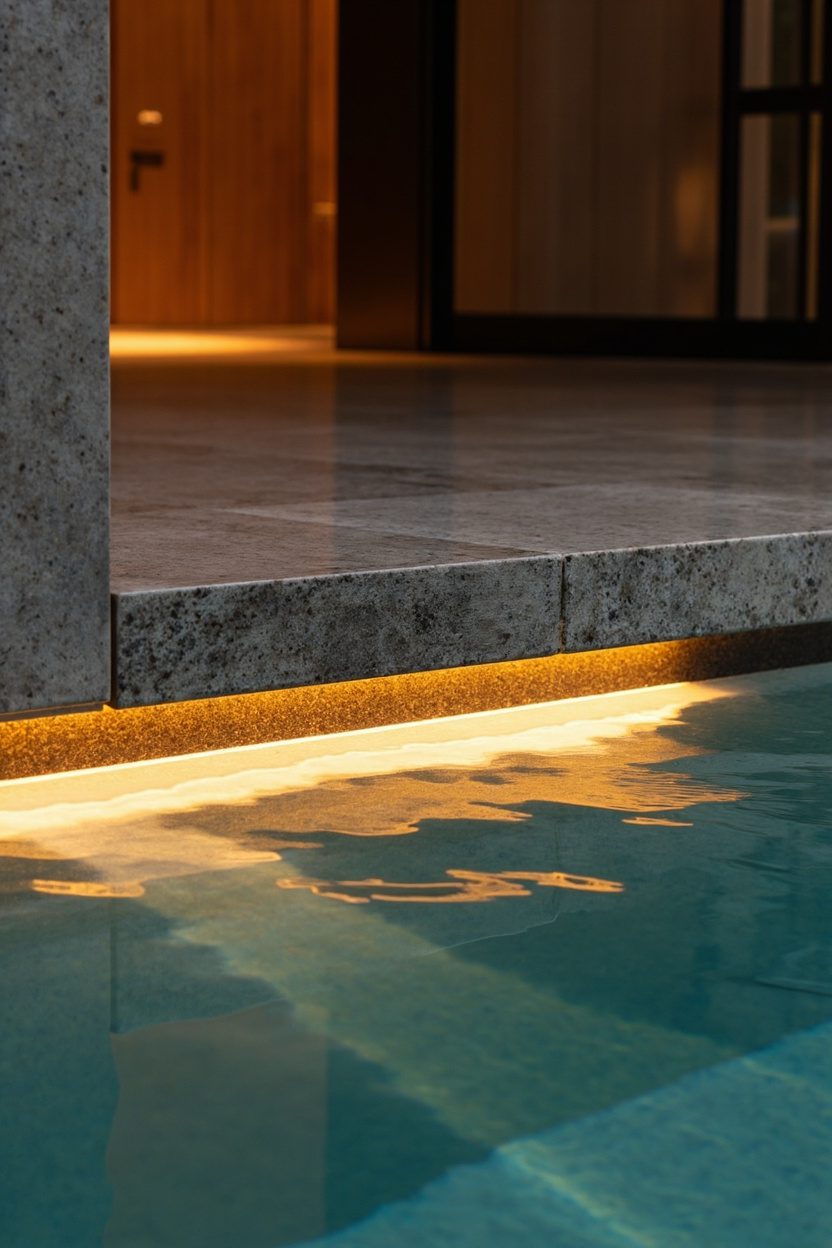
Layer RGB LED fixtures at the waterline, steps, and beneath benches to create depth and drama, install dimmable drivers so you can shift from bright safety lighting to soft mood illumination. Use warm white LEDs for evening entertaining, specify IP68-rated fixtures for full submersion and long-term reliability, and place fixtures every 6 to 8 feet to avoid patchy coverage.
For color effects, program subtle transitions rather than rapid jumps, this reads as luxury rather than showy, and keep a dedicated controller near the pool equipment for easy maintenance. Consider linking your lighting schedule to a smart home system for automated dusk-to-evening routines, this prevents leaving lights on all night and saves energy.
12. Durable Materials for High-Traffic Use
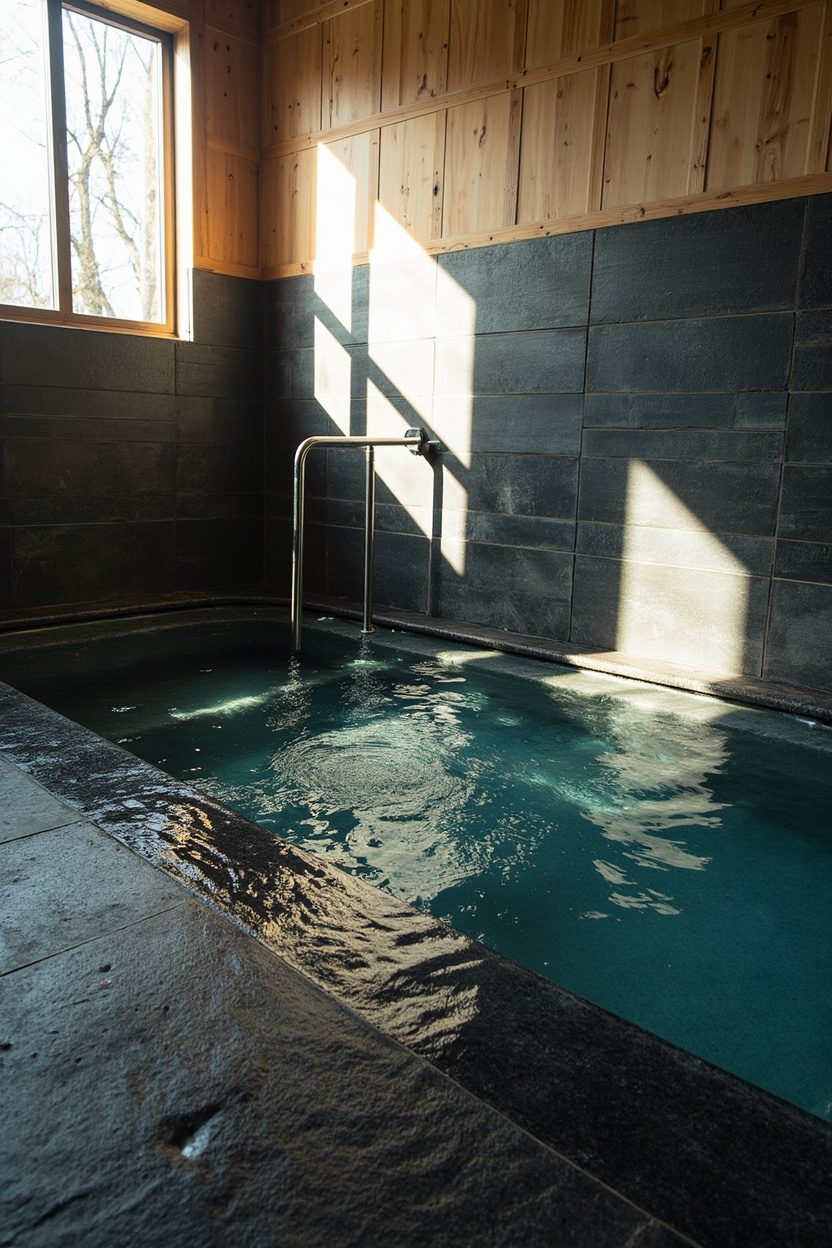
Select materials that resist chlorine and UV, such as glazed porcelain coping, stainless steel accents, and high-density polyethylene for integrated steps, these withstand frequent use and reduce long-term repair costs. For decking, prioritize textured pavers or composite wood with a slip-rating, specify 3/8 inch grout joints to limit cracking and simplify cleaning after heavy foot traffic.
Avoid soft natural stone in narrow yards where furniture rubs against edges, instead choose hard-wearing finishes that tolerate pool chemicals and garden wear, budget 10 to 15 percent more for premium pool-grade materials to ensure longevity. Include stainless anchoring hardware and marine-grade sealants during installation to prevent staining and premature failure in coastal or humid climates.
13. Privacy Solutions: Screens and Fencing
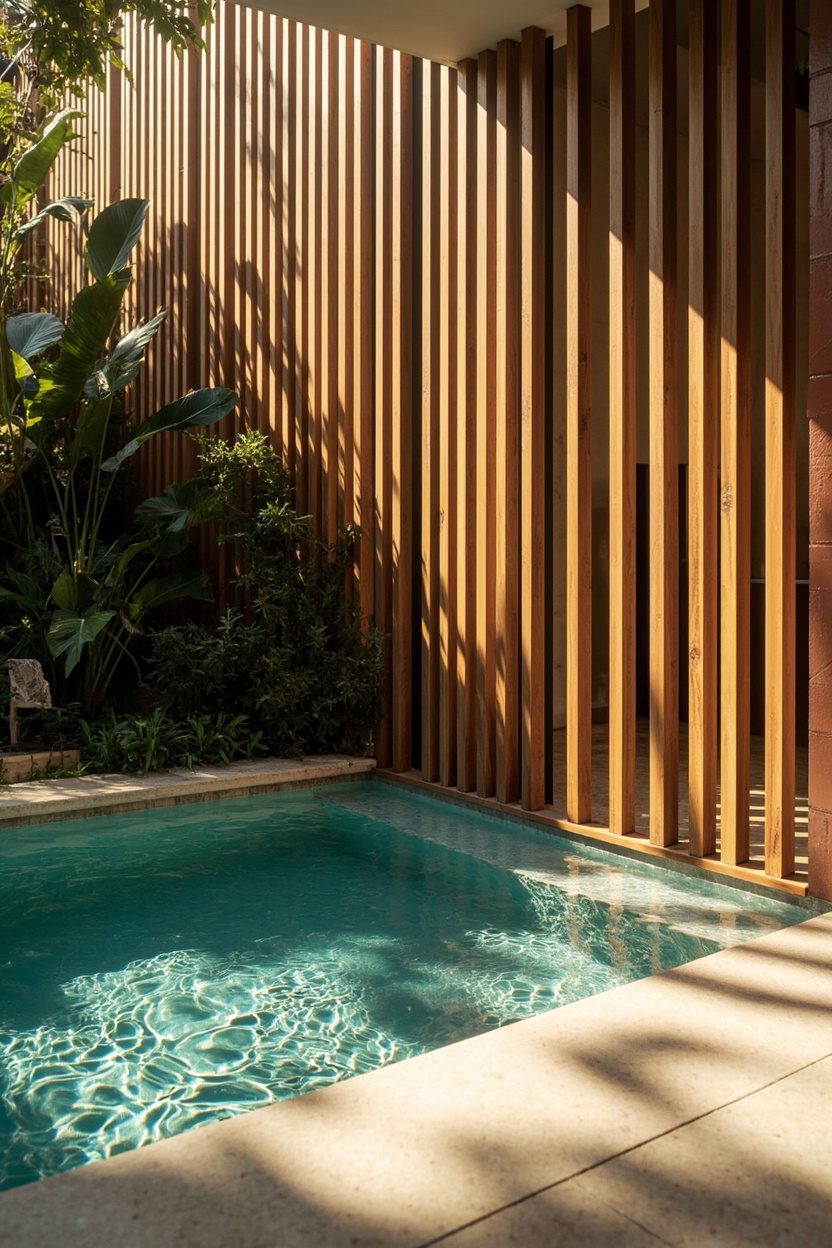
Use vertical slatted screens in cedar or composite, set panels 1.5 to 2 inches apart to allow airflow while blocking sightlines, mount them at 6 to 8 feet high to match typical fence heights and create true enclosure. Combine with climbing plants like star jasmine to soften the structure and add scent, install a 2-inch gap at the base for drainage and maintenance access.
14. Eco-Friendly Plunge Pool Designs
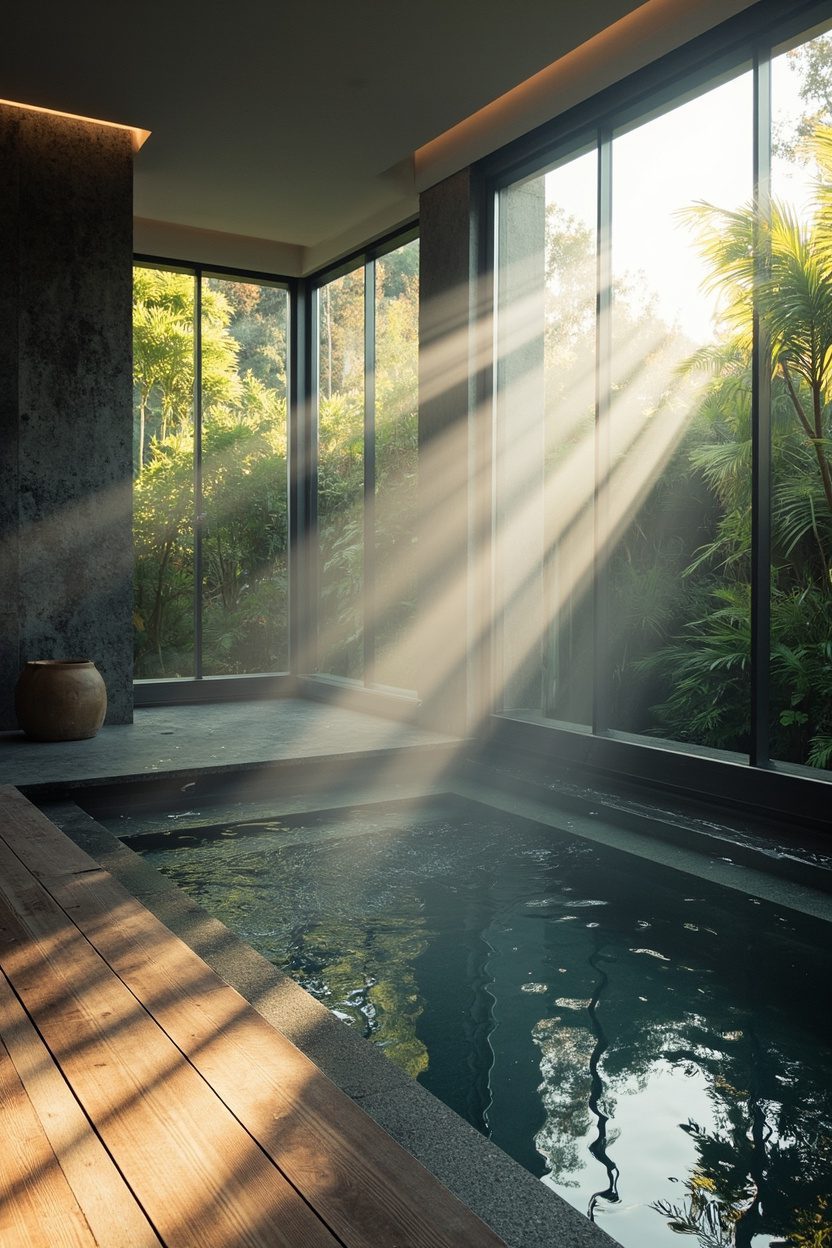
Select a saltwater system with a variable-speed pump to reduce chemical use and cut energy consumption, size filtration to turnover the pool in 6 to 8 hours for efficient cleaning, this typically lowers running costs long term.
Consider a solar thermal blanket and place a compact solar array on a sunny roof for pre-heating, in small pools a simple cover can reduce heat loss by up to 70 percent.
You can pair this with ideas from 20 Cold Plunge Aesthetic Ideas for the Wellness Obsessed.
FAQ
A comfortable two-person plunge is often 6 by 10 feet, with a depth between 3.5 and 4 feet to allow sitting and light swimming, which keeps construction and running costs manageable.
Permit requirements vary by jurisdiction, confirm setbacks and depth limits with local planning, many small plunge pools fall under in-ground pool regulations so expect inspections and safety fencing rules.
Expect lower operating costs than a full pool, with energy use influenced by pump size, heating choice, and cover use, installing a variable-speed pump and a good cover can cut annual running costs substantially.
Yes, small volume means faster heating, choose a heat pump sized for pool volume and local climate, and add a solar blanket to retain heat overnight for the most economical solution.
Final Thoughts
A carefully detailed plunge pool can transform a small backyard into a luxurious retreat, prioritize proportion, circulation efficiency, and material choices to get a high-end look without sprawling space.
For current layout trends and compact luxury ideas, see the Master Pools Guild report for 2026.