


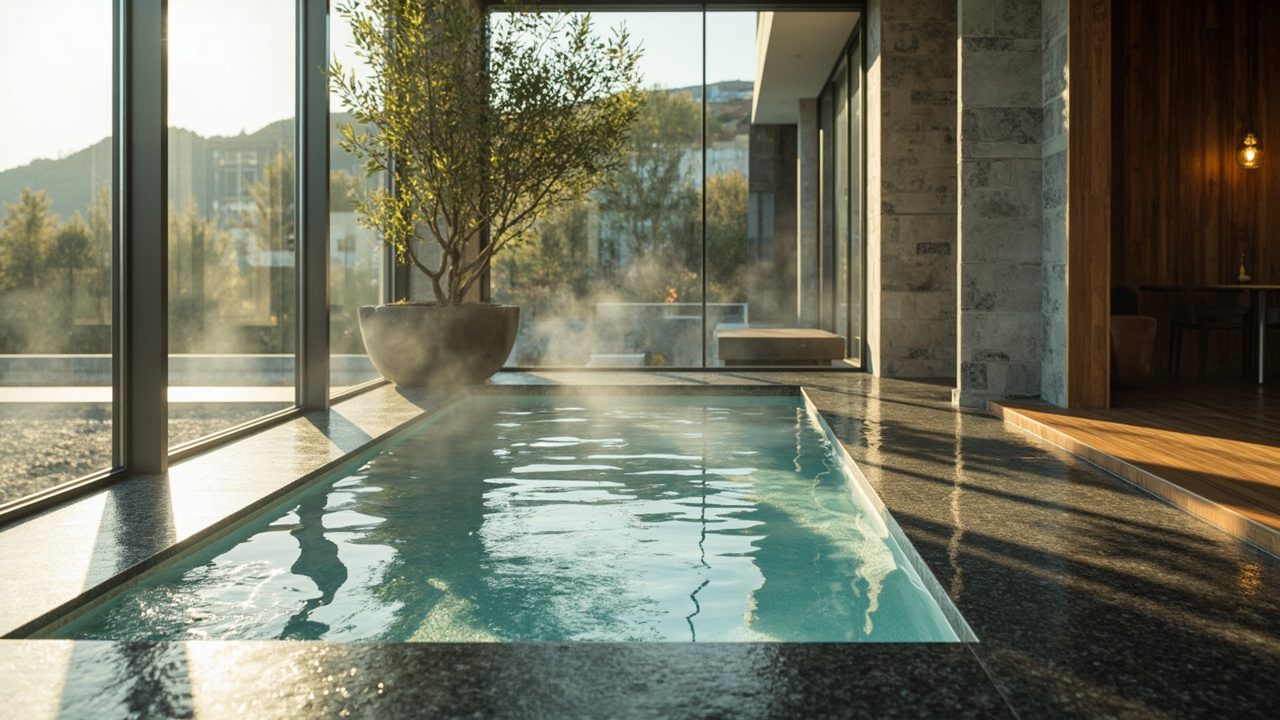
Small yards demand design intelligence, not compromise. These 12 plunge pool ideas show how restraint, material selection, and layered detailing turn a compact swim space into a luxe retreat that reads like a resort corner, not a backyard afterthought.
Think of each plan as a styling brief, where scale, finish, and circulation are decisive. I focus on concrete choices you can implement immediately, from tile color that hides waterlines, to pump locations that preserve tight sightlines.
1. Micro Plunge Pools
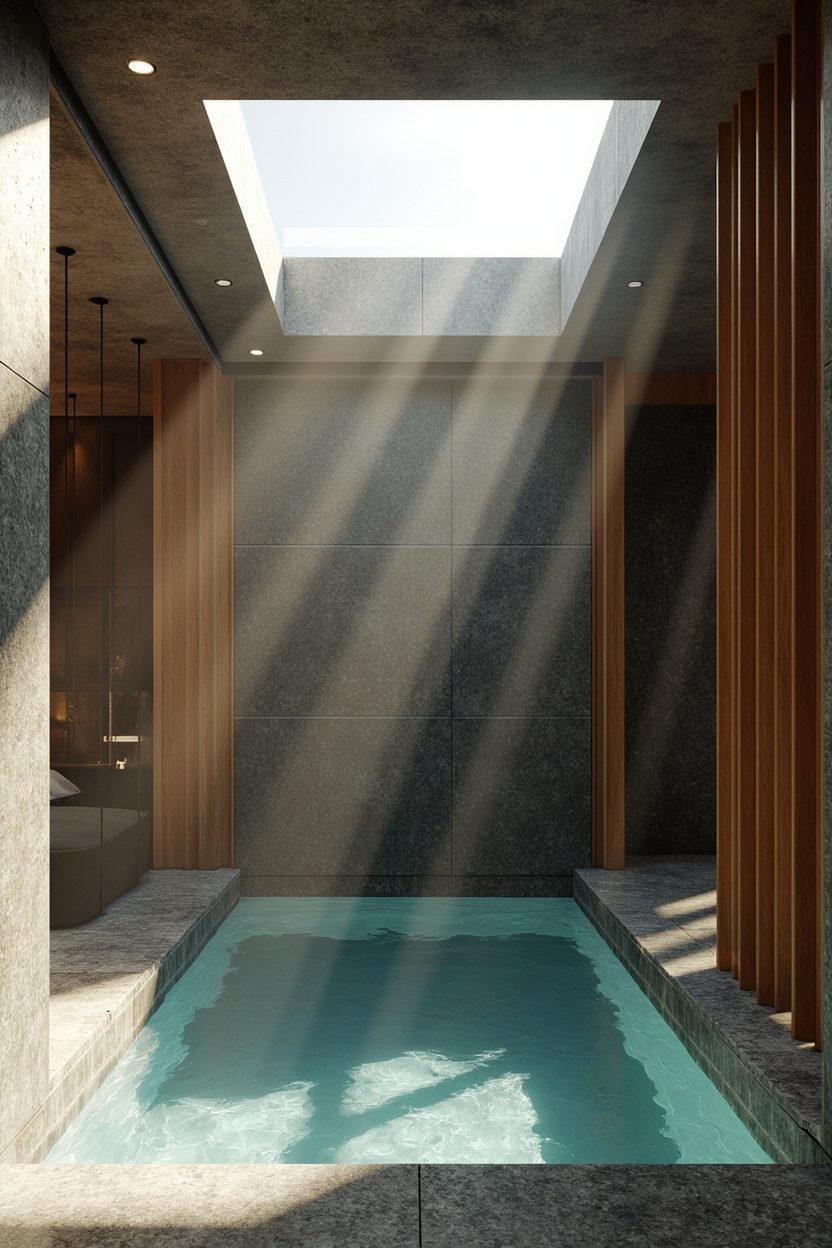
Micro plunge pools are intentionally tiny, usually 6 to 8 feet long, built for cooling off and aesthetic impact rather than laps. Choose fiberglass or preformed concrete for tight budgets and fast install times, because these materials reduce on-site work and risk in small yards.
Keep depth between 3.5 and 4.5 feet to allow sitting submersion without overwhelming the space, and avoid excessive depth that forces larger filtration equipment. Position the pool against a fence or wall to carve circulation space, and plan the pump and heater near that wall to hide service access.
Finish choices matter: dark mosaic tile creates a reflective, jewel-like surface in a small footprint, while plaster in pale tones enlarges the perceived space. For a high-end feel on a modest budget, add a thin bronze water blade or a narrow spillover edge, scaled to the pool length.
Lighting is the luxury detail that reads big in small pools, use a single recessed LED color-temperature adjustable fixture to create depth at night, and hide wiring within the pool shell to keep profiles clean.
Essential Elements
- Size: 6, 8 ft length, 3.5, 4.5 ft depth for comfortable seating and circulation..
- Material: choose fiberglass for speed, concrete for custom shapes, mosaic tile for luxe finish..
- Mechanical placement: cluster pump and heater against one wall to preserve perimeter space..
- Feature: add a narrow spillover or water blade for sound and visual luxury..
2. Courtyard Water Nook
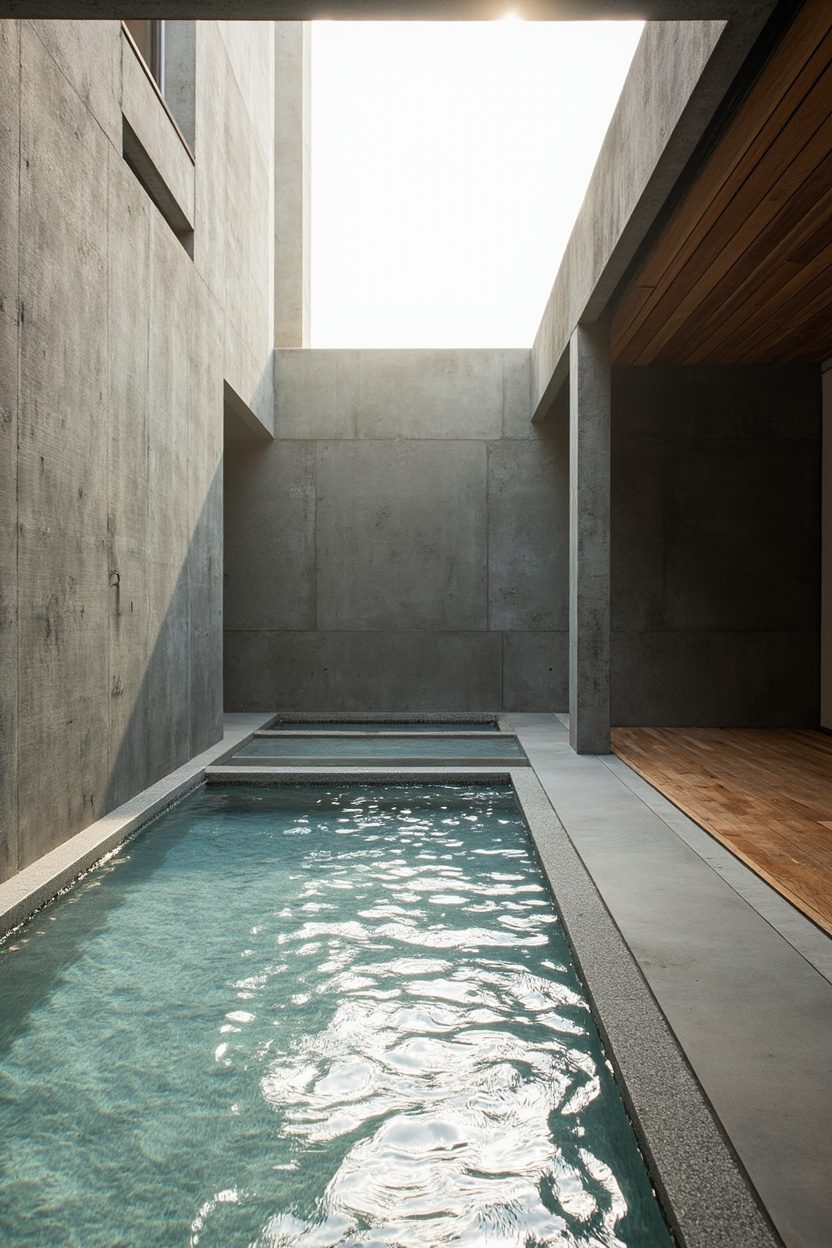
A courtyard water nook converts leftover patio corners into intimate swim-and-lounge pockets, often 7 to 10 feet with steps that double as seating. Use a heated plunge with vertical tile up the adjacent wall to create a visual and acoustic backdrop, and select tiles that hide splashes and calcium buildup.
Prioritize entry and exit flow, position wide steps on the longer side to form a bench that faces the court, and leave at least 36 inches of walking clearance along a primary circulation route. Planting here should be low-maintenance and salt-tolerant, like clipped boxwood or potted bamboo, to avoid leaf litter in the pool.
Materials should read cohesive with the courtyard: match the coping to patio pavers, and consider a narrow glass windscreen if the niche is exposed to neighbors for privacy without blocking light. Budget for a compact dehumidifier if the nook is partially enclosed, it protects finishes and keeps air fresh.
Lighting and furniture matter: a single pendant or wall sconce above the pool and a slim chaise nearby sell the sensation of scale and comfort, while a retractable shade keeps sun glare manageable during summer afternoons.
Styling Blueprint
- Layout: place wide entry steps for seating and easy access, maintain 36 in circulation on one side..
- Tile: use vertical accent tile on the back wall to hide splashes and add height illusion..
- Privacy: glass windscreen or tall planters instead of opaque walls to retain light..
- Climate control: include a compact dehumidifier if partially enclosed..
3. Foldaway Deck Pool
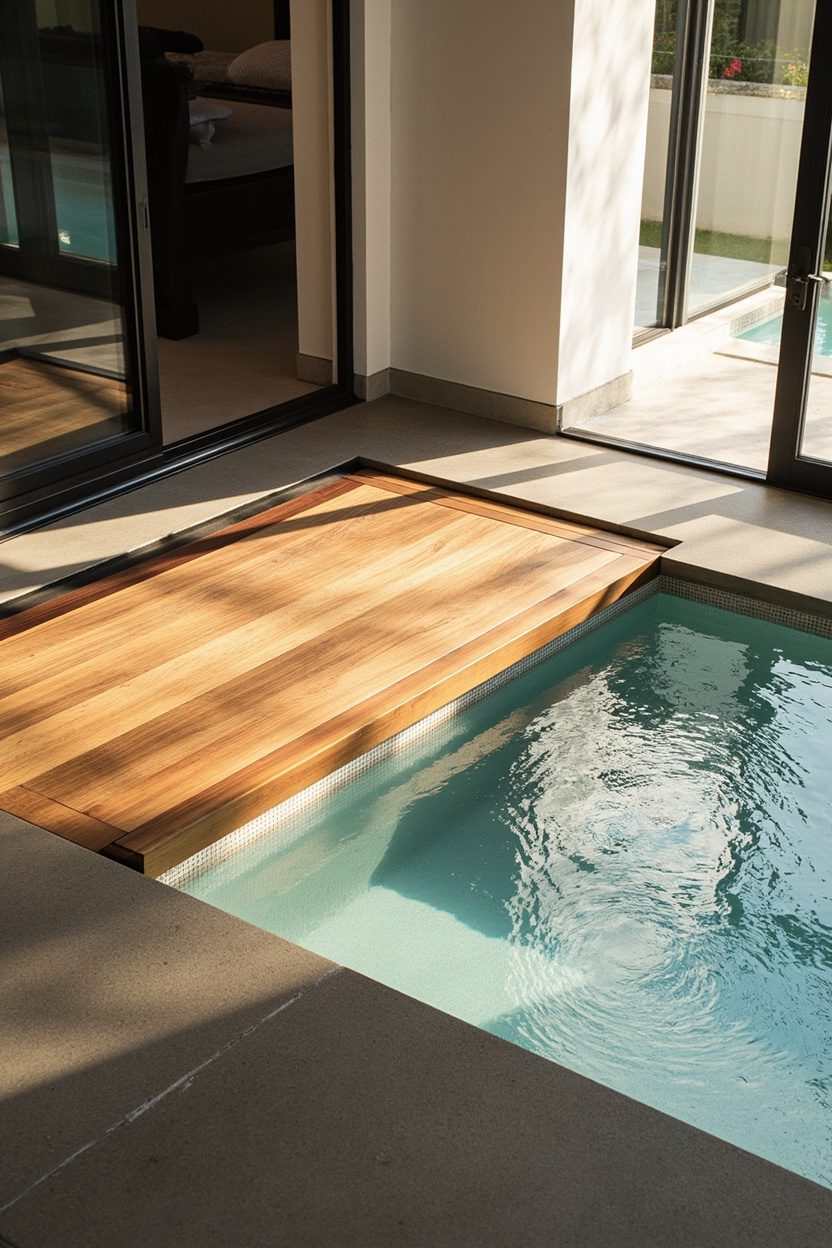
A foldaway deck pool hides beneath a motorized timber or aluminum deck, transforming the terrace from lounge to plunge in minutes, ideal when square footage must multitask. The pool shell sits slightly lower than the surrounding deck, so choose a low-profile frame and ensure a 2, 3 inch gap for expansion and drainage.
Mechanism choice is crucial, specify marine-grade stainless hardware and a telescoping actuator rated for the pool weight, and allocate 10, 15% of the pool budget to the lifting system to avoid warranty headaches. The deck surface should be non-slip finished hardwood or composite that matches the rest of the terrace to maintain visual continuity.
Waterline treatments need to be robust, select large-format porcelain coping to reduce grout lines that trap debris when the deck is closed. Plan for an automatic cover as a secondary safety measure and integrate lockable controls away from the pool edge.
For a luxurious touch, design the deck panels to read as continuous planks with hidden drainage channels; at night, linear LED strip lights along the deck perimeter signal the pool’s outline and aid safe operation.
What to Focus On?
- Mechanism: use marine-grade stainless hardware, budget 10, 15% for actuators and rails..
- Decking: choose non-slip hardwood or composite, match terrace finish for seamless look..
- Coping: large-format porcelain to minimize grout and ease cleaning when closed..
- Safety: integrate automatic cover and lockable controls into the deck design..
4. Sunken Seating Pool
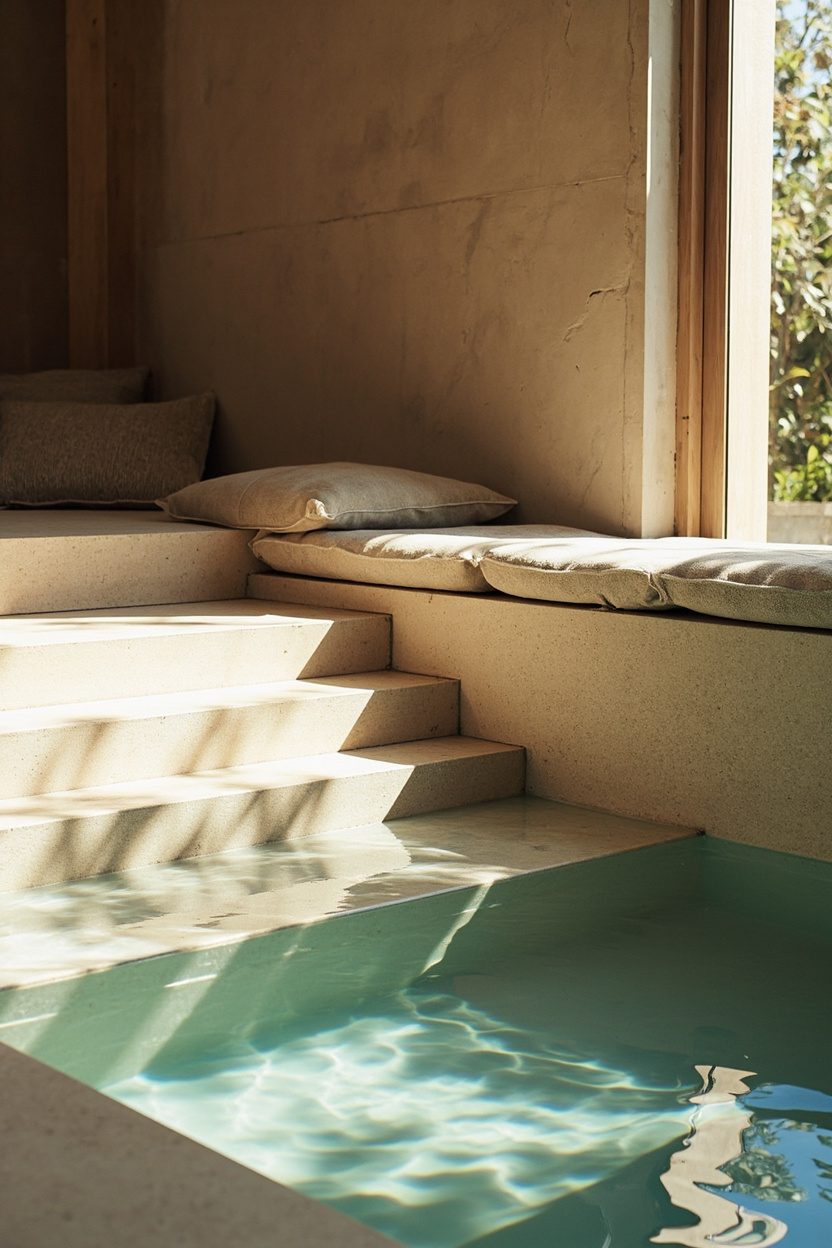
A sunken seating pool turns a compact plunge into an entertaining hub, integrating built-in benches at water level for lounging and socializing.
Scale matters, keep bench depth around 12, 16 inches for comfortable seating and an 18, 24 inch surrounding ledge for stepping in and out.
Material choice is pivotal, opt for smooth microcement or glazed tile on the bench to resist staining and stay cool to the touch.
Lighting under the bench and a single low waterfall make the small volume feel expansive and cinematic at night.
Styling Blueprint
- Bench finish in non-slip glazed tile, 60, 80 grit equivalent for safety.
- Depth plan: 3.5, 4.5 feet overall, with 12, 16 inch seating ledge height.
- Add a corner waterfall or bubbler for audio without splashing the seating area.
- Use recessed LED strips under benches for subtle, usable night lighting.
5. Lap-Style Plunge
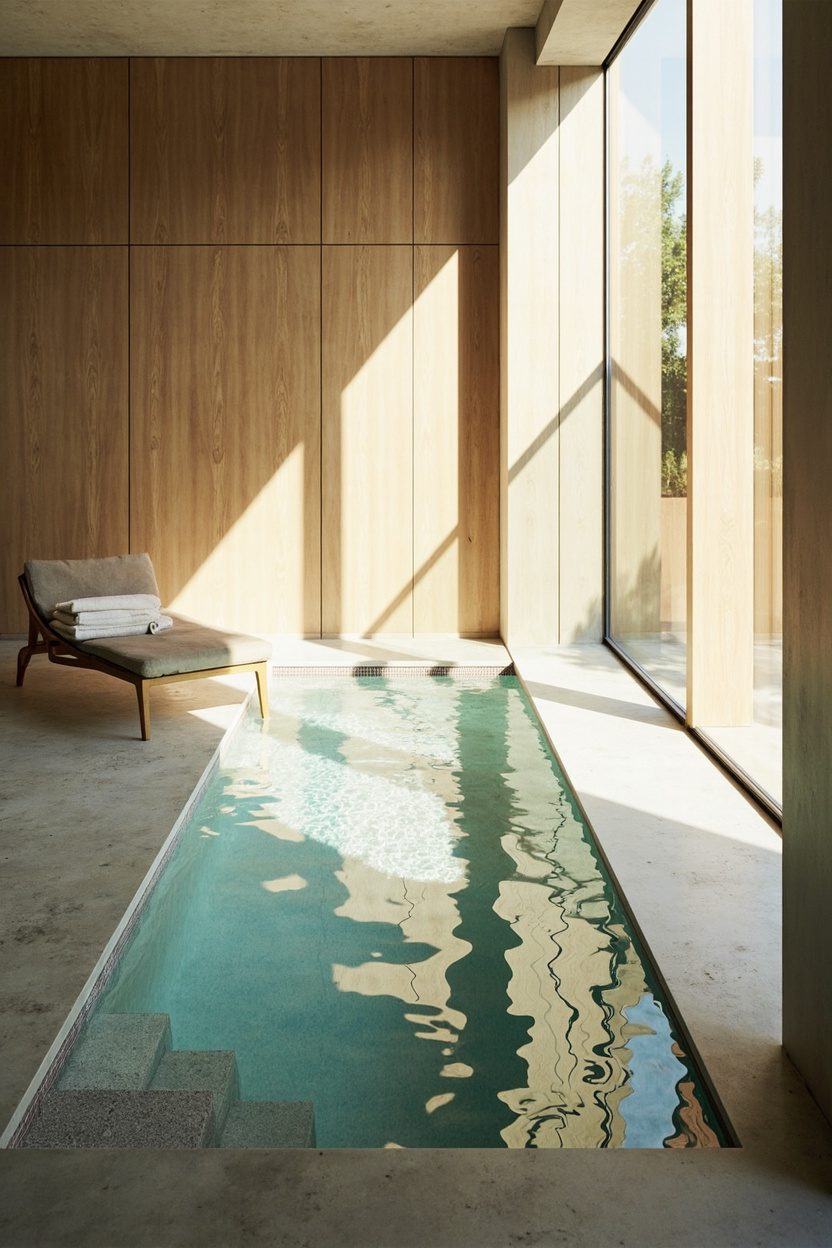
A lap-style plunge prioritizes length over width, giving you straight-line swim capability in a tight footprint, ideal for fitness-first owners.
Choose a narrow width, around 5, 6 feet, and extend length to 12, 20 feet depending on lot constraints and desired stroke length.
Finish with a dark quartz or pebble interior to visually elongate the pool and hide minor wear from regular use.
Consider installing a multi-speed swim current system if you want continuous resistance training in lieu of full-length laps.
Essential Elements
- Recommended dimensions: 5, 6 feet wide, 12, 20 feet long, 4, 5 feet deep for effective lap strokes.
- In-wall swim jets or tethered resistance unit for adjustable workout intensity.
- Slim deck at 18, 24 inches with anti-slip pavers to maximize usable length.
- Heater and cover system sized for quick warming and minimal evaporation losses.
6. Raised Trough Pool
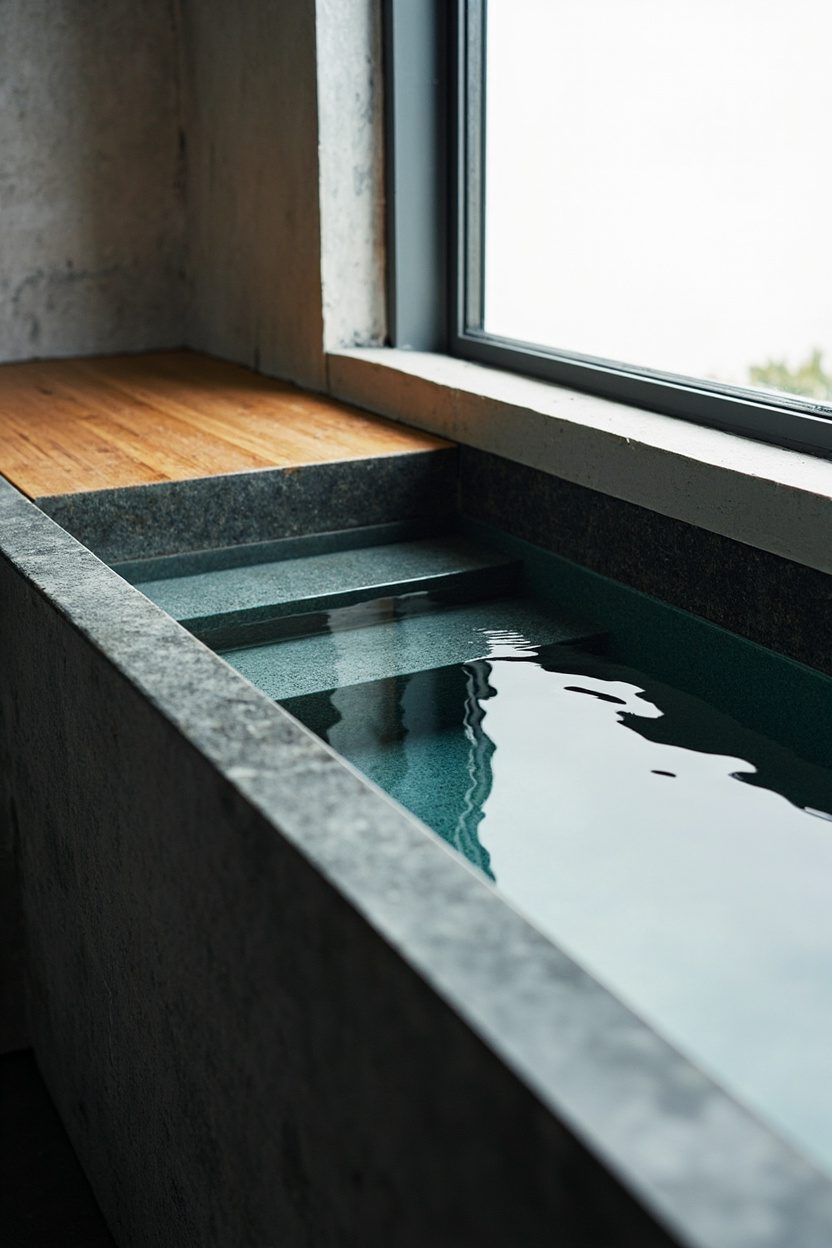
A raised trough pool sits above grade, creating a sculptural water element that reads like furniture, perfect for tight patios or rooftop terraces.
Use lightweight fiberglass or a steel shell to keep structural load manageable on decks and small foundations.
Edge detail makes the statement, select a flush overflow to create a reflective rim, with a concealed sump for a calm surface.
Raised walls allow integrated seating and planters, pick Corten steel or natural stone for an upscale, low-maintenance look.
What to Focus On?
- Weight planning: fiberglass under 1,000 lbs for most rooftop situations, otherwise consult a structural engineer.
- Wall finish: Corten steel for patina, or honed stone for a luxury, hands-on aesthetic.
- Overflow design with hidden catch basin to keep the surface mirror-smooth and quiet.
- Integrate planter boxes on the raised perimeter for privacy and softening scale.
7. Infinity Edge Mini
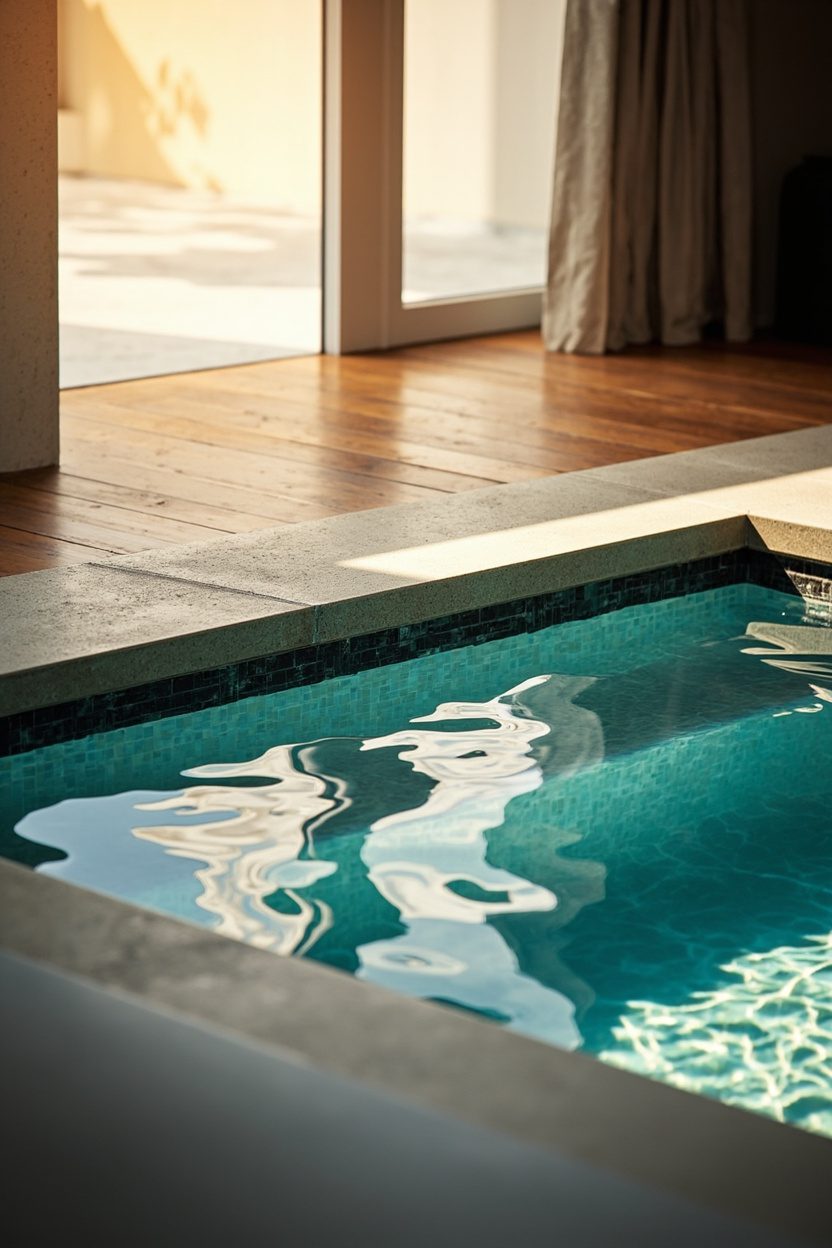
A micro infinity edge reads like a private vista, even on a narrow terrace, by visually extending the water to the skyline or garden beyond.
Keep the spillover trough shallow, around 6 to 8 inches, to conserve water and simplify pump sizing.
Cladding the negative edge in a dark basalt or anthracite tile deepens the visual vanishing point, choose 2×6 or larger tiles for a seamless look.
Mechanically, specify a variable-speed pump and a compact remote sump to fit inside a bench or planter, budget for professional waterproofing to avoid costly leaks.
Styling Blueprint
- Edge material: dark basalt or matte porcelain for optical depth and low maintenance.
- Scale tip: 6, 10 foot length, keep width under 5 feet to preserve yard circulation.
- Mechanical: variable-speed pump with small external reservoir for space savings.
- Placement: align with view axis, use raised decking to hide catch basin and equipment.
8. Heated Spa Plunge
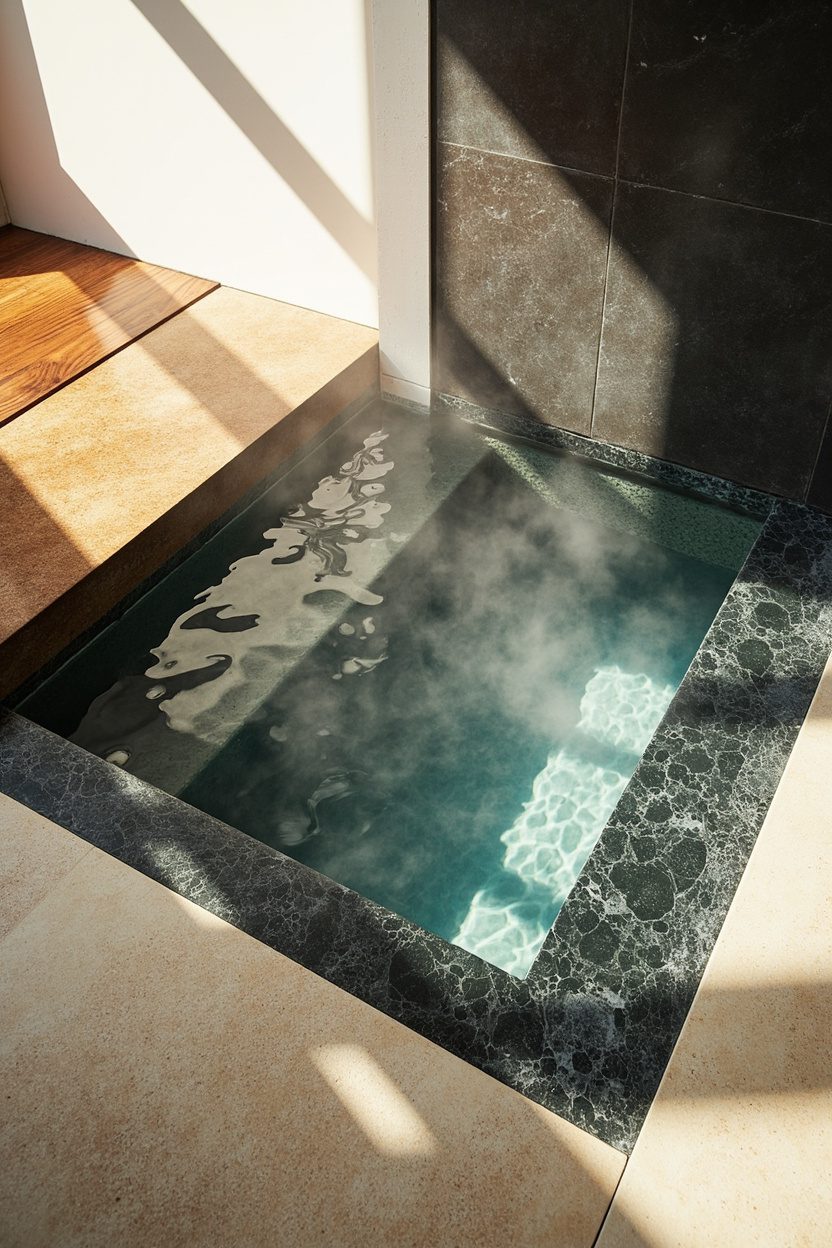
Combining a plunge pool with spa heating turns short swims into year-round ritual, aim for a water temperature range of 82 to 95°F depending on use.
Insulate the shell with closed-cell spray foam and specify a gas or electric heat pump sized for the smaller volume to keep operating costs sensible.
Add interchangeable jets and a removable bench to switch from active laps to passive soaking, pick stainless fixtures rated for chlorinated water.
Use non-slip porcelain tile at 12×24 for a refined spa feel, and include a snug cover that locks to retain heat when not in use.
Essential Elements
- Heating: electric heat pump sized to pool gallons, include smart thermostat control.
- Shell finish: plaster or microcement in warm tones for spa ambiance.
- Seating: built-in bench at 18, 20 inches high for comfortable soaking posture.
- Cover: insulated, lockable cover to reduce heat loss and evaporation.
9. Green Roof Pool
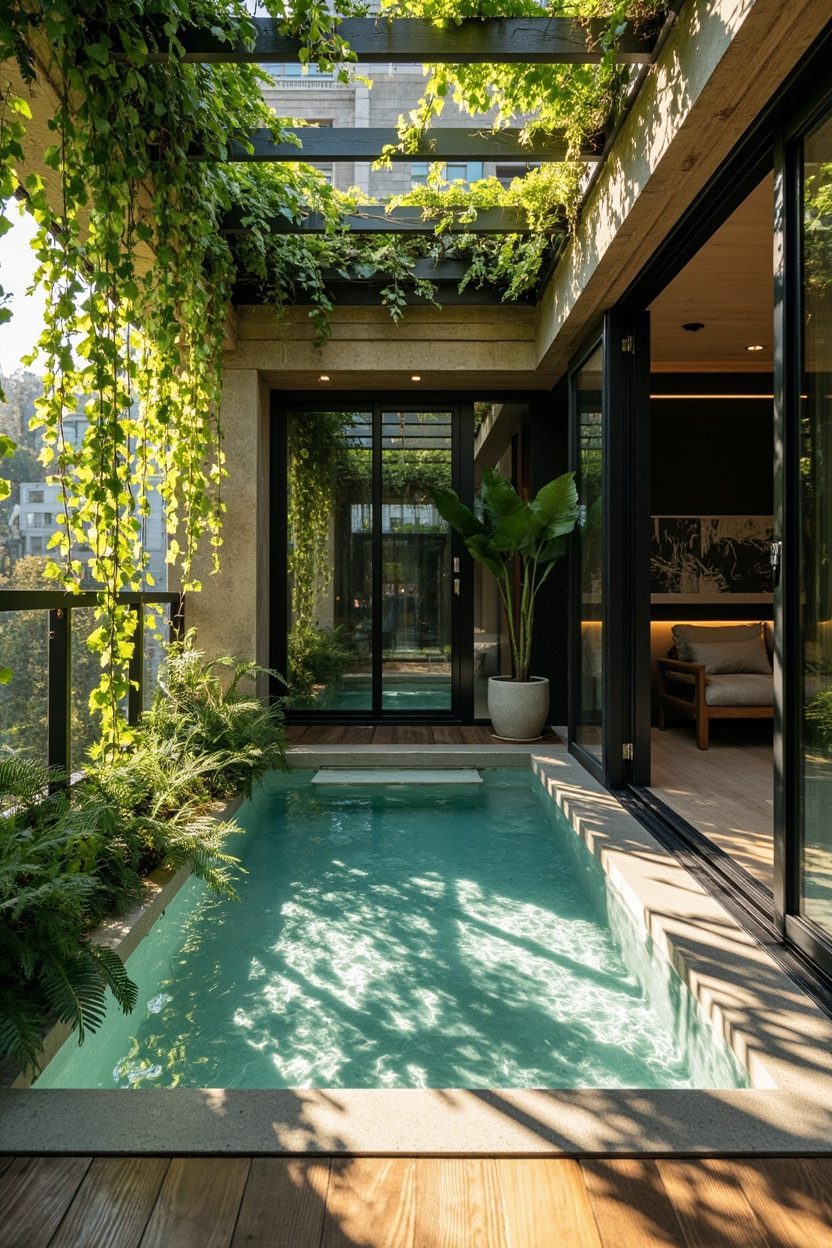
A green roof pool sits atop a garage or cabana, pairing compact plunge water with living roof plantings to maximize urban square footage.
Structural engineering is the decision that defines feasibility, plan for live load plus water weight, typically an added 80, 100 pounds per square foot including saturated soil.
Keep the pool shallow, 2.5 to 3.5 feet, to limit structural demands, and choose a lightweight media or sedum mat to reduce rooftop weight.
Integrate a raised planter edge that doubles as seating and conceals drainage; select stainless steel flashing and root barrier membranes for longevity.
What to Focus On?
- Structural: confirm roof can handle live load with a licensed engineer before design finalization.
- Planting: use shallow, drought-tolerant sedum mats to minimize saturated weight and maintenance.
- Waterproofing: multi-layer membrane, root barrier, and stainless flashing to prevent leaks.
- Access: plan for pump, filter access and service ladders that do not interrupt the roofscape.
10. Glass-Side View
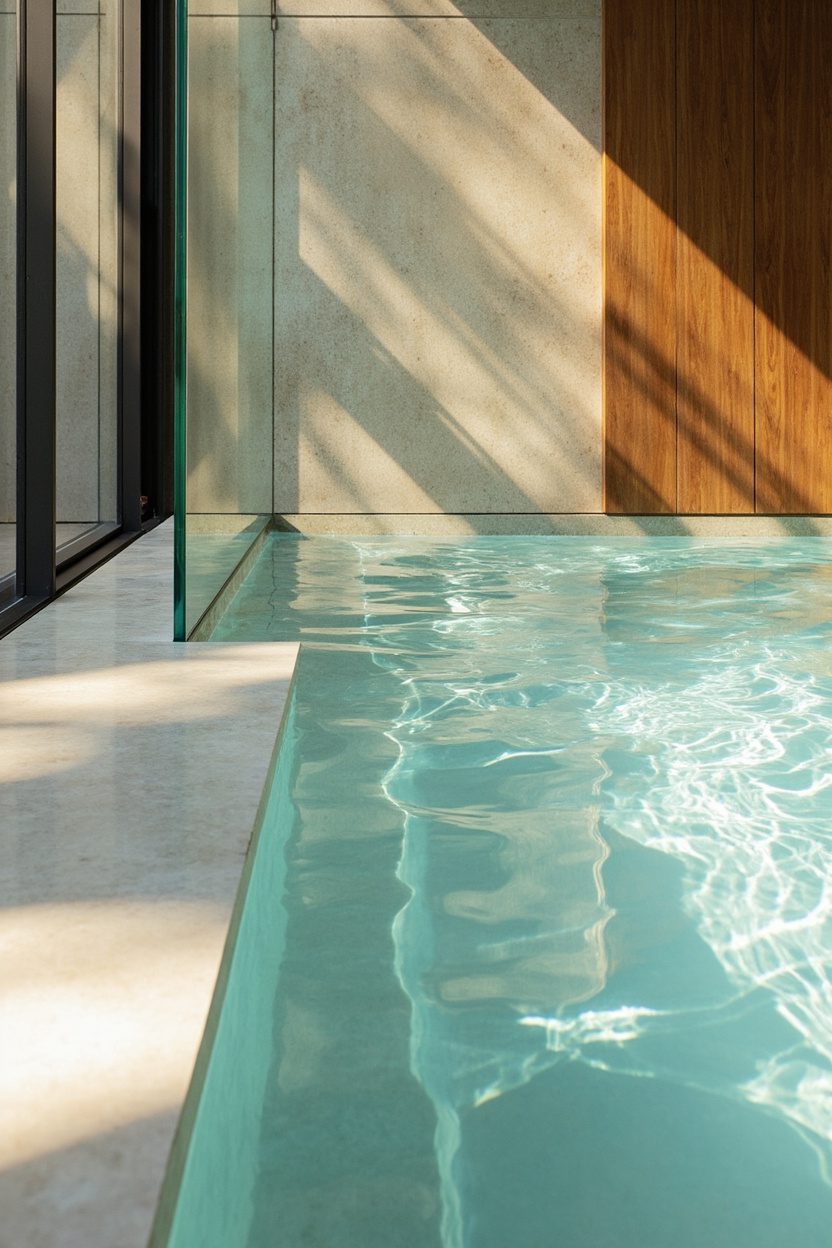
A glass-side plunge pool turns a tiny yard into a showpiece, letting water become a vertical focal point that reads like art.
Place the glass panel along a raised planter or adjacent to a patio to create depth, avoid placing it where splashes will hit a neighboring property.
Choose laminated, tempered glass at least 3/4 inch thick for residential use, and specify a stainless steel or recessed channel frame to keep the profile minimal.
Make the pool shallow, around 3 to 4 feet, to reduce structural load and to allow clear viewing from a sofa or breakfast nook, budgeting midrange to premium for the glazing and framing.
What to Focus On?
- Use tempered laminated glass, minimum 3/4 inch, for safety and clarity.
- Position the glass where indoor seating aligns for continuous sightlines.
- Integrate a slim stainless channel frame to hide fixings and drainage.
- Keep depth shallow, 3 to 4 feet, to limit structural costs and maintenance.
11. Convertible Splash Pad
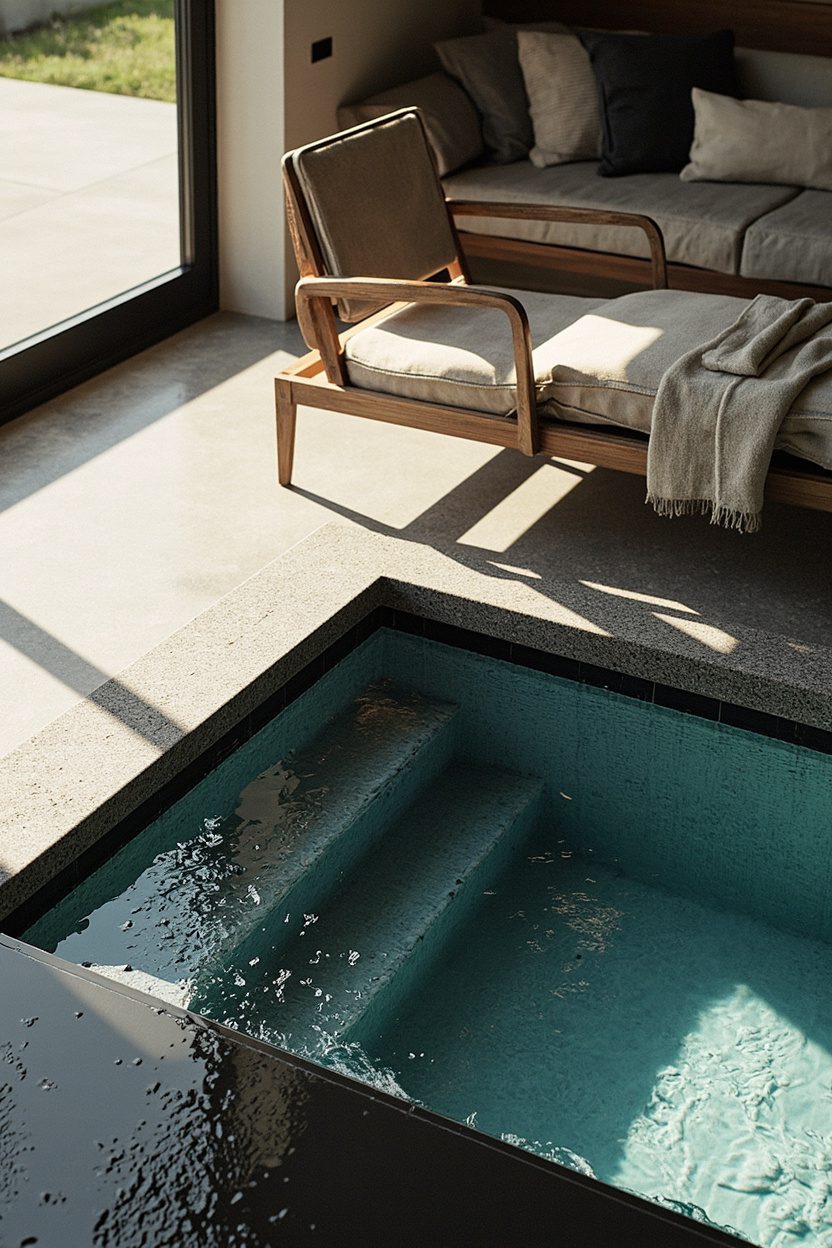
A convertible splash pad doubles as a dry courtyard and a shallow pool, ideal for tiny family yards that need flexible use.
Install a removable or hinged deck cover of teak slats or composite panels that sits flush with surrounds, ensuring easy conversion without trip hazards.
Specify a variable-depth basin, 6 to 10 inches when used as a pad, with hidden pop-up jets and a mechanical drain to empty quickly for events or winter.
Keep plumbing accessible under the cover and choose durable, non-slip porcelain or terrazzo finish, which handles splash, sun, and occasional furniture placement, making this a cost-effective luxury option.
Essential Elements
- Use a removable flush deck cover in teak or composite for quick switchovers.
- Fit pop-up jets and a mechanical drain to convert water depth rapidly.
- Choose non-slip porcelain or terrazzo for longevity and low maintenance.
- Design under-deck access panels for pumps and filtration servicing.
12. Compact Naturalistic Pool
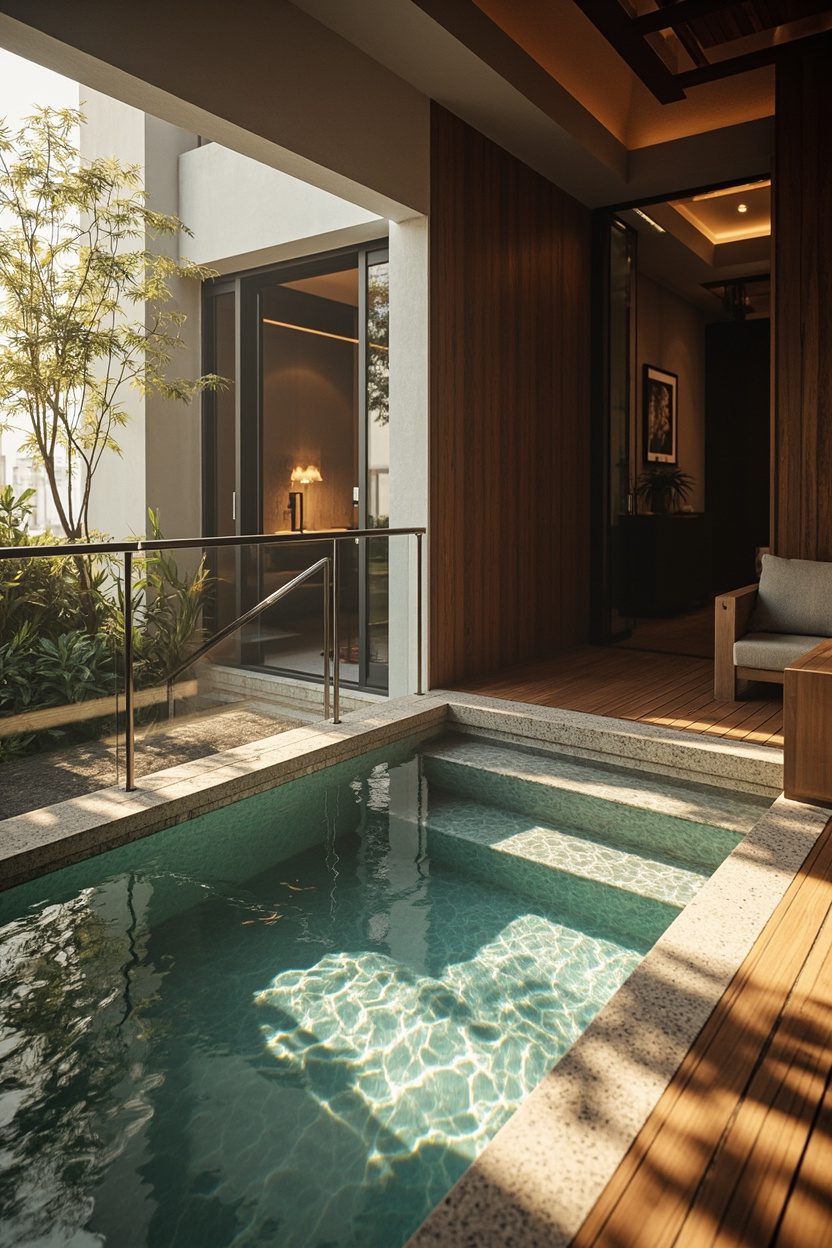
A compact naturalistic plunge uses boulders, planted edges, and pebble finishes to craft a private oasis, even in postage-stamp gardens.
Keep the footprint tight, roughly 6 by 10 feet, and use irregular edging to visually enlarge the perimeter, planting native, low-water species to soften hard lines.
Select a pebblecrete or aggregate finish in warm earth tones to mimic a natural spring, and place a low-flow waterfall feature on one short wall to mask neighborhood noise.
Budget for landscaping and an efficient salt or mineral sanitizing system, which pairs better with plants and stone than heavy chlorine, and preserves the natural aesthetic.
Styling Blueprint
- Size around 6 x 10 feet to balance intimacy and swim usability.
- Use pebblecrete in warm tones to resemble natural rock beds.
- Add a low-flow waterfall to create sound and circulation without overpowering volume.
- Plant native, drought-tolerant species around the rim for a low-care edge.
For a related idea, see Boho Room Aesthetic.
Final Thoughts
Small plunge pools are design exercises in precision, where material choices, placement, and simple mechanics create a sense of luxury without vast square footage.
Prioritize durable glazing, purposeful landscaping, and accessible service panels to ensure the pool looks effortless and performs reliably, whether you opt for a glass-side spectacle, a convertible pad, or a naturalistic retreat.
FAQ
Plunge pools typically range from 3 to 4 feet deep, which is deep enough for comfortable submersion but shallow enough to minimize structural complexity and drowning risk. For families with small children, consider integrated steps, a gradual entry, and a cover that locks.
Yes, well-planned plunge pools deliver luxury through materials, detailing, and sightlines rather than scale; glass panels, stone edging, and a focused water feature visually elevate even a 6 by 10 foot pool. Use layered lighting and seating to enhance perceived space.
Smaller pools require proportionally less chemical load, but filtration and circulation are crucial to avoid algae and temperature swings; choose a system sized to turn the water over at least once every four hours. Salt or mineral systems reduce harsh chlorine odor and help protect finishes.
Convertible pads can work in cooler climates if the system is drained and covers are installed for winter, protecting plumbing and finishes; insulating under-deck panels helps prevent freeze damage. Design for easy winterizing with accessible drains and a removable pump module.