


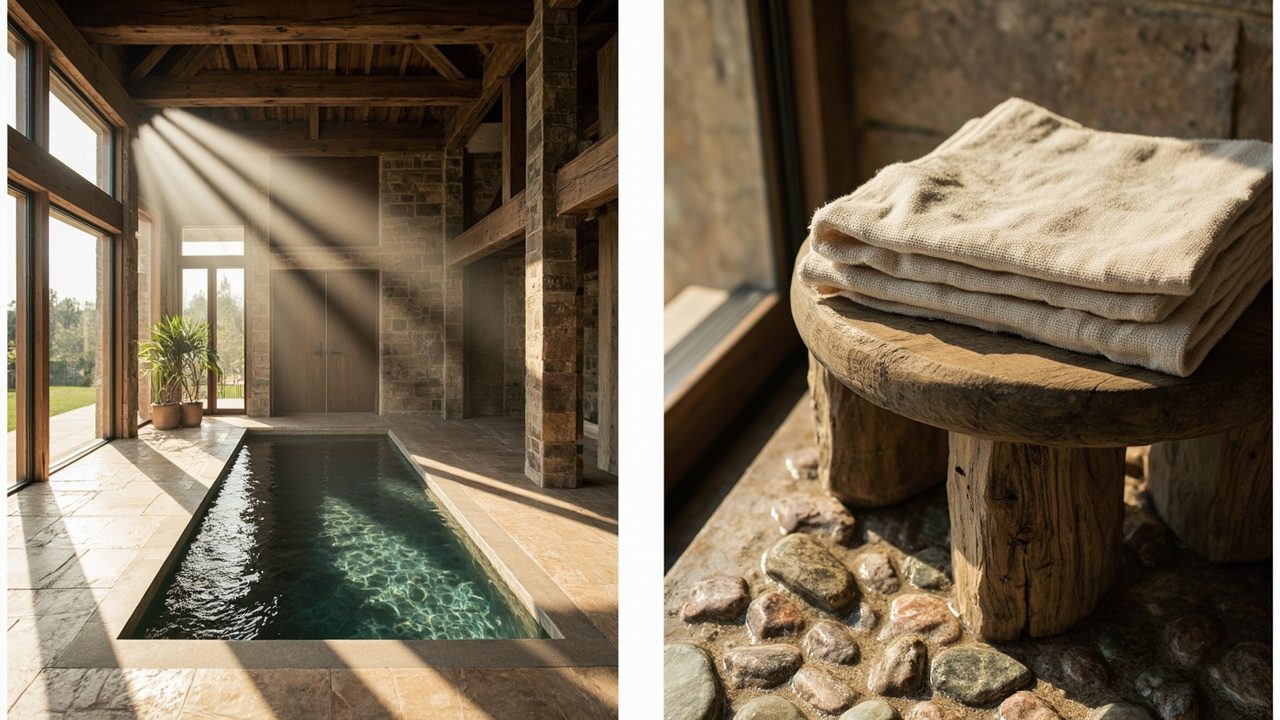
Give your country garden a cool, purposeful focal point with a plunge pool that reads as both rustic and refined.
These pools are about proportion and material honesty, use less water, and create a daily retreat without overwhelming a farmhouse plot.
Think through scale first, set the water plane no higher than one third of the visible yard depth to keep sightlines balanced, and choose finishes that complement wood, stone, and weathered metal. Pay attention to access, safety, and winterizing, so the pool looks like it belongs year-round.
- 1. Farmhouse Plunge Pool Design Essentials
- 2. Compact Luxury: Farmhouse Plunge Pools
- 3. Geometric Shapes for Rustic Yards
- 4. Dark Interior Finishes for Depth
- 5. Integrated Sun Ledges and Seating
- 6. Smart Automation for Plunge Pools
- 7. Energy Efficient Heating Options
- 8. Automatic Covers for Safety
- 9. Natural Materials: Wood and Stone
- 10. Landscaping for Privacy and Texture
- 11. Outdoor Living Extensions and Patios
- 12. Lighting Strategies for Ambiance
- 13. Compact Rectangular Plunge
- 14. Sun Ledge with Reclaimed Timber Loungers
- 15. Stone-Coped Courtyard Plunge
- 16. Integrated Hot Tub Corner
- 17. Farmhouse Pergola Shade Bay
- 18. Rustic Fireplace Backdrop
- 19. Breezeway Connection to Barn
- 20. Native Planting Border
- 21. Farm Gate Entry and Gravel Path
- 22. Dark Interior Finish for Contrast
- 23. Barn-Inspired Lighting Scheme
- 24. Hidden Automation Panel
- 25. Low-Maintenance Filtration Systems
- 26. Water Features for Soothing Sound
- 27. Sizing and Placement Guidelines
- FAQ
- Final Thoughts
1. Farmhouse Plunge Pool Design Essentials
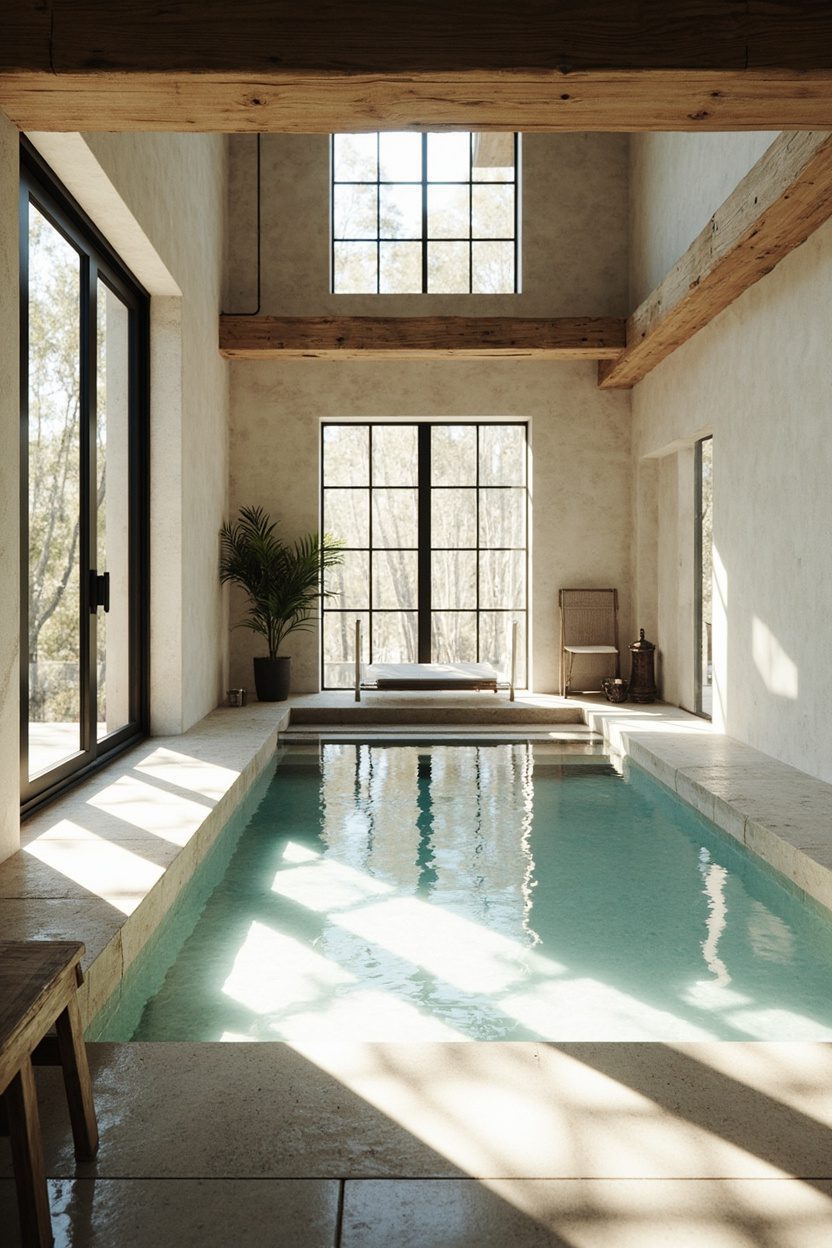
Start with a modest footprint, typically 8 to 12 feet wide, for a true plunge feel that fits most farmhouse lots and stays budget-friendly.
Place the pool parallel to the house, where it reads as an outdoor room, and use 18 to 24-inch coping to provide a usable ledge for seating or towel placement.
Choose a darker plaster or pebble finish to mirror aged materials; this deepens the water tone and hides fine debris between cleanings.
Combine a natural stone apron with a cedar or oak decking to link the pool visually to farmhouse cladding, and specify salt chlorination and a smart timer for low-maintenance operation.
2. Compact Luxury: Farmhouse Plunge Pools
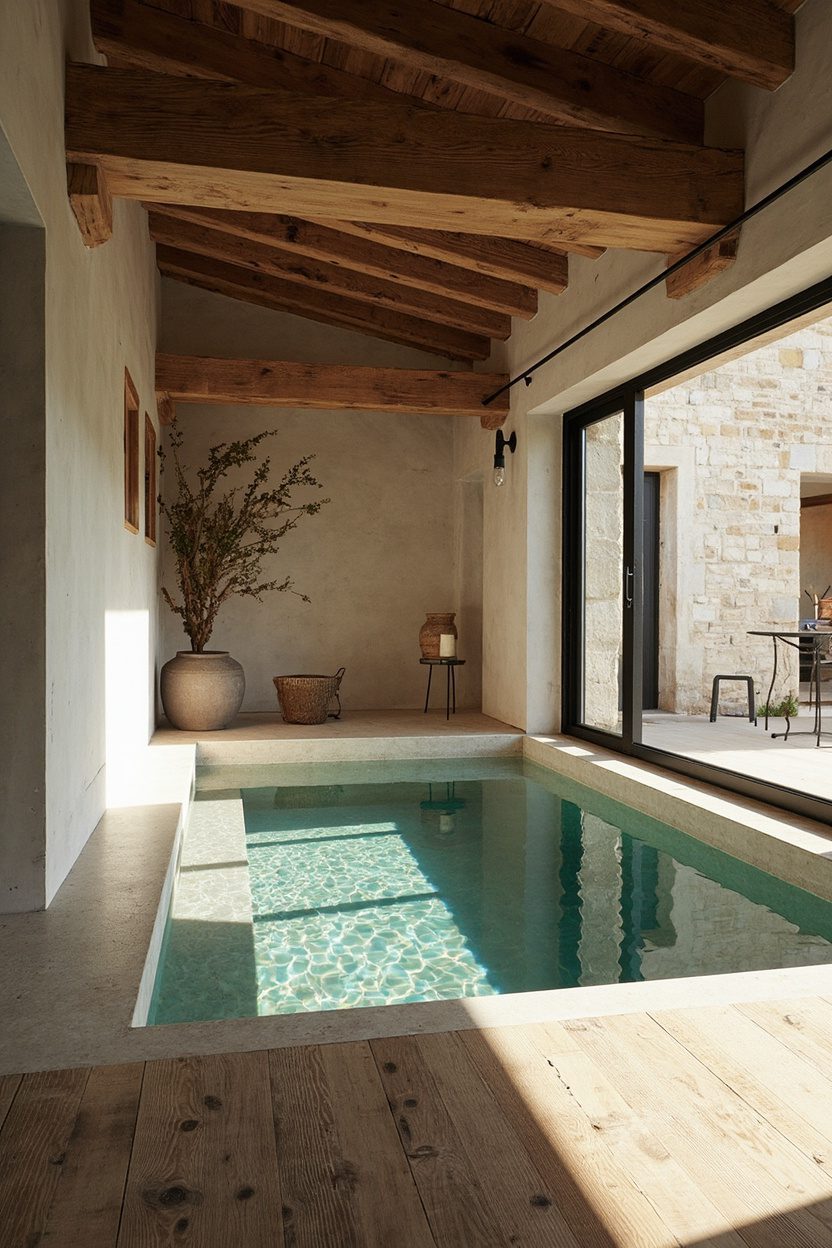
Compact plunge pools deliver luxury without sprawling landscaping or high water bills. Aim for a 6 to 10-foot sun ledge as an integrated lounging zone to increase use value. Use automated covers; they save heat and reduce evaporation.
Pick an insulated slatted cover sized to sit flush with the coping for a seamless look.
Layer rustic details like wrought-iron rails or matte black fixtures, keep plumbing runs short, and hide mechanicals in a nearby shed or bench to preserve the aesthetic.
For inspiration on compact layouts and finishes, the trend toward plunge pools is covered in industry roundups, which highlight integrated ledges and smart systems.
3. Geometric Shapes for Rustic Yards
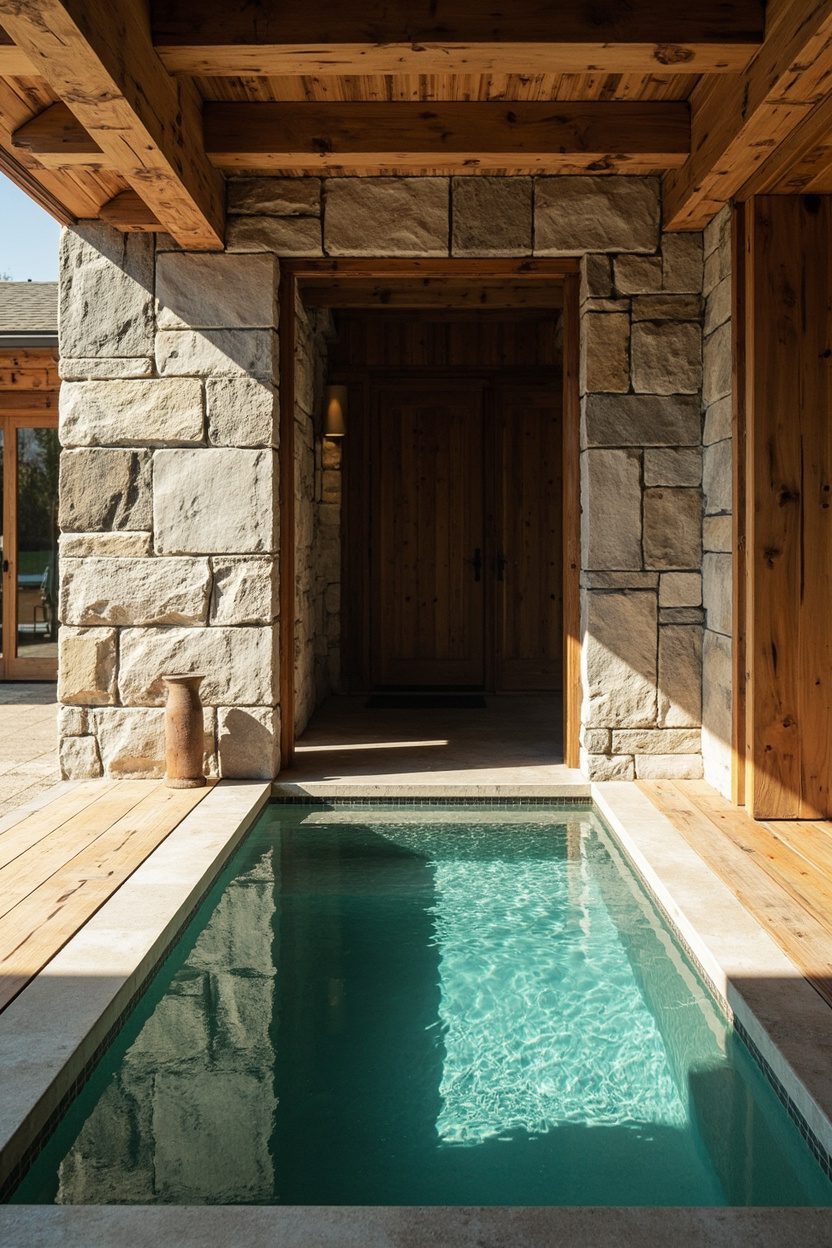
Geometric pools, rectangles, and L shapes bring a modern counterpoint to weathered barns and rough stone walls, aligning the long axis with existing sightlines and plantings to feel intentional. Maintain a minimum 3-foot clearance on all sides for service access, and use crisp square coping against rounded, informal planting to create a pleasing contrast.
Pair straight-edged pools with natural paving in larger joints to soften the transition, and choose materials in warm neutrals like tumbled limestone or honed concrete that echo farmhouse palettes.
See how clean geometry pairs with rustic schemes in practical lighting and layout advice from Minimalist Bathroom Lighting, and explore complementary boho accents for planting and textiles at Boho Easter Floral.
For trend validation, industry sources report a move to geometric shapes and darker finishes for 2026 pools, reflecting modern farmhouse preferences.
4. Dark Interior Finishes for Depth
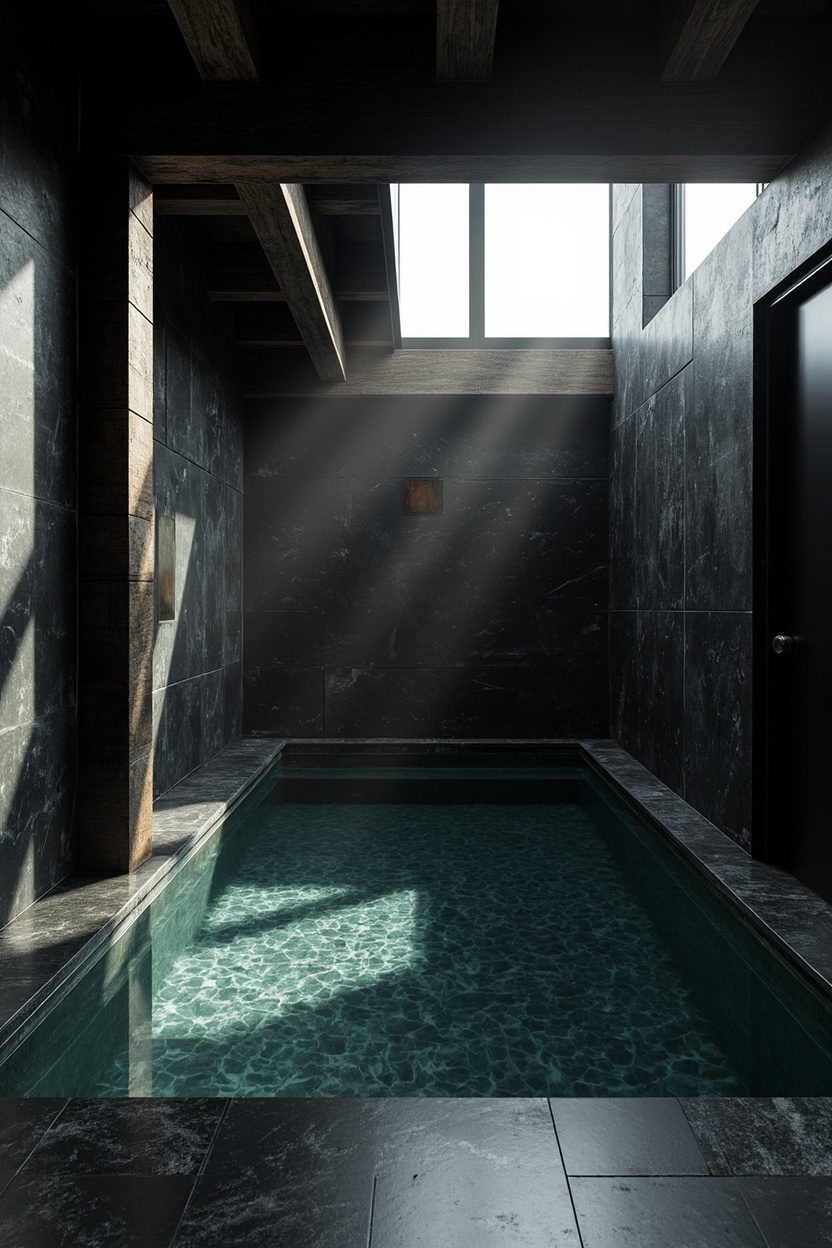
Dark pool interiors, such as charcoal plaster or deep slate tiles, instantly make a small farmhouse plunge pool read as luxurious; they increase perceived depth and create a reflective, mirror-like surface that complements barnwood siding.
Specify a matte finish to avoid glare, and cap the waterline with a 2-inch bullnose coping in honed limestone to keep the rustic look refined rather than industrial.
A common mistake is choosing a finish that shows every leaf and algae speck, so budget for a darker, low-maintenance quartz aggregate or glass bead finish engineered to resist staining, and plan annual acid washes as part of your maintenance calendar.
For visual continuity with an earthy interior, layer dark pool tones with warm timber decking and subtle uplighting along a nearby fence.
5. Integrated Sun Ledges and Seating
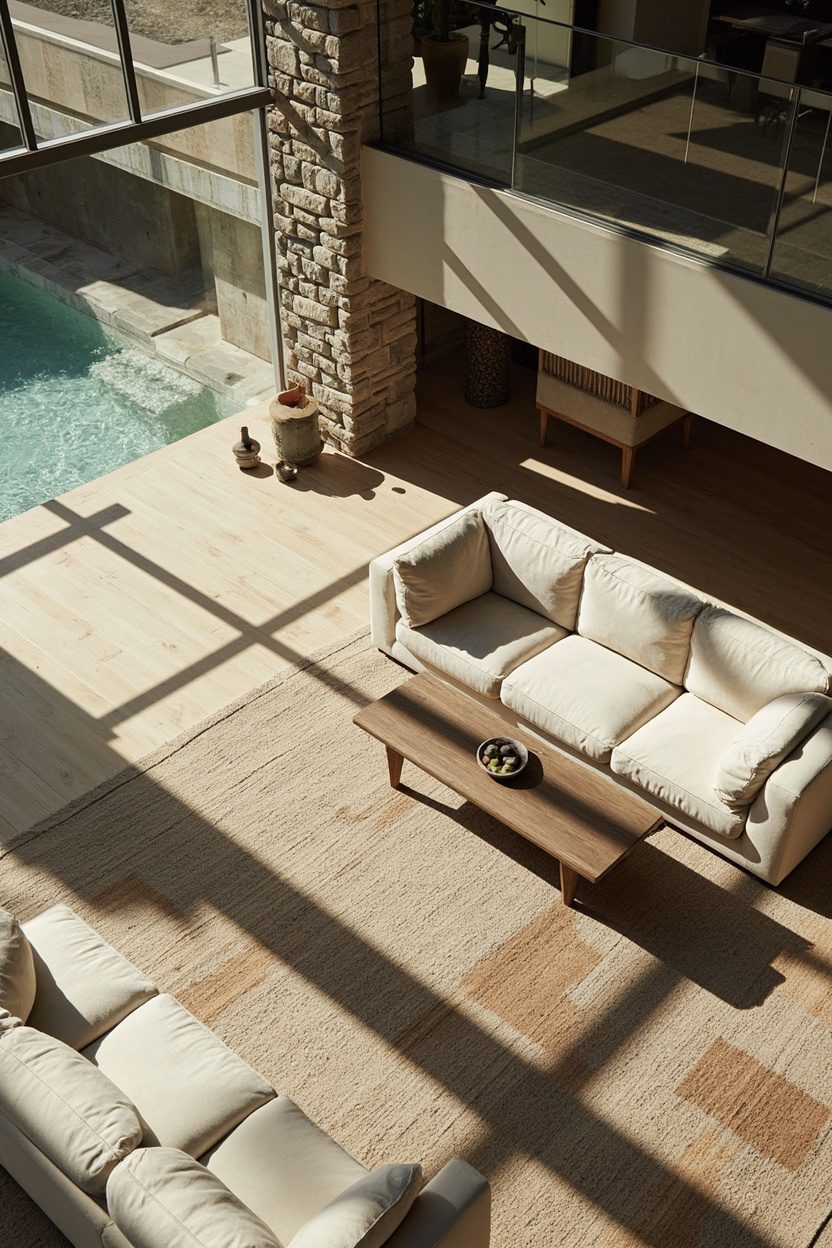
A shallow sun ledge, sized about 4 to 6 feet wide, provides lounging space, while a submerged bench along one side creates optional seating.
Place them on the south side for daytime sun, and finish with textured travertine pavers that match a farmhouse patio for cohesive flow.
Keep the ledge depth between 6 and 12 inches for loungers and include perimeter bubblers or a small cascade to add scent-masking white noise in windy rural settings.
For execution, cast the ledge in the same structural shell to avoid visible seams, and install a hidden skimmer or perimeter overflow to maintain clean water on the shallow plane, smart if you want a compact luxury approach that echoes the plunge-pool trend in contemporary designs.
6. Smart Automation for Plunge Pools
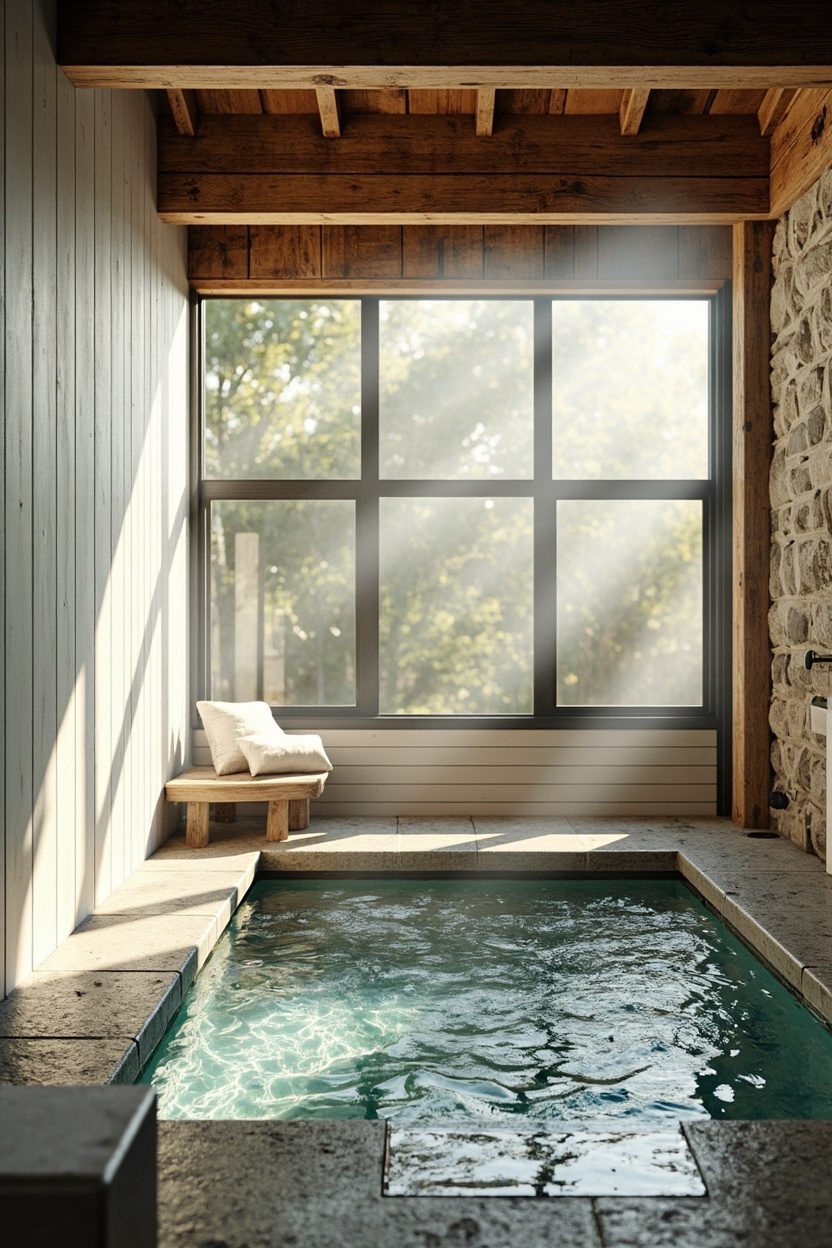
Integrate a smart controller that handles temperature, LED scenes, and filtration cycles. This keeps chemical use efficient and water pristine for a smaller volume plunge pool.
Specify a controller with remote app access and compatibility with low-voltage heaters or heat pumps. Program solar-friendly filtration schedules tied to peak sun hours to reduce energy use, and add automated covers sized to the pool footprint to lock in heat and prevent debris from barns or nearby trees.
When budgeting, allocate roughly 8 to 12 percent of the total pool cost for automation hardware and professional setup, and avoid the common pitfall of DIY wiring.
Hire a licensed electrician to ensure sensors and heaters meet local codes and weatherproofing standards.
7. Energy Efficient Heating Options
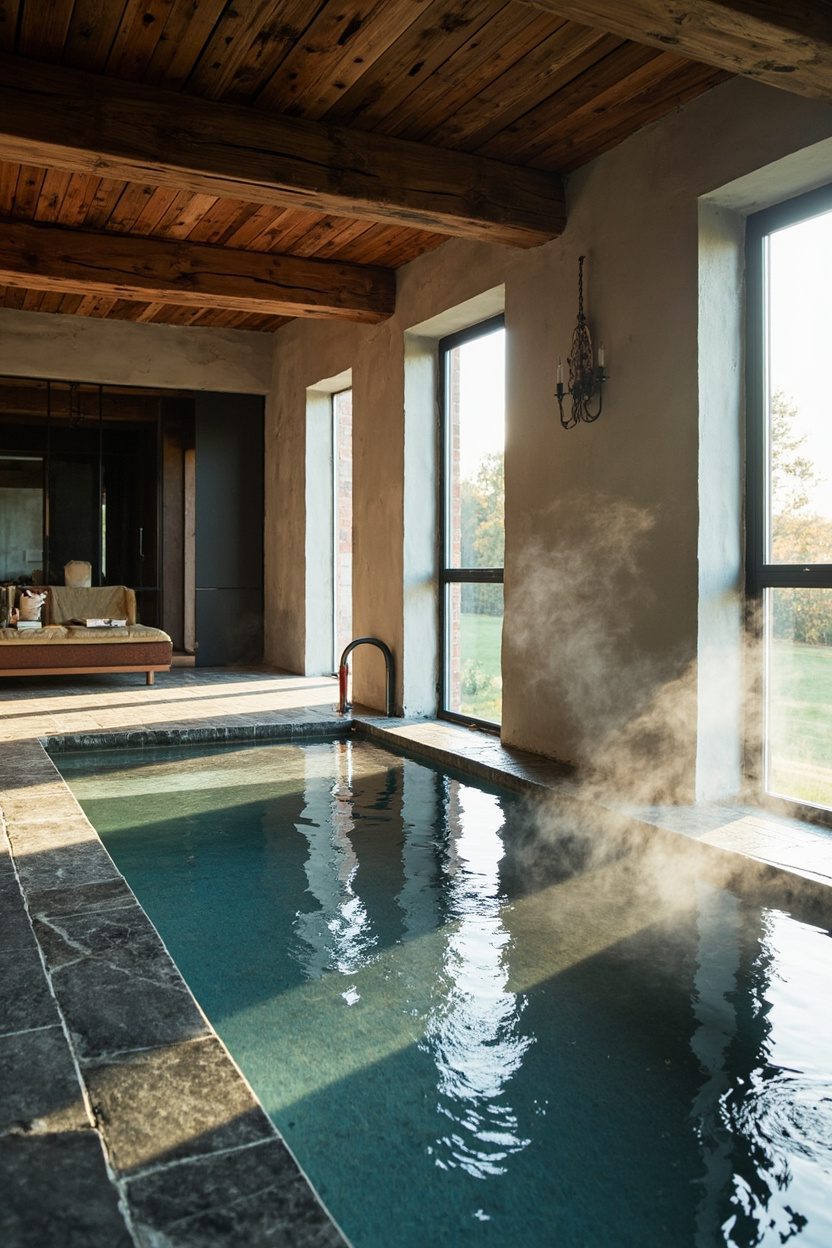
Choose a heat pump sized to your plunge pool volume, aim for one rated for at least 5 SEER to cut operating costs, and place it on a shaded, well-ventilated pad to prolong life.
Pair the pump with a programmable controller so the system runs only during occupied hours, lowering energy bills without sacrificing comfort.
For colder climates, consider a solar-boosted heat pump, route flat-plate collectors to pre-warm return water, and budget for insulated plumbing, as each foot of uninsulated pipe can add noticeable heat loss.
A common mistake is oversizing the heater, which raises purchase cost and causes short cycling, so consult a pro for correct load calculations.
8. Automatic Covers for Safety
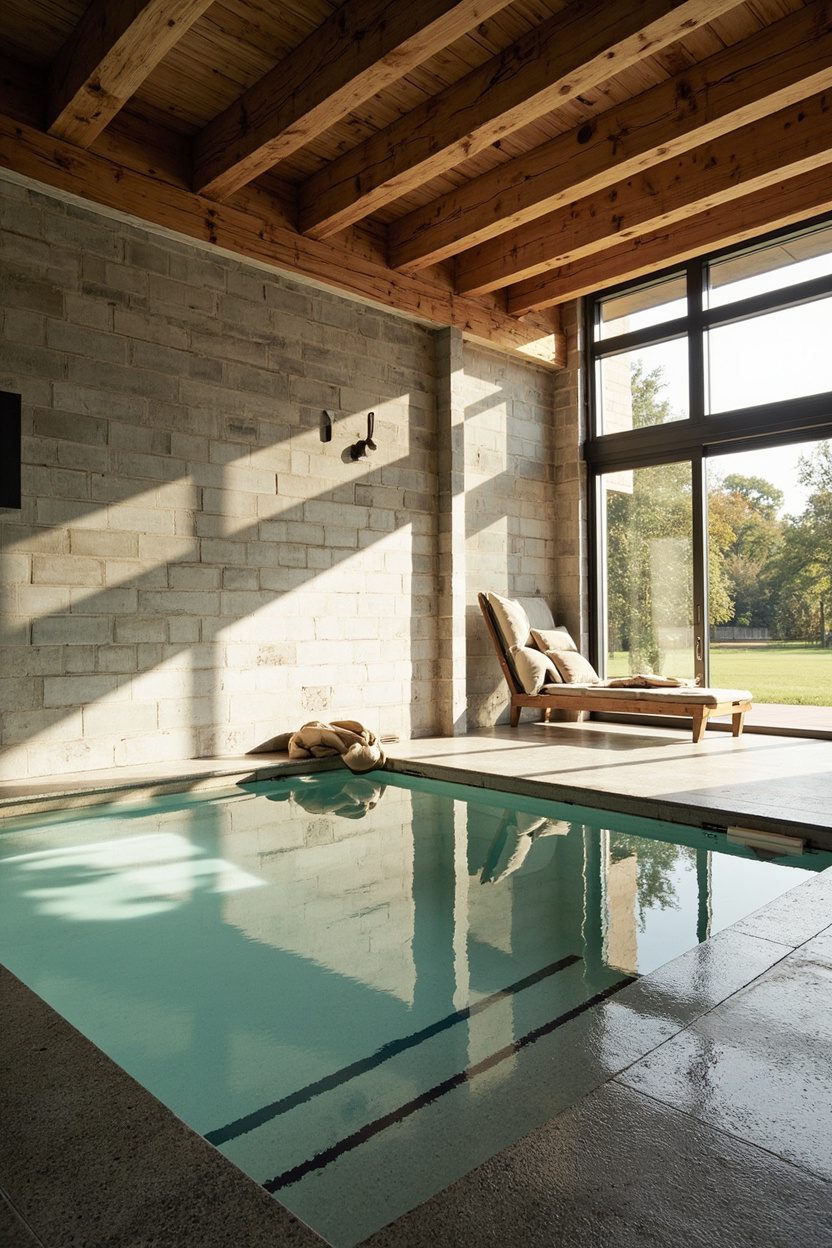
An automatic cover delivers safety and heat retention. Select one with a thermal blanket core and locking slats to keep children and pets secure, and position the motor housing discreetly in a recessed trough at the pool edge to preserve farmhouse lines.
Measure for a custom fit, as even a small gap reduces safety and thermal performance, and insist on an electric drive rated for your pool width.
Beyond protection, automatic covers reduce evaporation and chemical use, saving on ongoing maintenance, and integrate easily with smart controls so you can open or close the cover from a phone.
For rustic aesthetics, hide the cover casing with a stone cap or timber bench that matches surrounding materials, keeping function invisible and style intact.
9. Natural Materials: Wood and Stone
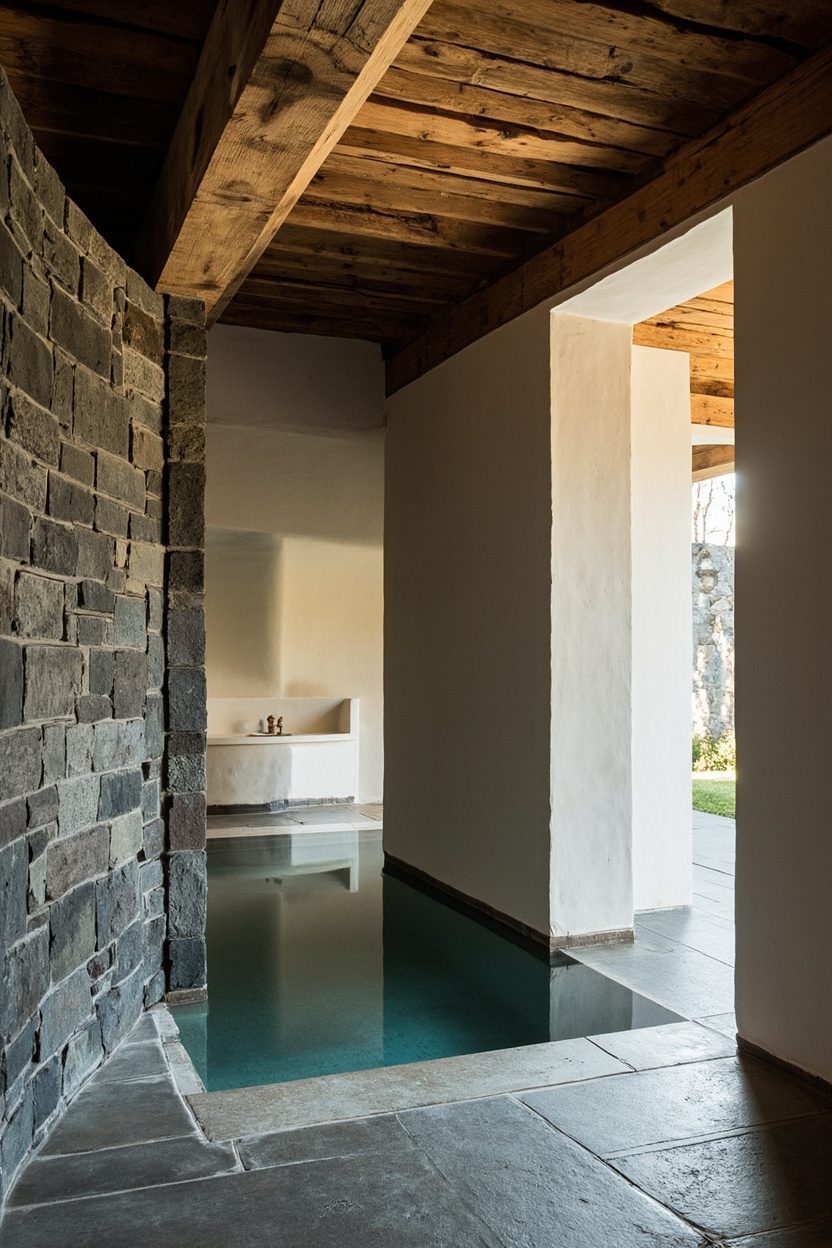
Use rot-resistant hardwood like ipe or thermally modified cedar for decking, set boards with a consistent 1/8 inch gap for drainage, and keep planks no wider than 5 inches to preserve a scaled, farmhouse look.
Combine that with locally quarried flagstone for the pool coping, cut to 1 to 1.5 inch thickness to avoid oversized edges, and tuck joints with a fine, grassy groundcover to soften hard lines.
When integrating stone walls or a low spillover, anchor the palette in warm mortar tones and seal natural stone annually to prevent staining from pool chemicals.
If budget is tight, opt for porcelain pavers that mimic stone on walkways, while reserving genuine hardwood or stone accents where hands touch, like steps and seating edges.
10. Landscaping for Privacy and Texture
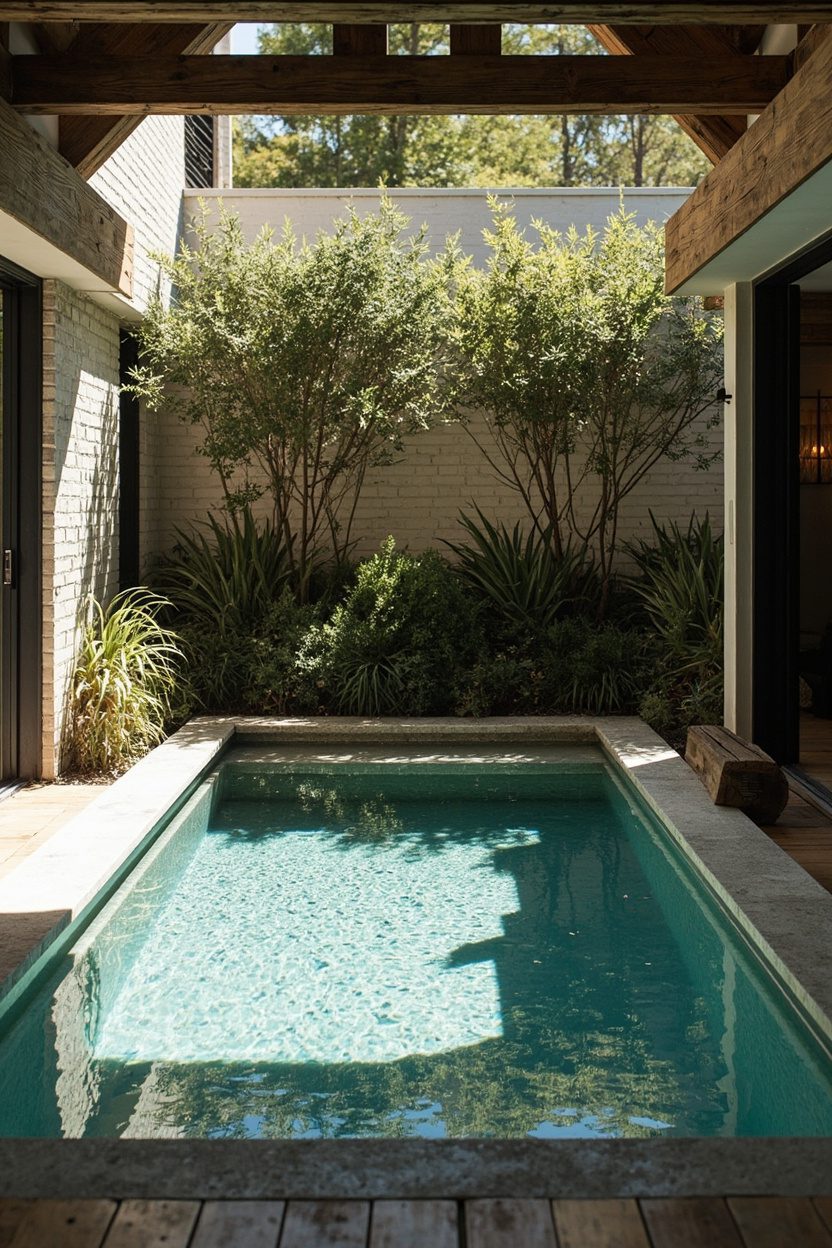
Layered planting softens a farmhouse plunge pool. Use a mix of evergreen hedges like boxwood at 3 to 4 feet for year-round screening, with taller native grasses or arborvitae at the back for a textured backdrop.
Position flowering perennials such as lavender or salvia in front to add scent and seasonal color. Keep plantings at least 3 feet from the pool edge to prevent debris and allow access for maintenance.
Incorporate natural materials for edging, choose reclaimed stone or weathered timber at a 6 to 8 inch rise to create a rustic border that doubles as seating, avoid high-maintenance manicured lawns close to the water, and plan irrigation zones so spray never reaches the pool to protect water chemistry.
11. Outdoor Living Extensions and Patios
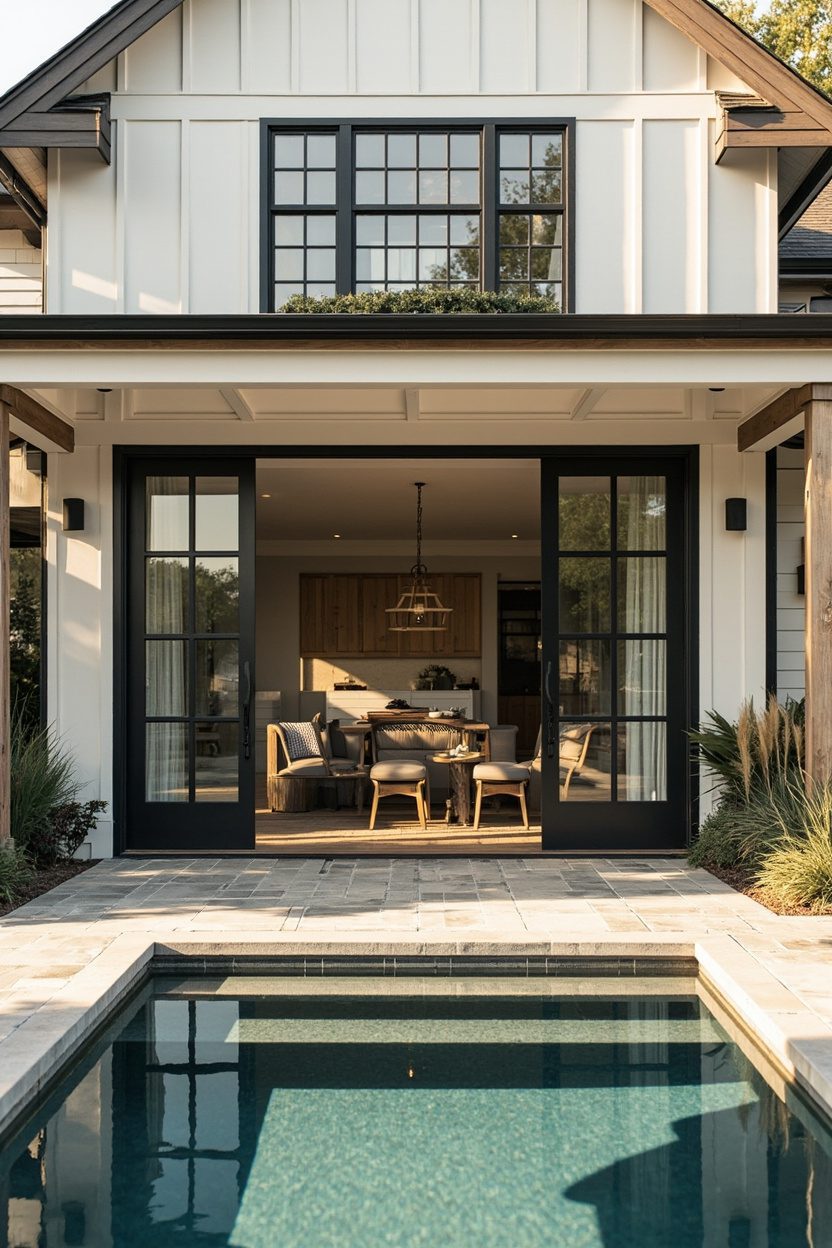
Extend the farmhouse interior to the plunge pool with a covered patio using rough-sawn beams and a beadboard ceiling. Set the patio floor 1 to 2 inches higher than the pool deck to define zones while keeping a seamless visual flow.
Furnish with durable, farmhouse-friendly pieces, specify teak or powder-coated iron seating with cushions in fade-resistant linen blends, and place a 48 to 60 inch dining table perpendicular to the pool to keep sightlines open.
Add a simple outdoor fireplace or a wood-fired pizza oven clad in reclaimed brick to anchor gatherings, position it 10 to 12 feet from the pool to avoid smoke over the water, and include a built-in bench with cushions for spillover seating.
For boho touches that layer textiles and informal planting on the patio, consider ideas from a Boho Interior Design sensibility translated outdoors.
12. Lighting Strategies for Ambiance
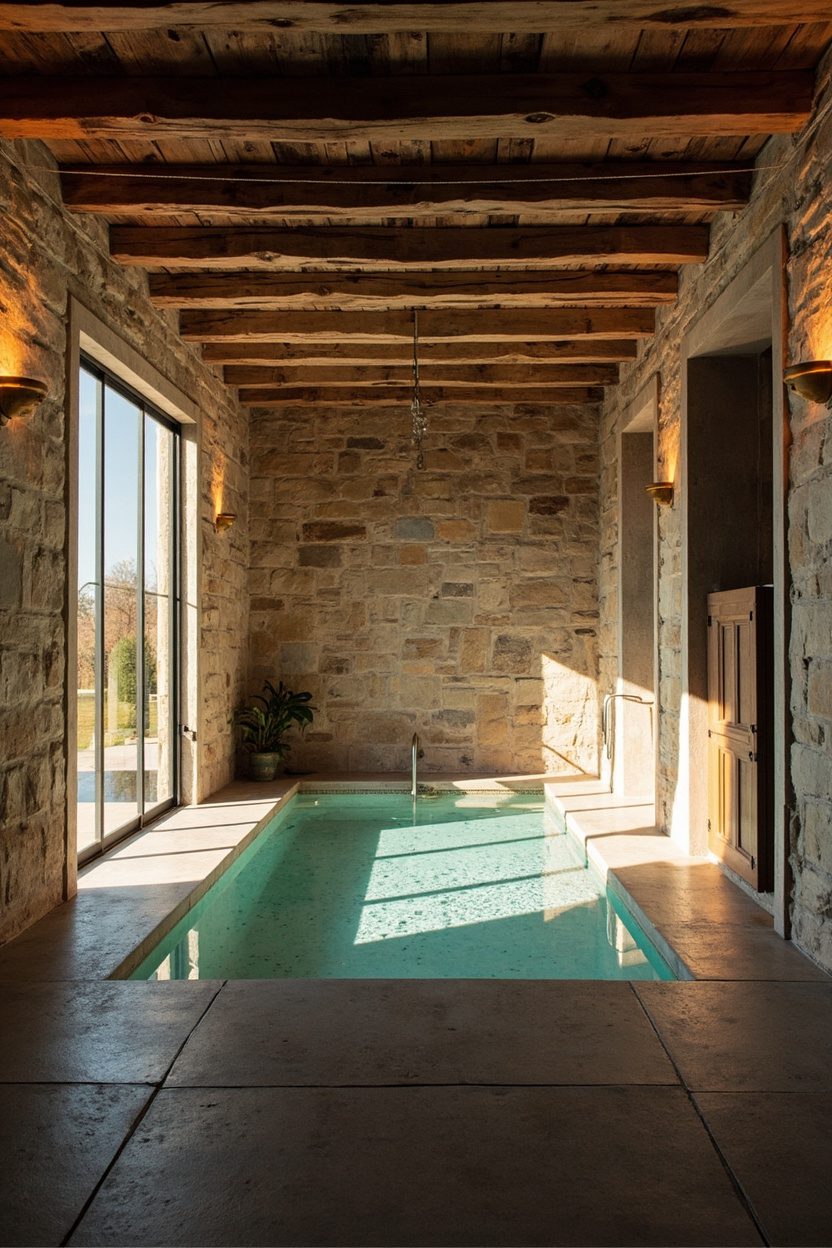
Choose lighting that complements the farmhouse aesthetic, place warm LED strip lighting under the coping for a soft glow, and install low-voltage path lights at 6 to 8-foot intervals to illuminate walkways without overpowering the landscape. For the pool itself, specify darker interior finishes paired with warm white underwater LEDs; this contrast enhances the depth of the water and reduces glare for evening swims.
Layer in uplights on specimen trees and bollard lights near seating areas to create separate activity zones, and include a smart lighting controller so scenes can be set for swim, dinner, or party modes while conserving energy.
13. Compact Rectangular Plunge
A clean, narrow rectangle reads modern against weathered siding, creating a 2.5m by 4m pool to allow lap strokes while saving yard space. Use a dark quartz finish to make the water feel deeper, and set the pool 60- 90cm below deck height to create a subtle edge. Avoid crowding pathways around it.
14. Sun Ledge with Reclaimed Timber Loungers
Integrate a 60- 90cm wide sun ledge for low-profile lounging, clad the adjacent deck with reclaimed oak to keep the rustic look, and seal the timber annually with a matte oil. Keep the ledge shallow, 15 to 30cm deep, for comfortable wading. Position loungers parallel to the house for sightlines and shade control.
15. Stone-Coped Courtyard Plunge
Frame the pool with 40- 60mm thick local stone coping to reference farmhouse masonry, install the coping 2, 3cm over the pool edge to shed water away from walls. Place the pool centrally in a small courtyard, leave 1.2m clear walkways on all sides to meet circulation and maintenance needs.
16. Integrated Hot Tub Corner
Tuck a 2-person raised spa into one corner, finish the spa interior with the same tile as the plunge for visual continuity, and use a 50cm step between levels to make transfers safe. Fit a separate thermostatic control for the spa, which prevents warming the entire plunge and keeps energy bills modest.
17. Farmhouse Pergola Shade Bay
Build a simple pitched pergola over the pool entry using 150x50mm timbers, space rafters at 40cm to support climbing roses without blocking light. Position the pergola to the south or west for afternoon shade, and stain it a warm honey tone to complement barn red or cream siding.
18. Rustic Fireplace Backdrop
Anchor one end of the pool with a masonry outdoor fireplace, use reclaimed brick laid in a running bond for a weathered feel, and keep the chimney 3- 4m high for proper draft. Place seating 1.2, 1.5m from the hearth for safety, and orient the fireplace so smoke blows away from the house and pool.
19. Breezeway Connection to Barn
Connect the plunge to an existing barn with a glass breezeway, specify 8- 10mm tempered glass for wind protection without blocking views. Keep the breezeway floor level with the deck to avoid steps, and use textured porcelain tiles that mimic stone to prevent slips.
20. Native Planting Border
Edge the pool with drought-tolerant native grasses and lavender to cut maintenance and reinforce the countryside aesthetic, plant in 30- 45cm deep beds to allow roots to establish. Place taller screening plants 1.2, 1.5m from the pool edge to limit leaf debris and maintain clear sightlines.
21. Farm Gate Entry and Gravel Path
Create a simple farm gate entry using aged steel or timber, lead visitors along a 1m-wide compacted pea gravel path for informal drainage, and install a 20- 30mm concrete edge to stop migration. Keep the gate opening at least 90cm wide to allow pool equipment access without damaging the surrounding landscaping.
22. Dark Interior Finish for Contrast
Choose a deep charcoal pebble finish to contrast pale clapboard walls and make the water feel luxurious. Budget 10, 20% more for pebble finishes, but expect longevity and color retention. Avoid light finishes in sunny yards; they show algae growth and require more frequent scrubbing.
23. Barn-Inspired Lighting Scheme
Use warm 2700K LED uplights on timber posts to echo barn lanterns, space fixtures no more than 2.5m apart to wash walls evenly, and include dimming controls for evening ambiance. Light the pool interior with low-glare LED niches to maintain a relaxing glow, position them at the deep end for balanced illumination.
24. Hidden Automation Panel
Install a compact automation hub in a ventilated cupboard near the pool pump, specify a weather-rated enclosure if placed outdoors, and route power and control conduits in 25mm conduit for future upgrades. Program timed filtration cycles and a freeze-protection routine to reduce long-term labor and energy use.
25. Low-Maintenance Filtration Systems
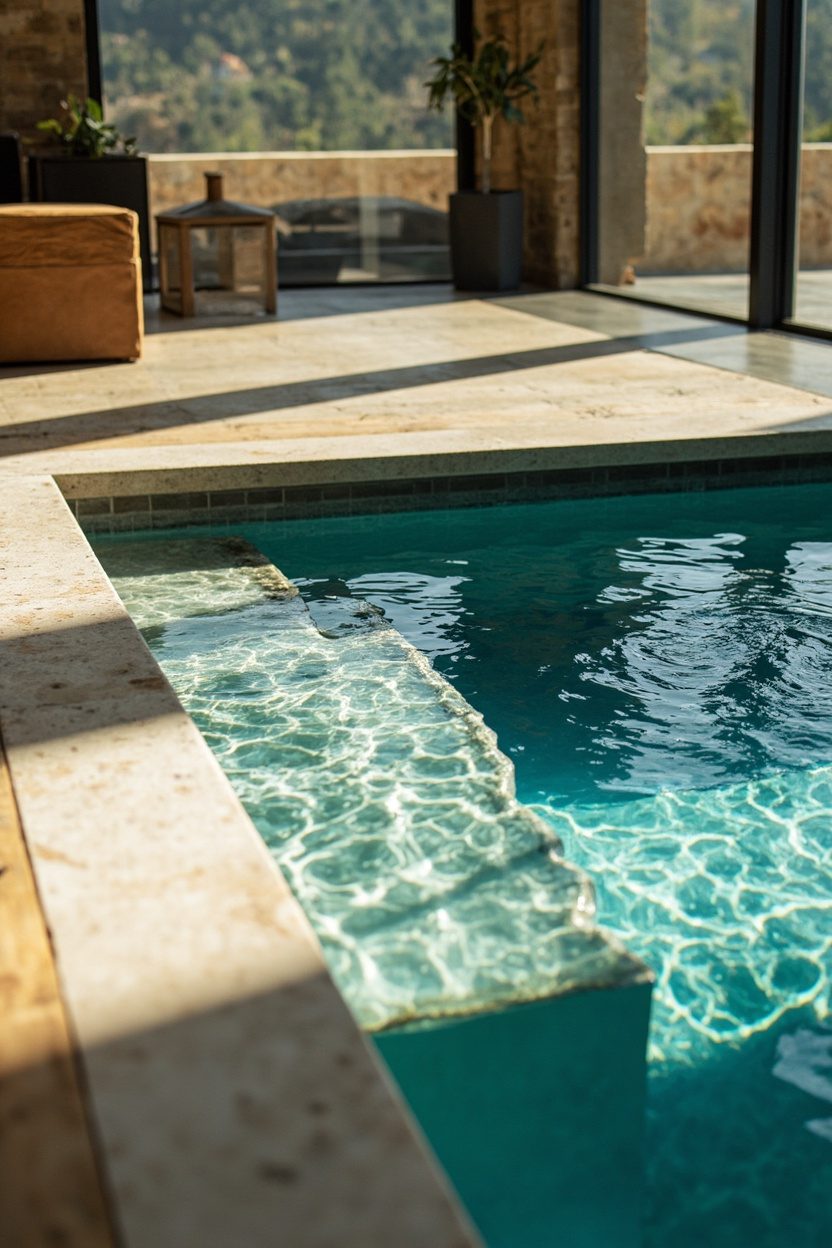
Opt for a cartridge or variable-speed pump paired with a sand or diatomaceous earth filter to minimize weekly chores. Size the pump so turnover occurs within 6 to 8 hours; this balances energy use and cleanliness.
Position the equipment within 3, 5m of the pool to reduce plumbing runs, and include a clear-flow sight glass on the filter to make maintenance checks quick and accurate.
26. Water Features for Soothing Sound
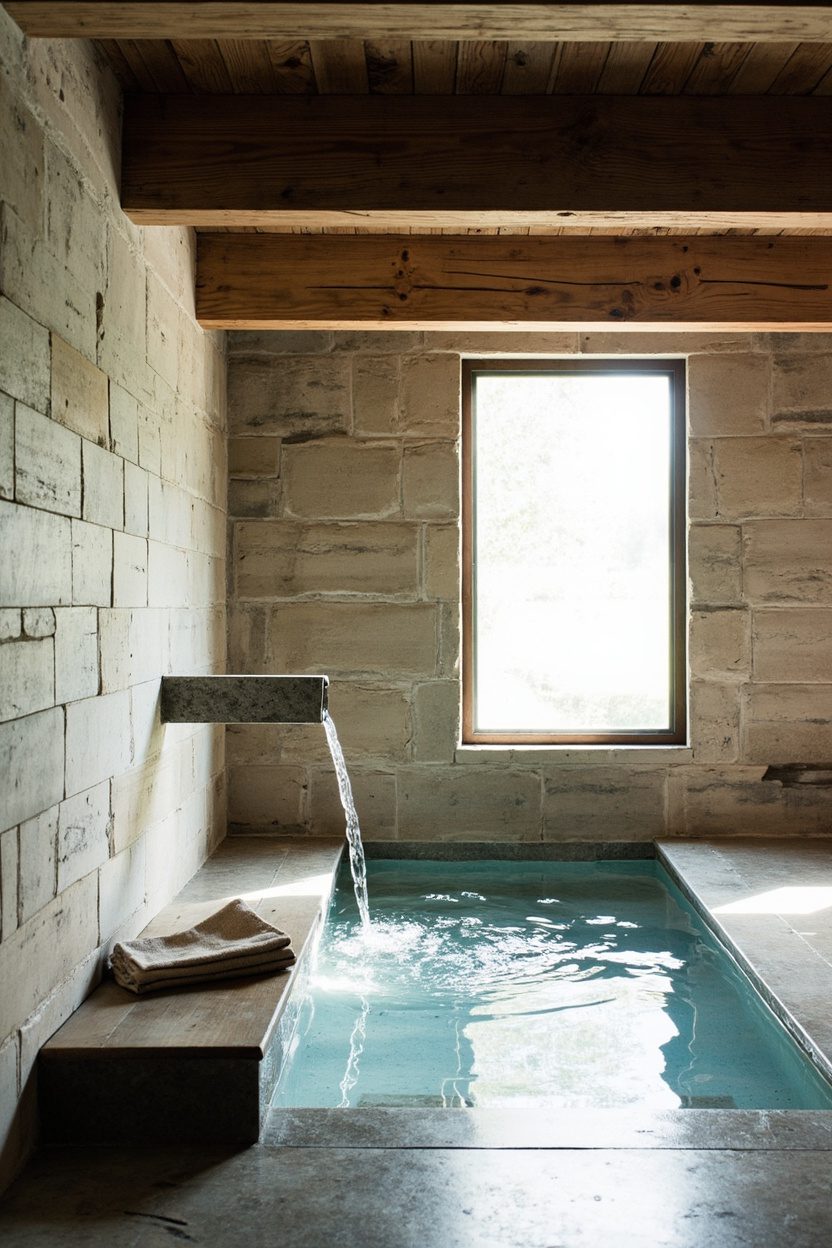
Add a slim stainless steel water blade along one side, set it 30- 45cm above water level to produce a gentle curtain sound that does not overpower conversation, use a dedicated 0.5, 1hp pump for consistent flow.
Cement the blade into the coping with a 20- or 30mm neoprene gasket to prevent leaks, and place it opposite seating so the sound reads as background ambience.
27. Sizing and Placement Guidelines
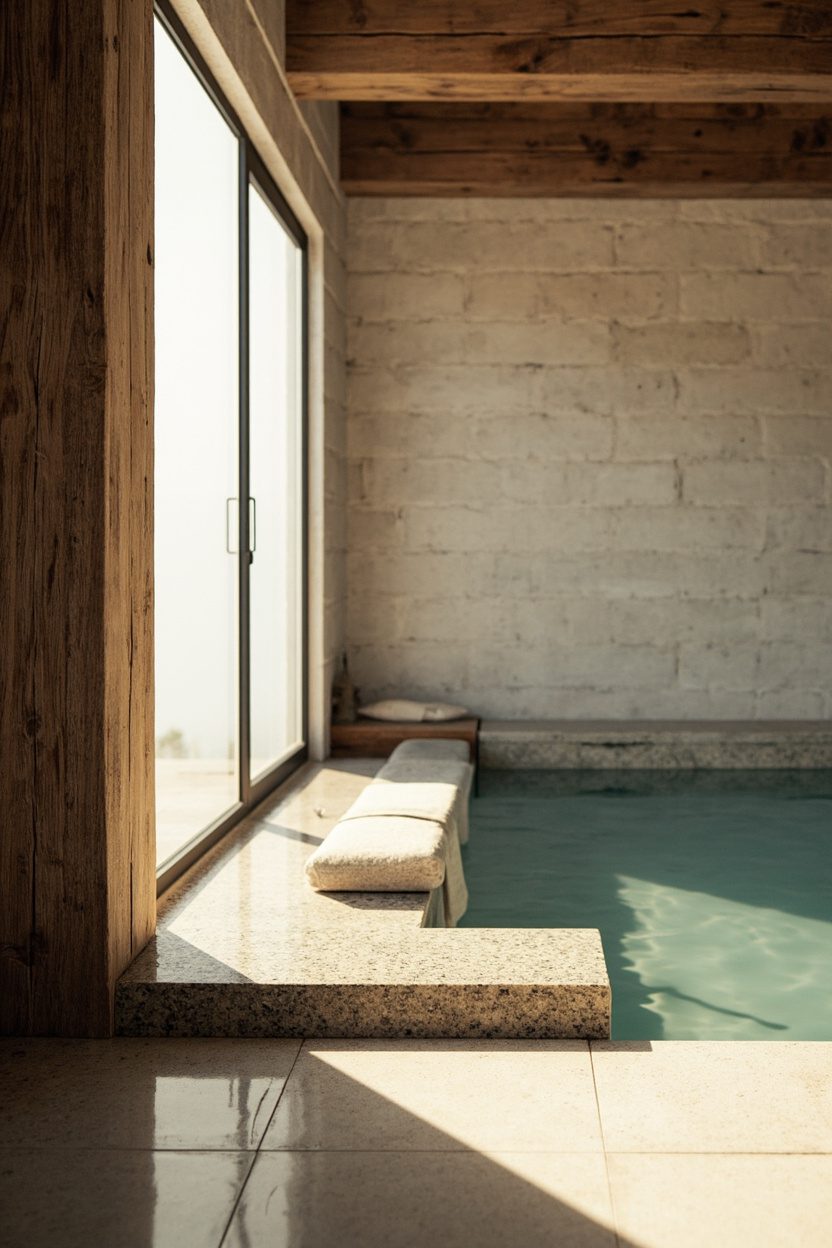
For most farmhouse yards, plan for a plunge between 2.5 and 4m in width, and 4 and 6m in length, allowing at least 1m clearance to structures and 1.2m paths for service access. Position the pool with a long axis facing south or southeast, where possible, to maximize sun exposure, and avoid placing it under large deciduous trees to cut leaf cleanup and root issues.
You can pair this with ideas from 15 Modern Farmhouse Exterior Ideas That Have Real Curb Appeal.
FAQ
A depth of 1.1, 1.4m suits relaxing dips and light laps; it is shallow enough for safe family use and deep enough for a satisfying swim.
Choose durable materials like sealed reclaimed timber, pebble finishes, and native plantings; these reduce repainting and pruning while keeping the farmhouse character.
Yes, install a removable cover and low-maintenance filtration, winterize by lowering water below skimmers and using antifreeze in lines when temperatures drop.
Not if you specify a variable-speed pump, LED lighting, and a compact heater or heat pump sized to the pool volume; those measures cut operational costs significantly.
Final Thoughts
Balance rustic materials with smart systems for a farmhouse plunge that feels timeless and effortless. Focus on scale, durable finishes, and thoughtful placement to create a relaxing retreat that requires minimal fuss. For ideas on pared-back lighting and complementary planting schemes, see Minimalist Bathroom Lighting.