


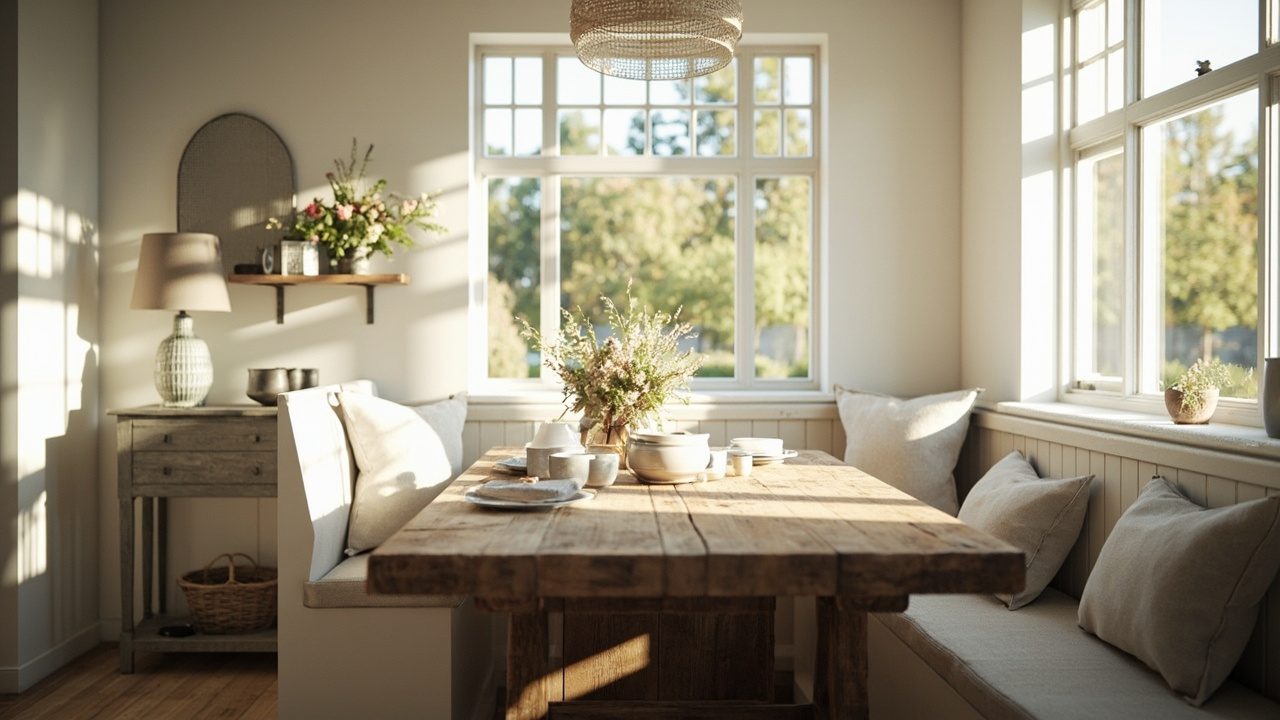
Create a nook that actually invites you to linger, with practical choices that marry comfort and farmhouse character.
These three starters focus on durable materials, correct proportions, and simple styling moves that transform an awkward corner into a daily ritual spot.
- 1. Farmhouse Breakfast Nook Bench Seating Ideas
- 2. Shiplap Accent Wall for Breakfast Nooks
- 3. Reclaimed Wood Table Styles for Nooks
- 4. Cozy Textiles for Farmhouse Nooks
- 5. Mixing Modern Lighting with Rustic Fixtures
- 6. Farmhouse Window Treatments and Shades
- 7. Painterly Neutral Color Schemes
- 8. Built-in Storage Solutions for Nooks
- 9. Vintage Metal Chairs with Rustic Tables
- 10. Open Shelving Displays Above Nooks
- 11. Layered Rug Choices for Breakfast Areas
- 12. Farmhouse Tabletop Styling Essentials
- 13. Small Space Breakfast Nook Layouts
- FAQ
- Final Thoughts
1. Farmhouse Breakfast Nook Bench Seating Ideas
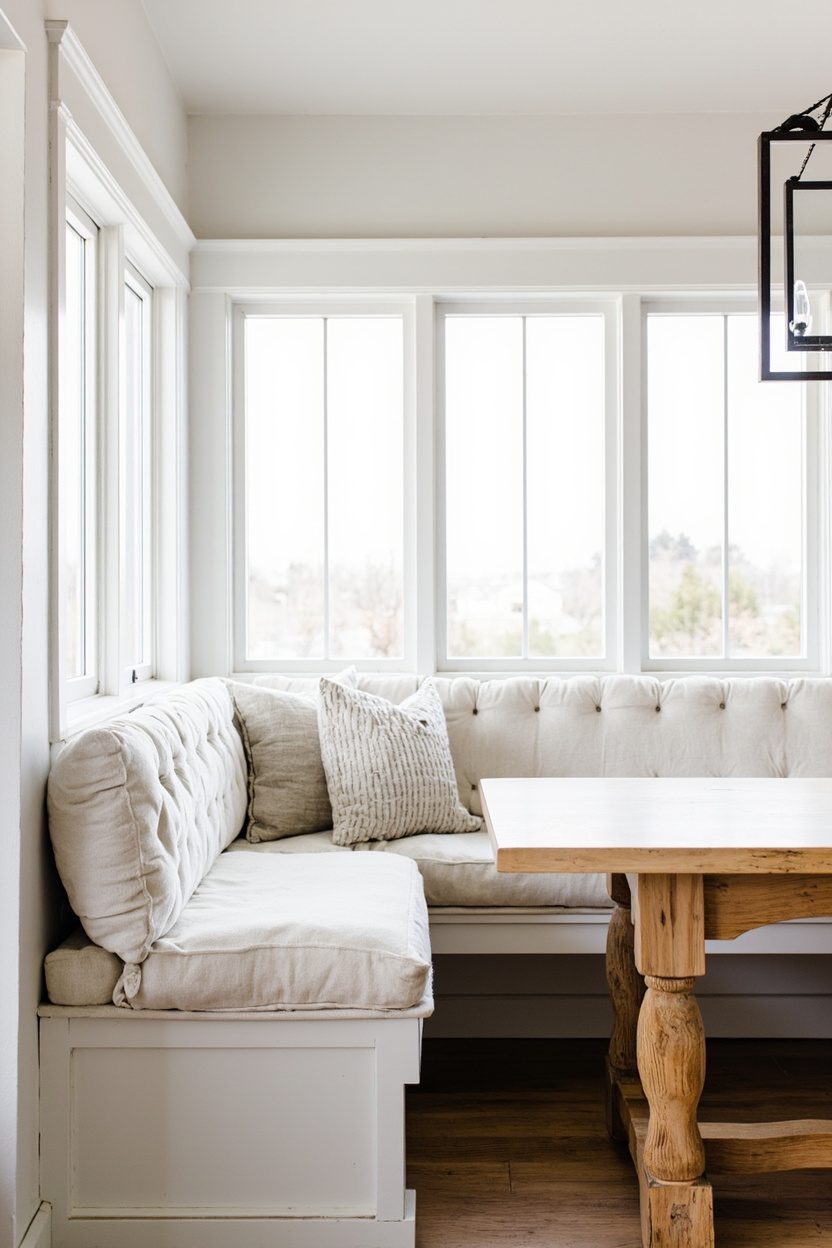
Built-in bench seating is the signature farmhouse move; it saves floor space and creates a cohesive look when run to corner lengths of 84 to 96 inches for a family of four.
Use kiln-dried pine or painted plywood for the carcass, and seat cushions in outdoor-grade fabric if the nook gets heavy sun, which avoids fading and stains while staying budget-friendly.
Layer storage beneath the bench with full-extension drawers or lift-up lids, place 2 to 3 lumbar pillows per bench side for proportion, and leave a 12 to 16 inch clearance between the bench seat and table edge so chairs can slide in opposite sides without crowding.
2. Shiplap Accent Wall for Breakfast Nooks
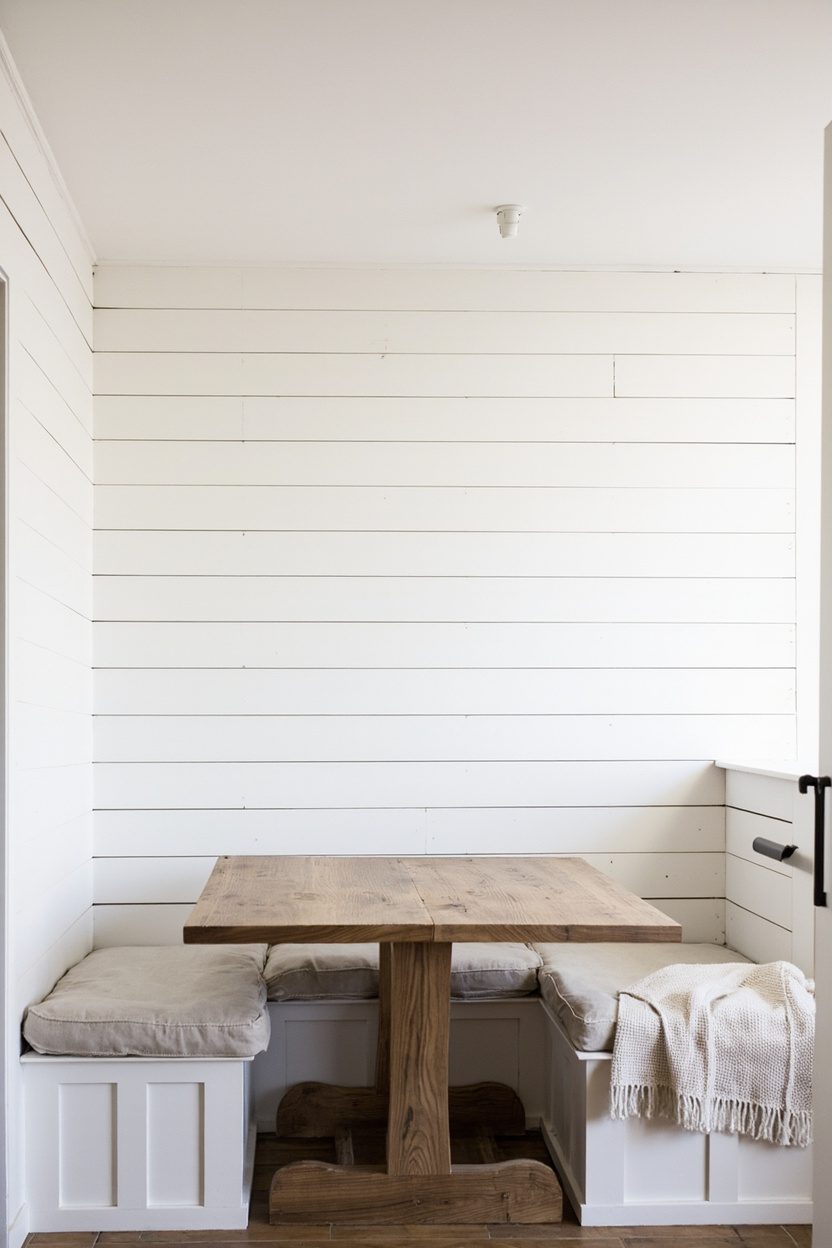
Shiplap instantly signals farmhouse charm. Install horizontal 5.5-inch boards in a tongue-and-groove profile and paint them in a warm white or soft cream to bounce morning light.
Run the shiplap from tabletop height up to the ceiling to anchor the nook visually, and avoid full-wall ceiling-to-floor shiplap in small nooks, which can feel overpowering.
For a modern twist, paint the top third in a subtle contrasting hue, or stagger board widths to add texture, and finish with a satin trim coat so the surface is easy to wipe after breakfast spills.
3. Reclaimed Wood Table Styles for Nooks

A reclaimed wood table brings patina and tactile warmth. Choose a top of 1 to 1.5 inch thickness with a protective oil finish to resist rings, and pair it with tapered farmhouse legs or a sturdy trestle base to match rustic proportions.
For tight nooks, opt for a round table 36 to 42 inches across to improve traffic flow, or a rectangular 30 by 48-inch table for narrow alcoves.
When sourcing reclaimed pieces, verify the wood species and inspect for structural repairs, then sand only the top two passes to preserve character while removing splinters, and set a 1-inch bumper under centerpieces to prevent direct heat contact with the finish.
4. Cozy Textiles for Farmhouse Nooks

Layer textiles to make a farmhouse nook feel lived-in. Start with a sturdy linen bench cushion in a neutral tone, then add two throw pillows in mixed scales, one ticking stripe and one small floral, each about 18 to 20 inches, to keep proportions balanced.
Choose washable fabrics for high-use breakfasts, and place a woven wool rug under the table that extends at least 18 inches beyond the chairs to prevent uneven wear.
Introduce a textured throw in a soft cotton or chunky knit, folded over the bench back, to add depth without crowding the seating.
Avoid overly bright colors; instead, use muted blues, warm creams, or faded sage for an authentic, modern farmhouse palette.
5. Mixing Modern Lighting with Rustic Fixtures
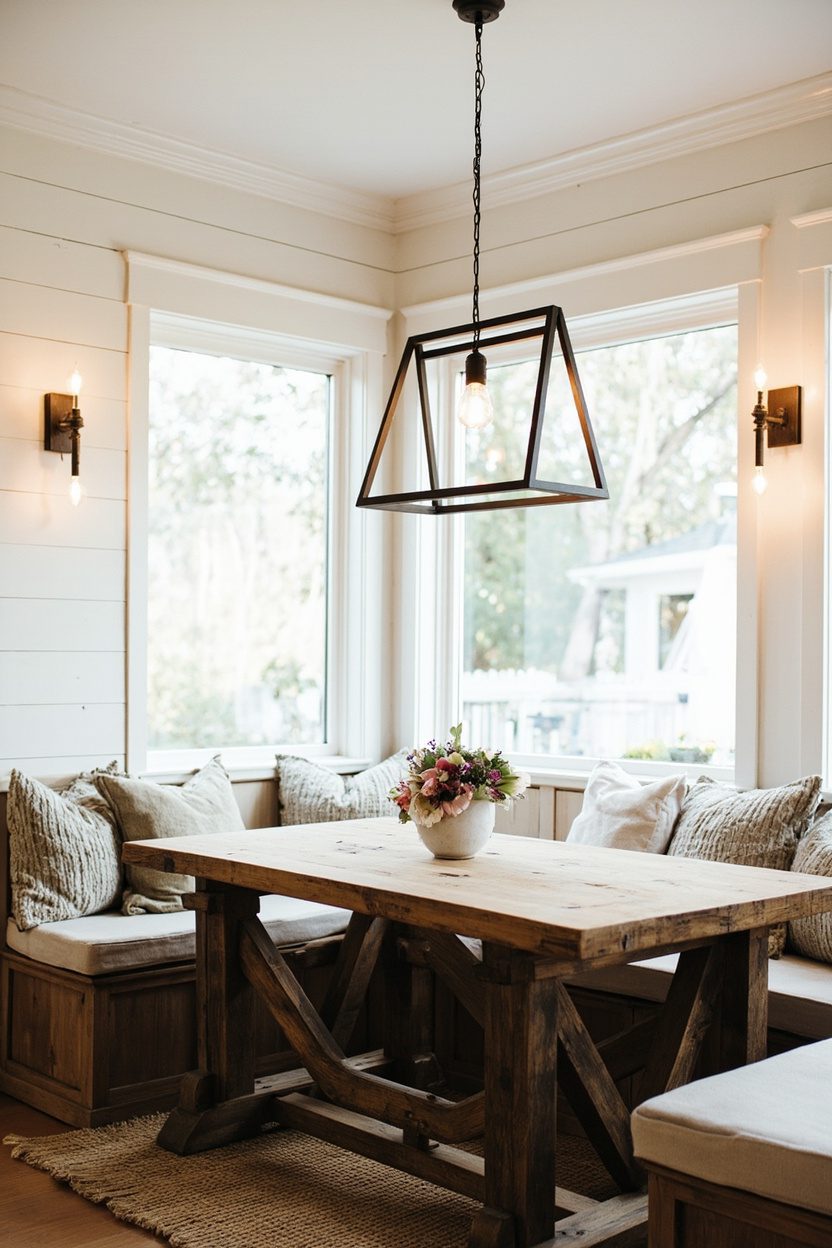
Anchor the nook with a single statement pendant in aged brass or black iron, about 12 to 18 inches above the tabletop for two-person nooks, or 28 to 32 inches for larger tables, to achieve the right glare-free light.
Balance that rustic fixture with modern bulbs, choose warm 2200K to 2700K LED filament bulbs for vintage character with energy efficiency.
If you want layered light, add recessed dimmable LEDs hidden in the ceiling for ambient control, and mount a small adjustable wall sconce near the bench for reading, placing it about 48 inches from the seat for practical reach.
Pairing contemporary finishes with farmhouse silhouettes keeps the look fresh, as seen in current trend roundups like The New Rustic coverage from Hello Lovely.
6. Farmhouse Window Treatments and Shades
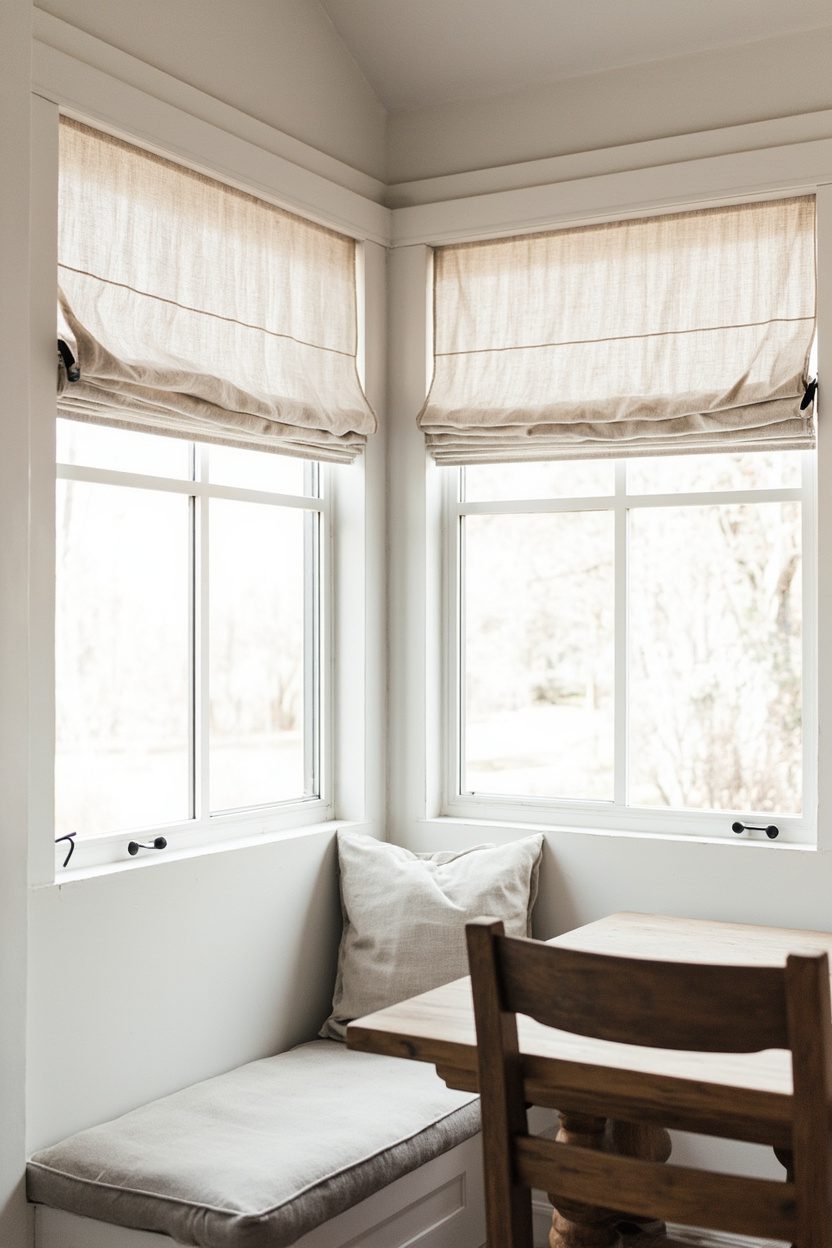
Opt for simple cotton or linen panels hung high and wide, mount the rod 4 to 6 inches above the window, and extend it past the frame.
This makes small nook windows read larger and lets light wash the seating area. For privacy without losing softness, combine café-style curtains on the lower half with a lightweight roman shade above, using neutral tones that coordinate with cushion textiles.
Choose natural woven shades if you want texture, place them inside the frame for a tailored look, or outside the frame for a relaxed cottage feel; aim for a shade slat width under one inch to avoid a heavy visual.
For inspiration on floor plan placement and how light affects small spaces, review compact layouts in Small Home Floor Plans.
7. Painterly Neutral Color Schemes
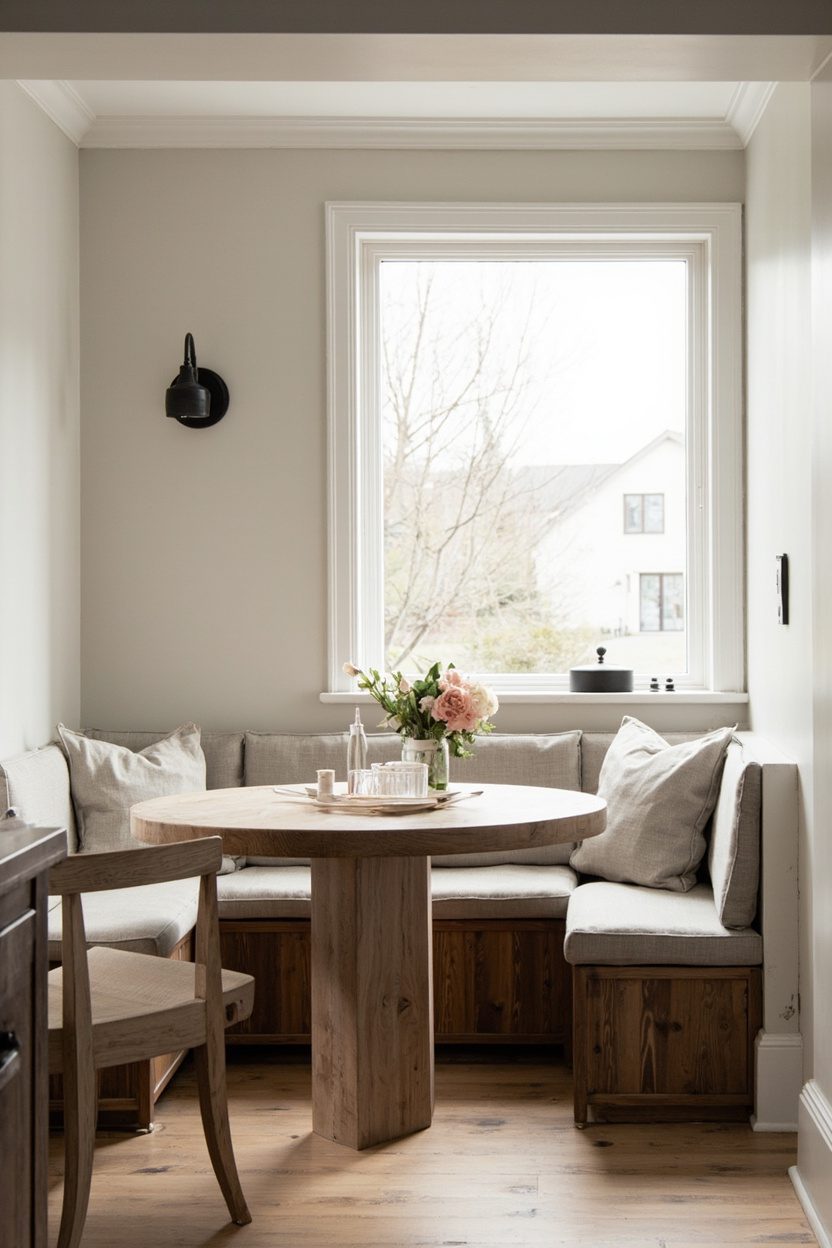
Start with a warm, painterly neutral palette, think soft clay, oatmeal, and museum-white, applied in broad, brushy strokes on an accent wall to mimic vintage plaster.
Use a 70/20/10 rule for balance, 70 percent wall and upholstery tones, 20 percent wood or metal furniture, 10 percent darker accents like charcoal trim to ground the nook.
Layer texture rather than pattern, pair a linen banquette with a reclaimed pine table, and add a single low-contrast print for visual interest; avoid exact matches, instead vary warm neutrals by one or two tonal steps to prevent a flat look.
For sourcing, choose washable performance linen for cushions; it handles morning spills and keeps the soft, painterly aesthetic intact.
8. Built-in Storage Solutions for Nooks
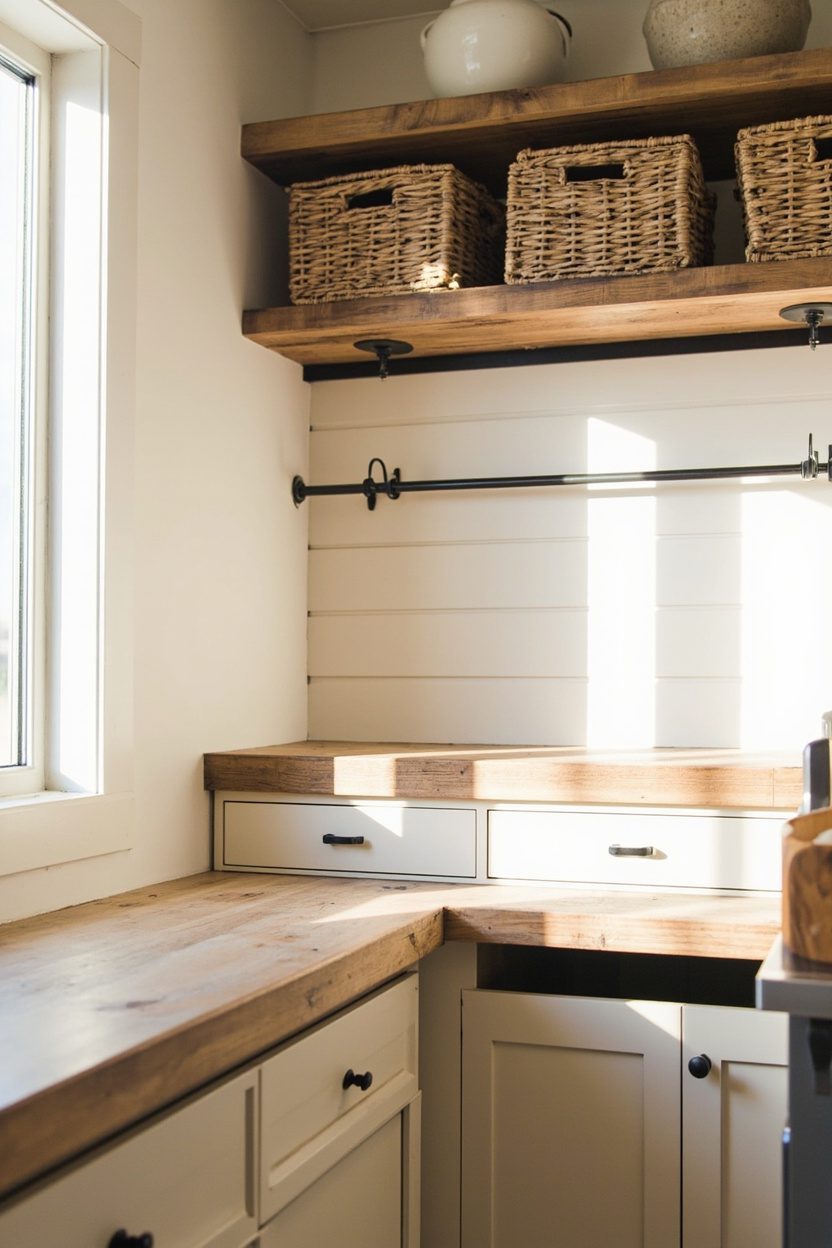
Design a 36–42 inch deep bench with lift-up lids and a partitioned interior, so you can store placemats and seasonal cushions separately. This keeps the seating tidy and practical for daily use.
Integrate 3–4 shallow drawers under the bench front for silverware and napkins, use full-extension soft-close slides to maximize access without sacrificing comfort.
Frame the nook with fluted cabinetry or open cubbies at eye level to display pottery, stagger shelf depths to accommodate both plates and stacked cookbooks, and finish with beadboard backing to reinforce that farmhouse character while hiding fastener edges.
9. Vintage Metal Chairs with Rustic Tables
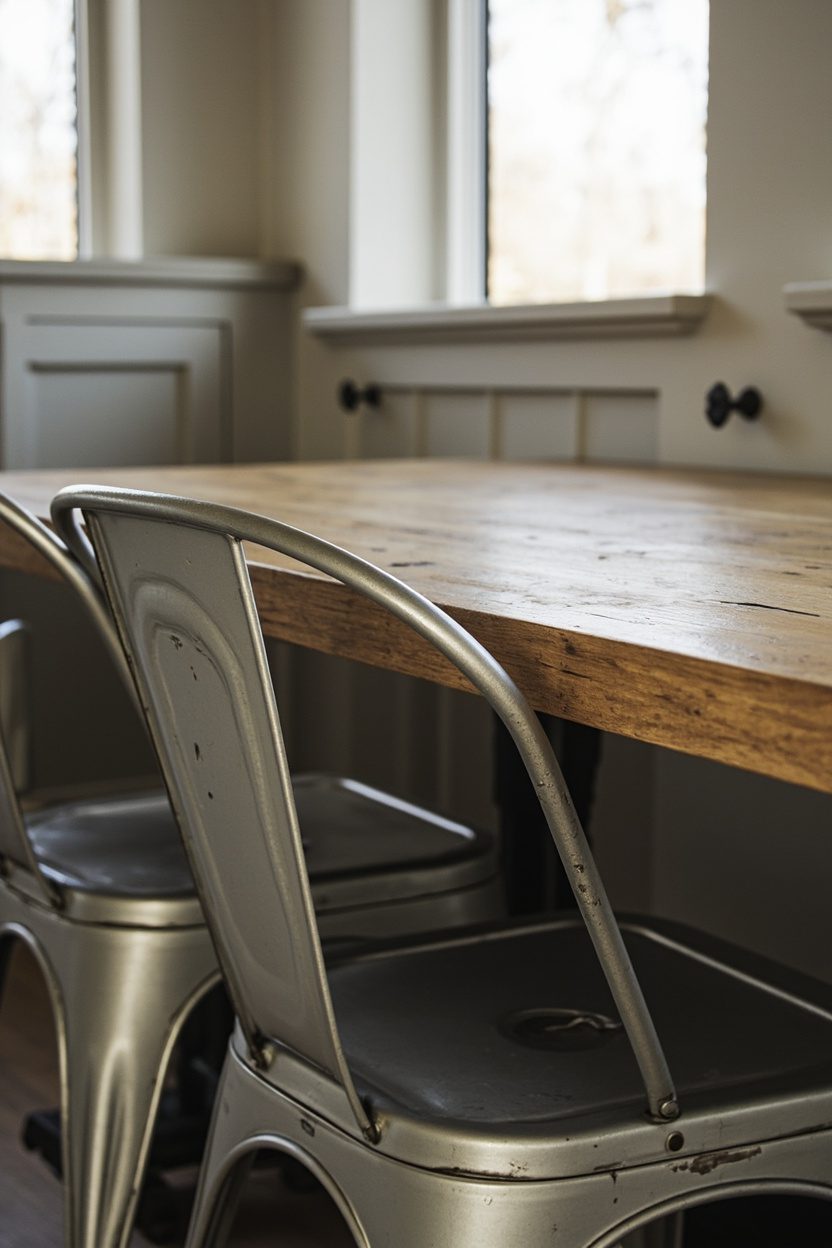
Pair salvaged Tolix-style metal chairs in worn enamel with a solid reclaimed-wood farmhouse table, keep chair seats at 12–14 inches above the table apron for comfortable knee clearance, and anchor the grouping with a woven jute rug sized to allow chairs to pull out. Leave metal finishes untreated if you want patina, or opt for a thin clear coat to preserve chatter marks while preventing rust from kitchen humidity.
Balance the industrial edge by softening the table setting, using linen napkins, a ceramic pitcher for flowers, and a simple runner no wider than one-third of the table to maintain the rustic charm without clutter.
For inspiration that blends modern and weathered pieces, see ideas on farmhouse styling that update classics with contemporary lines. They show how to mix scale and finish successfully.
10. Open Shelving Displays Above Nooks

Open shelving above a breakfast nook creates vertical interest and keeps everyday ware within easy reach. Place shelves 12 to 18 inches above the seatback to avoid head bumps.
Use mixed materials, pair a reclaimed wood shelf with iron brackets for contrast, and limit each shelf to three types of objects to prevent visual clutter.
Style for function, arrange frequently used mugs on lower hooks, stack plates sideways for stability, and reserve the top shelf for less-used baskets or seasonal decor; a common mistake is overfilling shelves, which makes a cozy nook feel chaotic rather than curated.
11. Layered Rug Choices for Breakfast Areas

Layering rugs in a breakfast nook defines the zone and protects the flooring. Start with a durable natural fiber base rug like sisal and add a softer, patterned wool layer on top. Keep the top rug at least 6 inches smaller on all sides so the base still frames the space.
Choose pile and material based on traffic, use low-pile weaves under chairs to avoid chair legs catching, and opt for washable flatweave options if kids are regulars.
Keep proportions tight, center rugs so the table and front two chair legs sit on the layered rugs, and avoid oversized rugs that swallow the nook; this proportion trick keeps the area visually rooted without feeling like a rug under an entire room.
For farmhouse looks, select muted plaids or faded kilim patterns to echo vintage charm, combined with neutral tones from Farmhouse Decor for cohesion.
12. Farmhouse Tabletop Styling Essentials

Farmhouse tabletop styling relies on approachable, tactile pieces. Start with a linen runner sized to leave 6 inches of tabletop visible on each end, layer in a wooden board for height, and use a mix of earthenware and white pottery for contrast.
Keep centerpieces low, a shallow enamel tray with a small vase, salt cellar, and a compact candle cluster preserves sightlines for conversation and passing dishes.
Pay attention to scale and repetition, place items in odd-numbered groups, and vary heights by at least 3 inches to create rhythm.
Avoid tall, single centerpieces that block views and disrupt conversation. For seasonal swaps and pairing ideas, reference farmhouse floral approaches in Farmhouse Easter Floral to keep styling fresh without starting from scratch.
13. Small Space Breakfast Nook Layouts
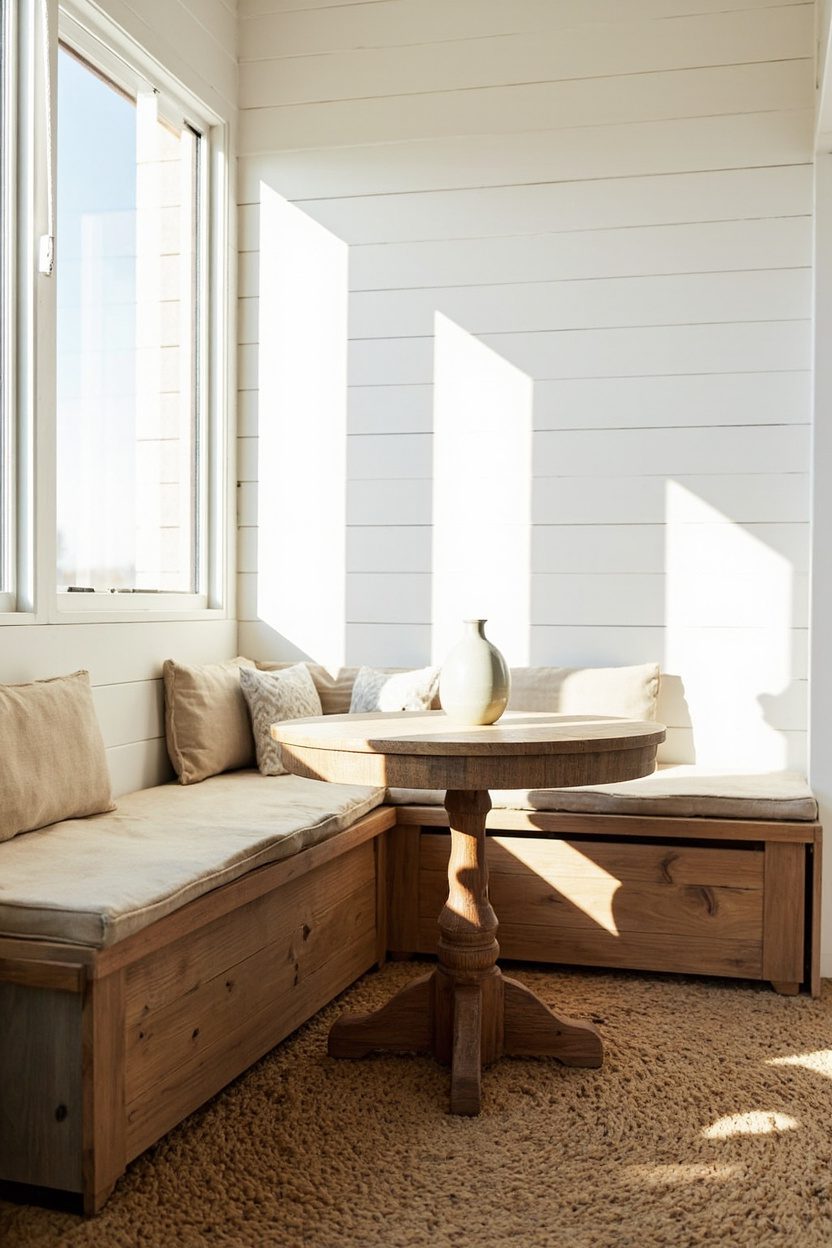
A banquette pushed into an alcove is the most reliable small-space move, fit to the wall so circulation stays clear. Specify a 16–18 inch seat depth for comfort, and build in storage under the bench using shallow drawers, which keeps bulky items out of sight without increasing footprint.
Choose a round or oval table no more than 36 inches across to preserve walking room, and anchor it with a pendant light 28–32 inches above the tabletop to create a focused, cozy zone.
For materials, pick a painted wood bench in a light tone and pair it with a woven jute rug, which hides traffic wear and keeps the farmhouse feel intact.
For additional context, see Beautiful Breakfast Nooks and Kitchen.
11 Farmhouse Hallway Decor Ideas That Use Every Inch of a Narrow Space gives the topic a complementary decor approach.
FAQ
Soft whites, warm greiges, or muted sage lend that farmhouse calm, and they reflect morning light well. Use eggshell or satin finishes for wipeability near dining surfaces.
Use a built-in banquette with under-seat storage and mix in 1 or 2 armless chairs you can tuck fully under the table; that way, you gain seating without losing circulation.
Yes, but limit the pattern to one element, like cushions or a table runner, while keeping surrounding finishes simple to avoid visual clutter.
Pendants scale better in tight spaces, they provide direct task light, and they sit lower without overwhelming the room, which is essential in compact farmhouse nooks.
Final Thoughts
Designing a small farmhouse breakfast nook is about smart proportion and layered texture, selecting practical materials, and exact seat dimensions to make mornings effortless.
For layout inspiration, see Farmhouse Floor Plans, and if you want to read plans in detail, consult Read Architectural Floor Plans, and for trend context, the New Rustic movement offers useful direction.