


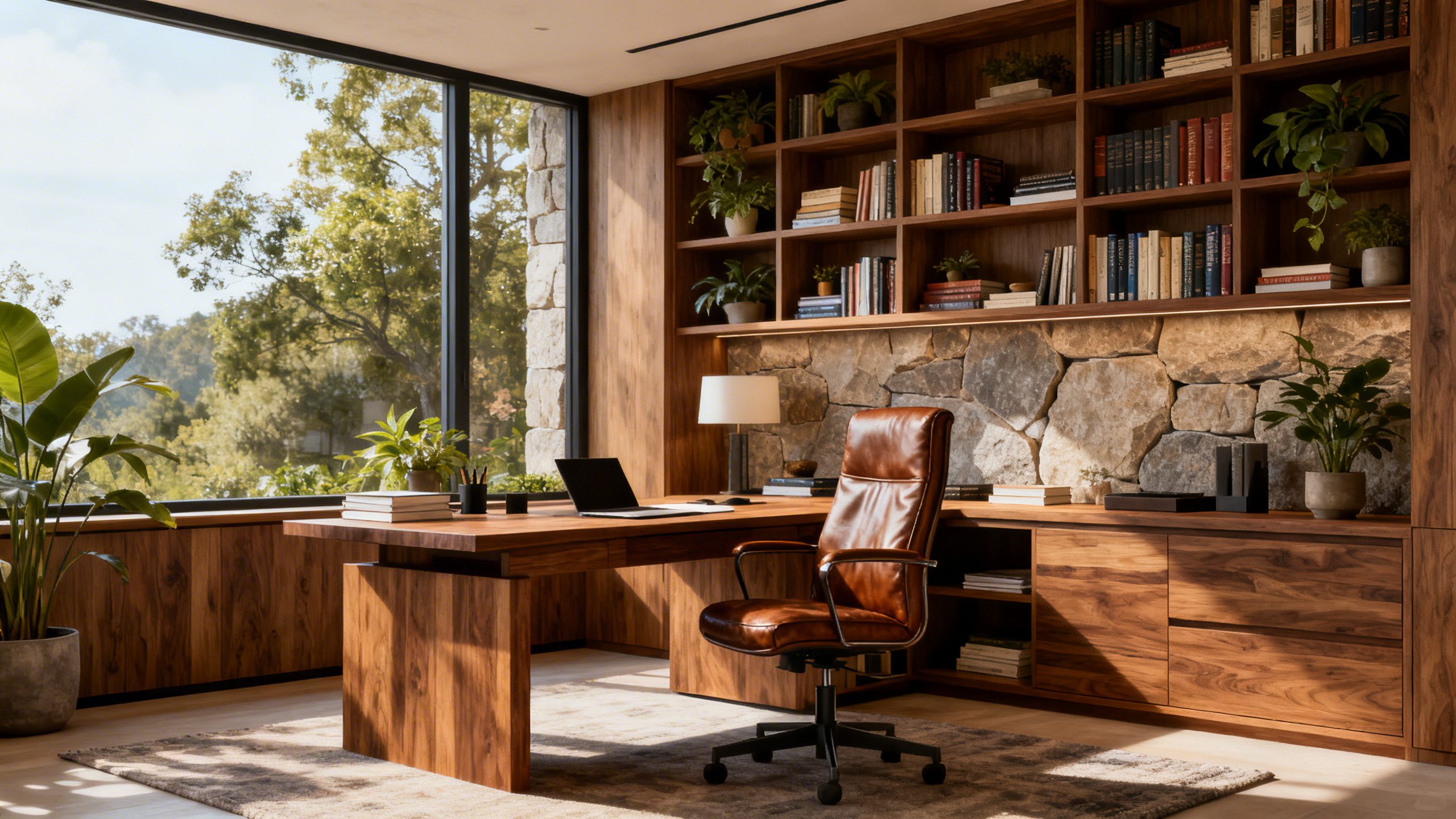
Smart home office design ideas turn any corner into a productive, good-looking workspace, whether you are squeezing a desk into a cupboard or planning a full spare-room setup.
The key is right-sizing furniture, controlling visual clutter, and dialing in lighting that works as long as you do.
Think in layers, not just a desk and chair. Integrate vertical storage, add biophilic texture for wellness, and use a restrained palette that photographs clean on video calls while feeling calm in person, insights echoed by industry trend reporting and lived-in projects on Home Design.
Editor’s Pick: Biophilic Touches With Real Plants — I love this because it instantly softens hard lines, boosts focus, and costs little, yet the difference in light quality and mood is huge in real homes.
- 1. Compact Desk Nooks With Storage
- 2. Built-In Shelving Wall Systems
- 3. Biophilic Touches With Real Plants
- 4. Dual-Monitor, Cable-Free Setups
- 5. Warm Wood Desks And Panels
- 6. Acoustic Panels And Soft Textiles
- 7. Statement Task Lighting Layers
- 8. Ergonomic Chairs With Style
- 9. Calm Neutrals With Black Accents
- 10. Zoom-Ready Backdrops And Art
- 11. Convertible Guest Room Offices
- FAQ
1. Compact Desk Nooks With Storage
- Effort Level: Weekend DIY.
- Estimated Budget: 100-500.
- Maintenance Level: Low (requires dusting).
- Best For: Renters / Small Bedrooms.
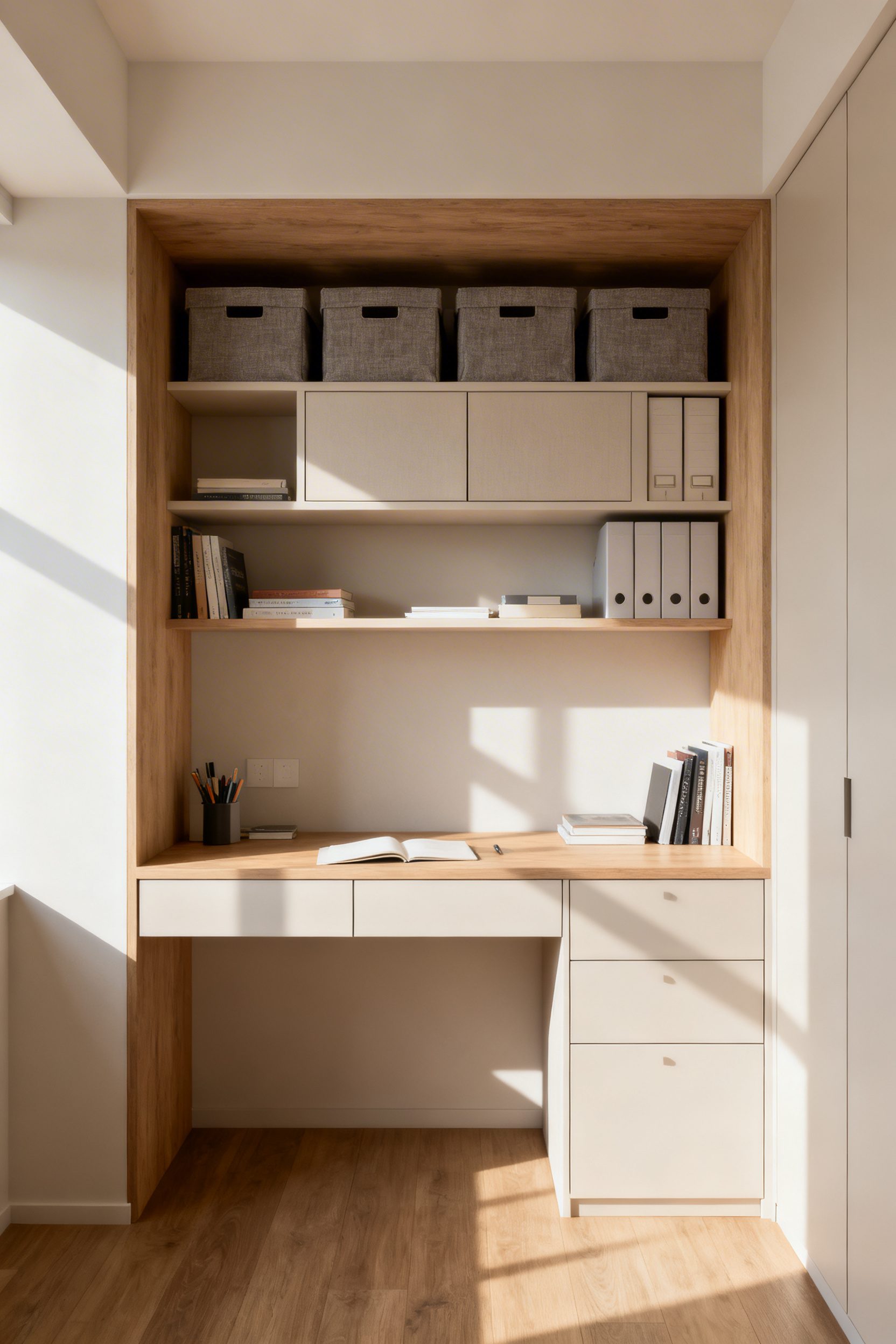
Convert an underused alcove or cupboard with a 20 to 24-inch deep wall-mounted desktop, then flank it with 10 to 12-inch deep shelves to keep knees clear. A pocket or bifold door hides the setup between calls, and a cable grommet keeps the desktop clean.
Choose a compact task chair that tucks fully under, and add an LED strip under the lowest shelf for shadow-free lighting. Stick with two finishes, such as matte white shelving and a warm oak top, to reduce visual noise in tight quarters.
For renter-friendly installs, use cleats and heavy-duty anchors rated for your wall type, and opt for clip-on file bins to avoid drilling into the desk face. If your nook sits near an entry, layer a soft seasonal accent like a subtle Spring Door Hanger nearby to keep the transition charming without adding clutter.
2. Built-In Shelving Wall Systems
- Effort Level: Pro install or advanced DIY.
- Estimated Budget: 500+.
- Maintenance Level: Medium (dusting and hardware checks).
- Best For: Spare Rooms / Hybrid Libraries.
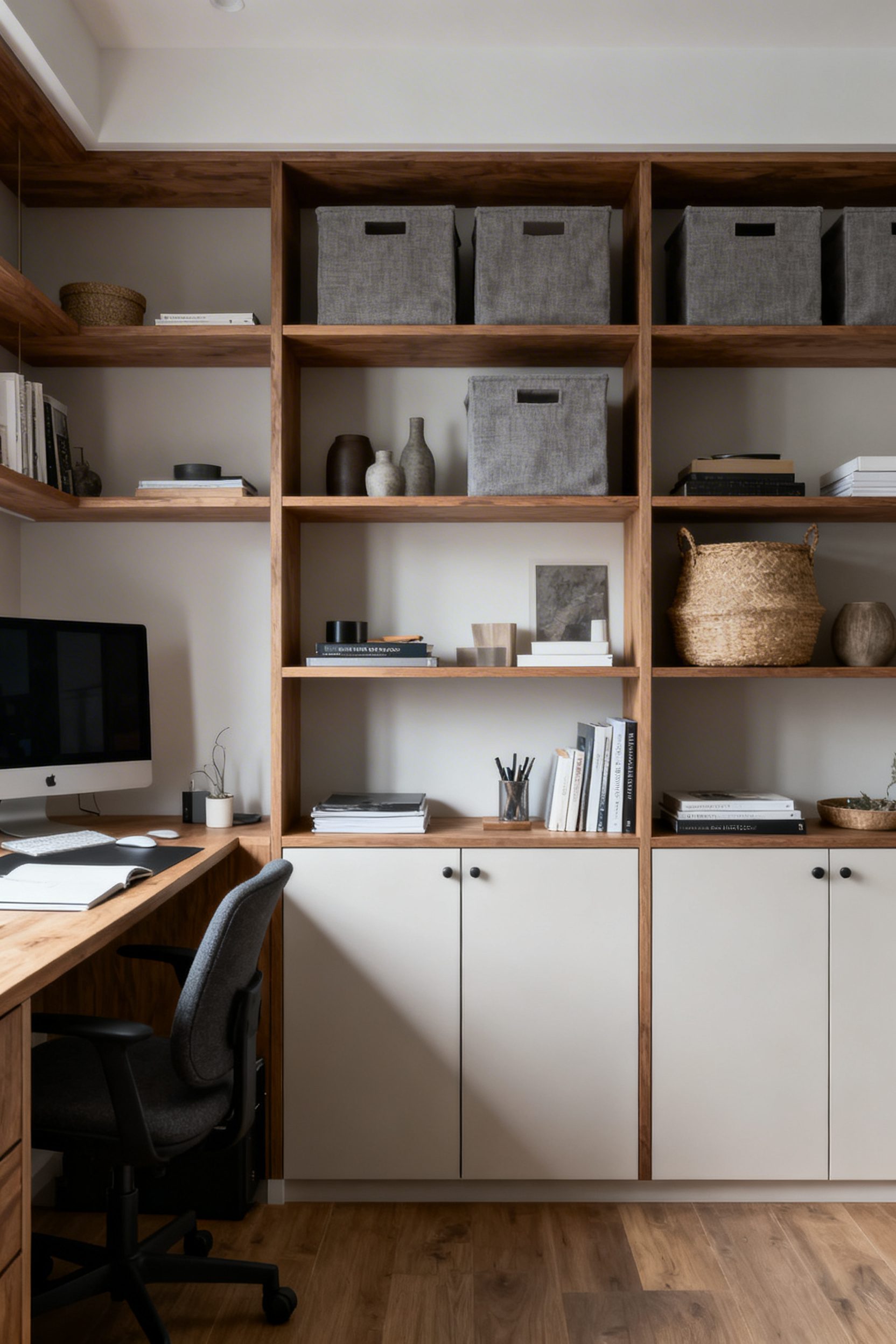
Span a full wall with adjustable uprights, closed bases, and open shelves, then float a 24 to 28 inch deep desktop between base cabinets for concealed printer and paper storage. Align shelf heights to eye level for display, and keep reference books within arm’s reach of the chair swing.
Paint shelves and trim to match the wall color for a seamless, custom look, or contrast the back panel with grasscloth to soften acoustics. Hardwire puck lights into upper units to light the desktop evenly and avoid desk lamp clutter.
Common mistake, oversizing the desktop and undersizing the leg clearance. Leave 30 inches clear width for seating and 36 inches for a comfortable walk path behind, guidance that aligns with practical studio projects and high-functioning studies featured on Houzz’s roundup of home workspaces.
3. Biophilic Touches With Real Plants
- Effort Level: Weekend DIY.
- Estimated Budget: Under 100.
- Maintenance Level: Low to Medium (watering schedule).
- Best For: Any Size / Window Adjacent.
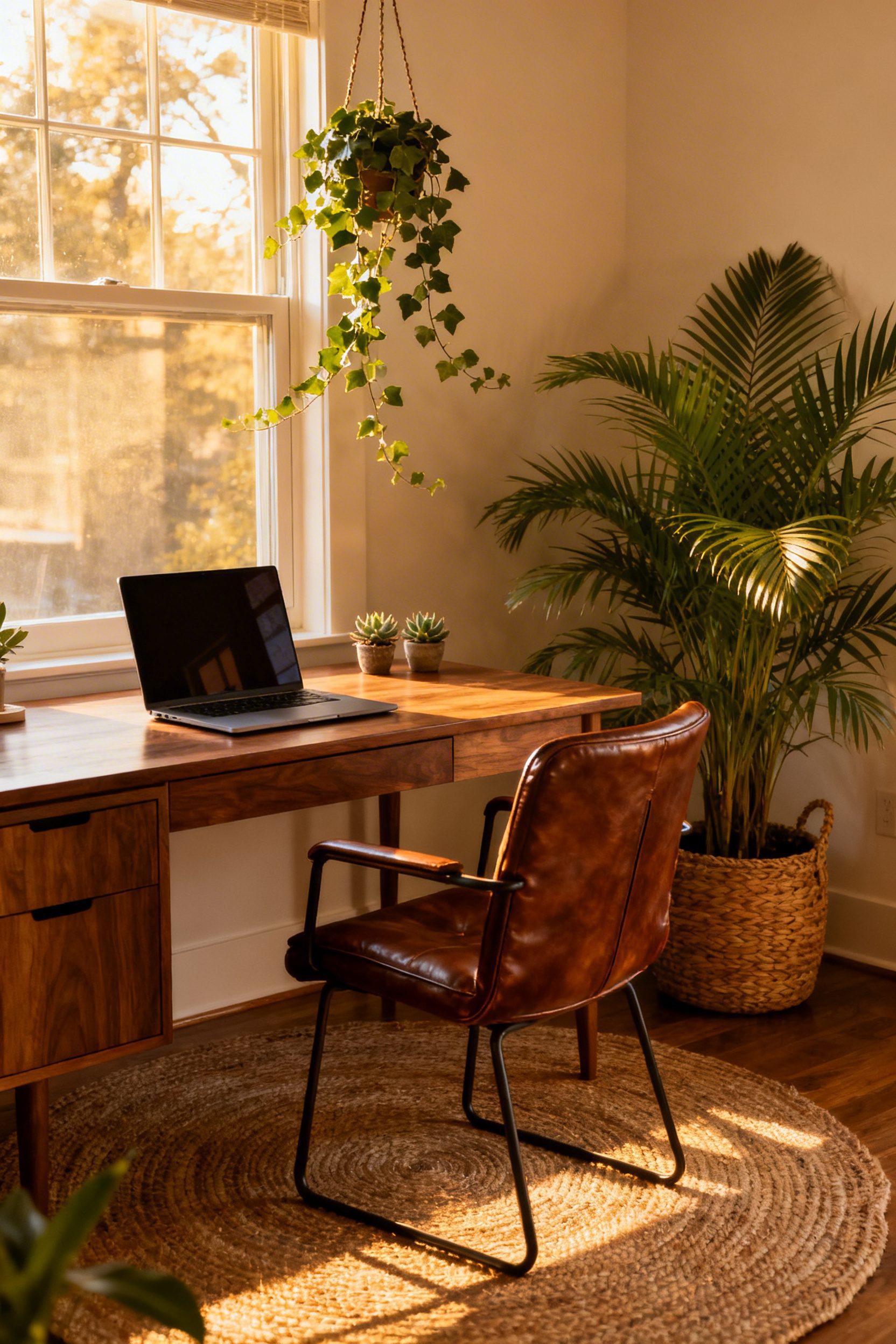
Layer three scales, a floor plant at 4 to 5 feet for vertical punctuation, a desktop plant at 6 to 10 inches for eye line, and a trailing shelf plant to soften edges. Use breathable terracotta or matte ceramic pots with trays to protect surfaces.
Place greenery within 3 to 6 feet of a window for bright indirect light, and choose resilient species like pothos or ZZ for low-light corners. A small pebble tray under plants raises local humidity, which can help with dry air from constant HVAC.
Biophilic design improves perceived well-being and focus in modern work settings, a continuing trend in 2026, according to Office Principles. Echo the palette with a moss green desk mat or natural linen pinboard to pull the look together without visual clutter.
4. Dual-Monitor, Cable-Free Setups
- Effort Level: Weekend DIY.
- Estimated Budget: 100-500.
- Maintenance Level: Low (requires dusting).
- Best For: Renters.
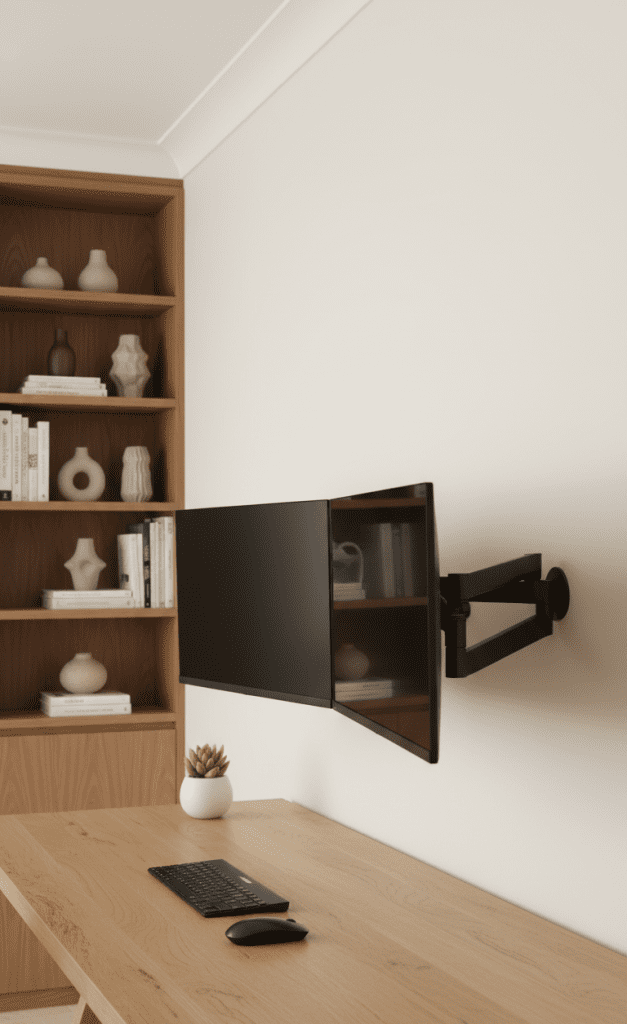
Mount two 27-inch monitors on a single VESA arm, then run power and HDMI through a grommeted desk hole to a surge strip mounted under the surface. Use a USB-C hub clamped to the desk rear, and add adhesive cable raceways down the leg to keep everything visually silent.
Choose a desk with a solid apron or add a 24-inch fabric modesty panel to conceal the hub and brick clutter. Color-match cables to the wall, white on white or black on charcoal, and finish with a wireless keyboard and mouse to truly clear the plane.
Lean into biophilic touches to offset the tech, a small pothos and warm task lamp soften the rig and reduce eye strain, a direction backed by current workspace research from Office Principles.
5. Warm Wood Desks And Panels
- Effort Level: Weekend DIY.
- Estimated Budget: 100-500.
- Maintenance Level: Low (requires dusting).
- Best For: Small Bedrooms.
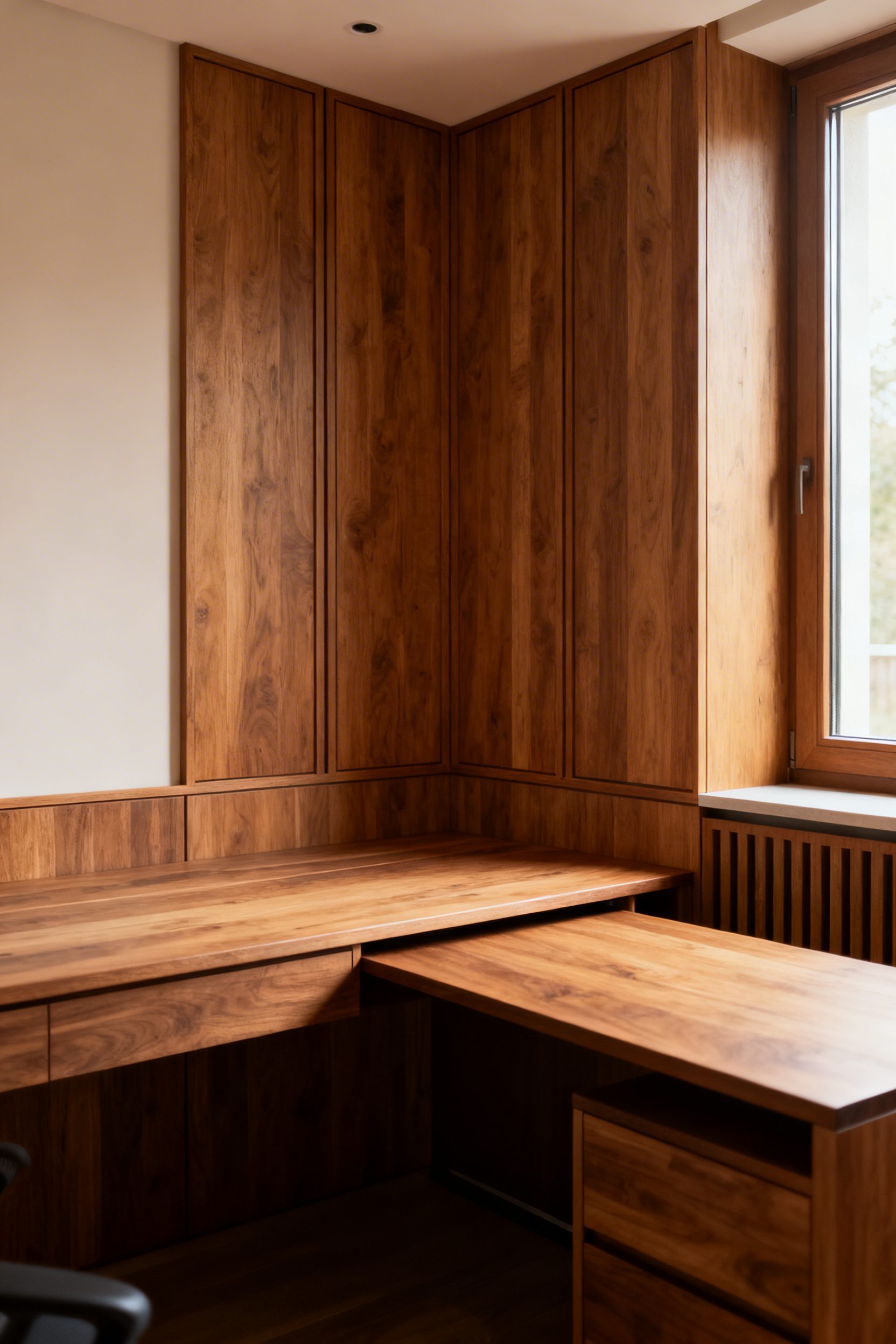
Anchor the workspace with a 60 to 72-inch solid wood top, walnut, white oak, or ash, on slim powder-coated legs for visual lightness. Add a 42-inch high slatted wall panel behind the desk, spaced 3/4 inch apart, to warm the sightline and hide wall scuffs.
When I tried this in my own living room, I underestimated the finish sheen; satin looked rich while gloss read plastic under daylight. I also learned to stop the panel 6 inches short of adjacent trim for a deliberate reveal that looks custom, not crammed.
Style with a linen shade lamp and a leather blotter to introduce soft and matte textures, then keep hardware minimal; a single brass pen cup is enough. For a layered character, pull cues from our rustic kitchens edit in French Farmhouse Kitchen On Budget and echo those woods and tones in the office.
6. Acoustic Panels And Soft Textiles
- Effort Level: Weekend DIY.
- Estimated Budget: 100-500.
- Maintenance Level: Low (requires dusting).
- Best For: Renters.
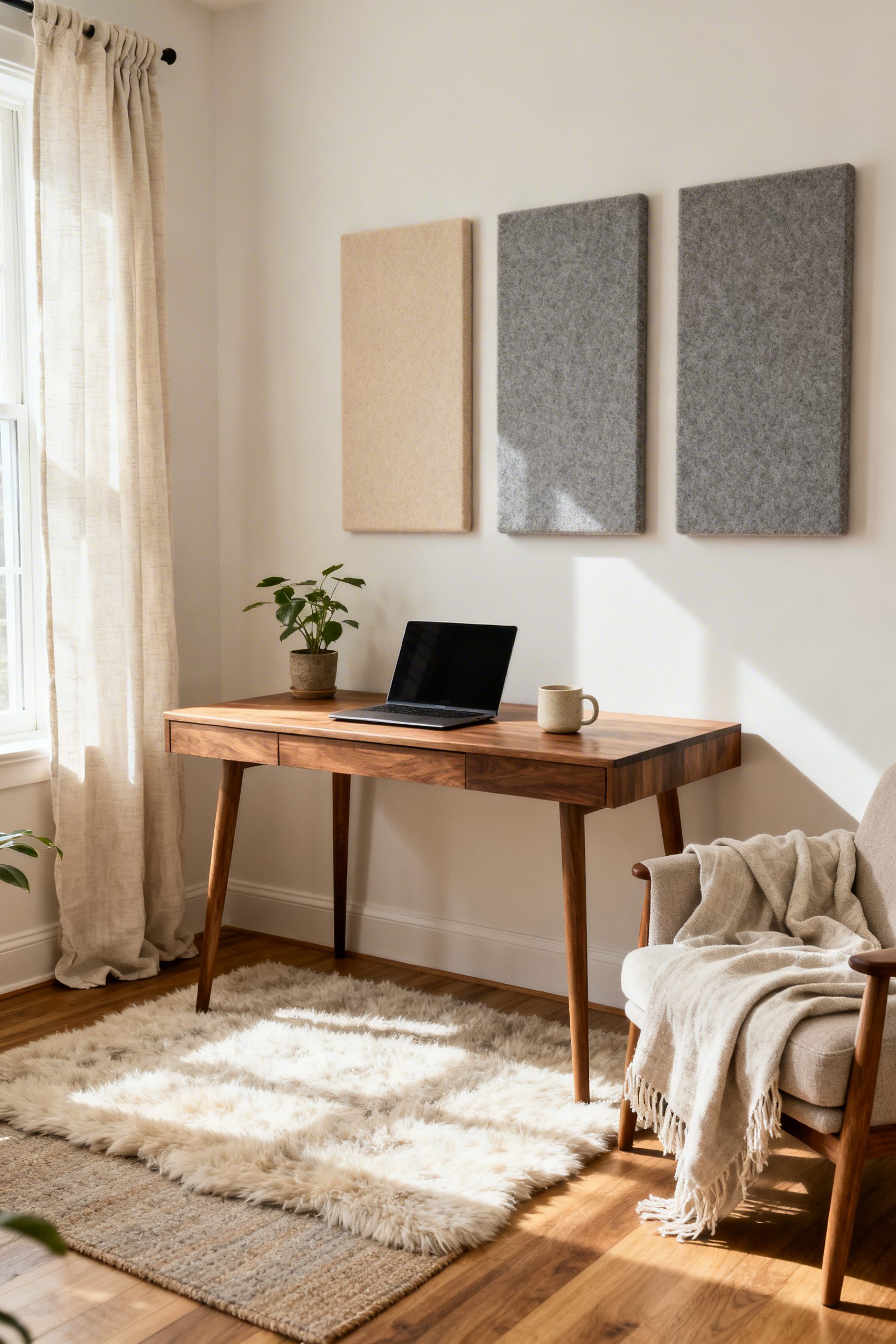
Place four 24 by 48 inch fabric-wrapped acoustic panels at first reflection points, left and right of your chair, plus two behind your screen. Add a dense 8-by-10 wool rug under the desk and a heavy linen curtain to absorb echo in hard-floored rooms.
Choose NRC 0.7 or higher for panels and hang with removable Z-clips so you can swap covers seasonally. Keep colors close to the wall tone, parchment or clay, to make them disappear while doing the work, a tactic echoed in recent case studies on Houzz.
Round out the mix with an upholstered task chair and a felt desk pad to mute keyboard clatter. If your home layout is evolving, tie acoustic placement to planned zones within Home Renovations so treatments move with you.
7. Statement Task Lighting Layers
- Effort Level: Weekend DIY.
- Estimated Budget: 100-500.
- Maintenance Level: Low (requires dusting).
- Best For: Renters.
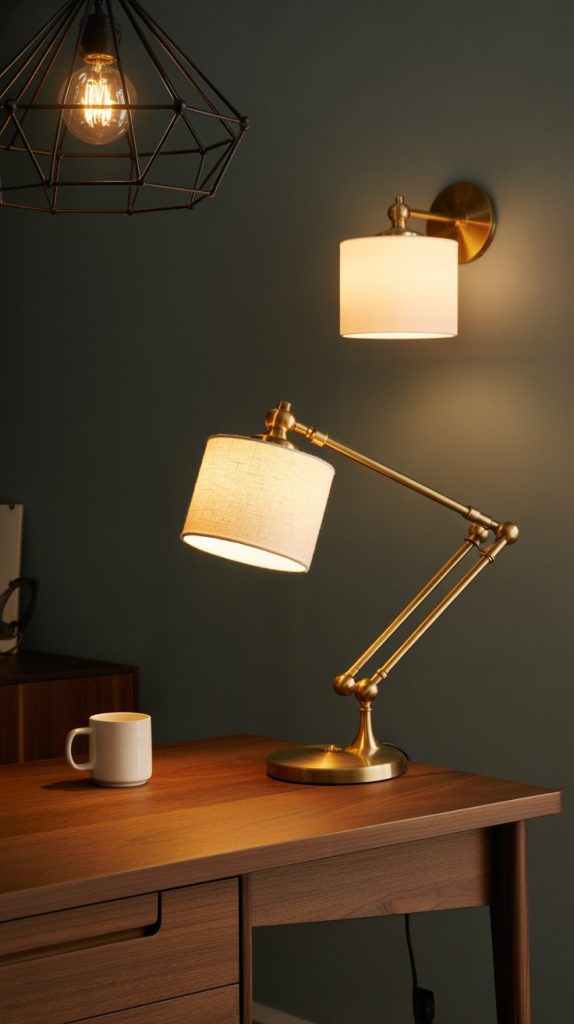
Combine a bold overhead fixture with a focused swing-arm sconce and a low-glare desk lamp to eliminate shadows at the keyboard. Aim for 3000K to 3500K bulbs for warm productivity, and position the task lamp opposite your dominant hand to avoid casting a shadow.
Choose matte opal or fabric shades to diffuse hotspots on screens, and specify a CRI of 90+ for accurate color when reviewing prints. A clip-on puck under shelves gives targeted light without drilling, smart for small nooks or a closet office.
Put everything on separate dimmers, or use a smart plug scene so video calls get an instant, flattering balance.
For fixture finishes, repeat one metal, like black or aged brass, in pulls and frames to tie the scheme back to your broader Home Design choices.
8. Ergonomic Chairs With Style
- Effort Level: Easy setup.
- Estimated Budget: 500+.
- Maintenance Level: Low (wipe clean).
- Best For: Daily use workstations.
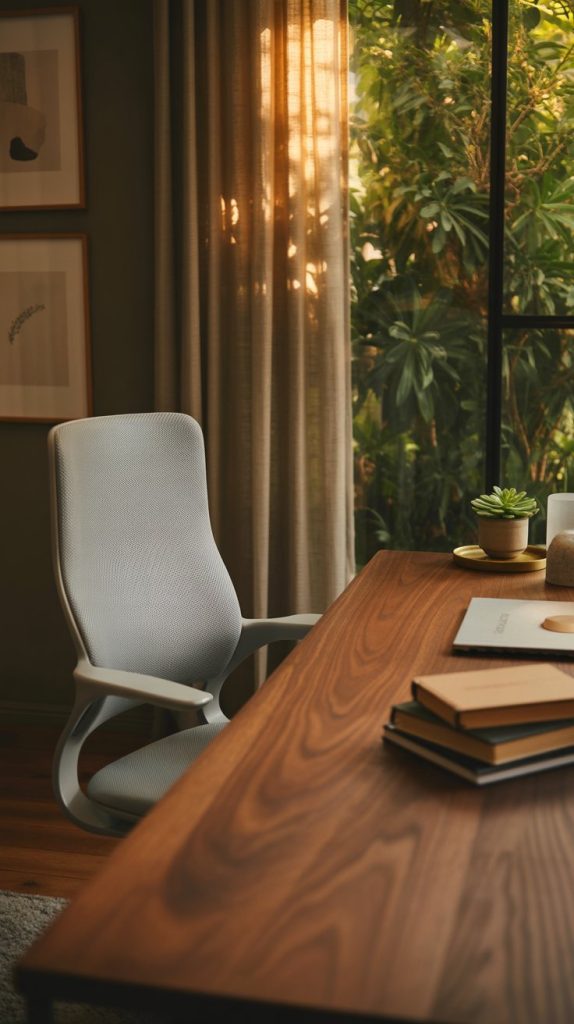
Look for adjustable seat height, lumbar depth, and 4D armrests, then match upholstery to your palette. Wool blend reads refined and breathes better than vinyl. If space is tight, select a mid-back profile with a 25 to 27-inch base so it clears cabinet doors.
Test seat pan depth, you should fit two to three fingers between the knee and the edge to keep circulation flowing. Casters matter, soft casters for hardwoods, hard casters for carpet, or swap to felt glides for a rug layered under the desk.
To keep the silhouette sleek, choose a frame color that echoes your desk legs or window trim; black or warm gray are safe. For inspiration on mixing performance with polish, align finishes with details you loved in your Luxury Living Room.
9. Calm Neutrals With Black Accents
- Effort Level: Weekend DIY.
- Estimated Budget: 100-500.
- Maintenance Level: Low (requires dusting).
- Best For: Small bedrooms.
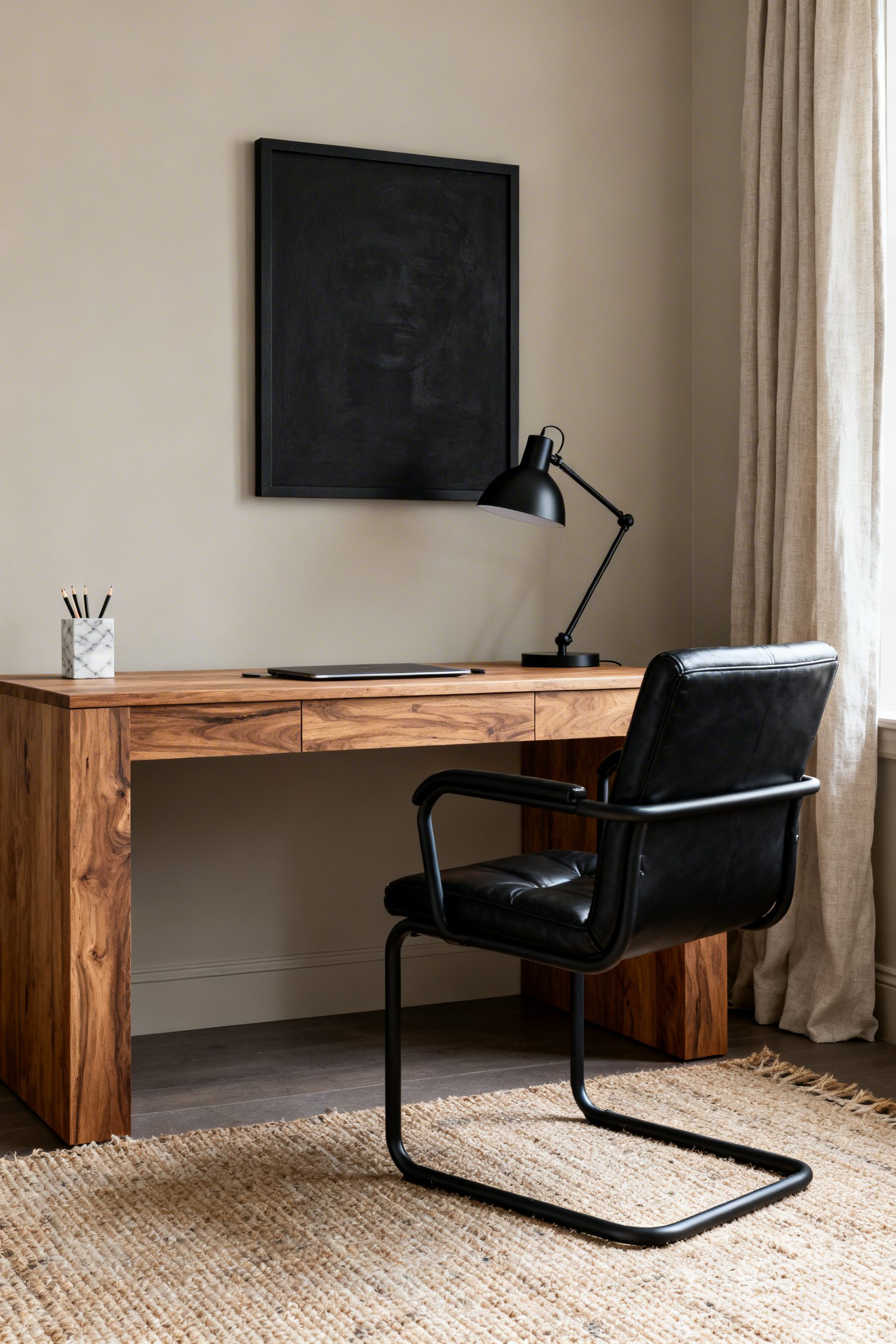
Start with a warm white or pale greige on walls, then anchor with a black metal desk lamp, slim frames, and a powder-coated shelf bracket. Limit black to about ten percent of the room for contrast without heaviness, think three to five repeated moments at eye level.
Layer textures so the palette feels intentional. A boucle seat, oak desktop, and linen pinboard keep neutrals from going flat. Use cord covers and matte black cable clips to tidy lines, tidy sightlines, and sell the calm.
If you want biophilic calm without color noise, add one leafy plant in a charcoal pot. Low-maintenance species like ZZ thrive in offices, a direction backed by current workplace research on nature’s benefits from Office Principles.
10. Zoom-Ready Backdrops And Art
- Effort Level: Weekend DIY.
- Estimated Budget: Under 100.
- Maintenance Level: Low (requires dusting).
- Best For: Renters.
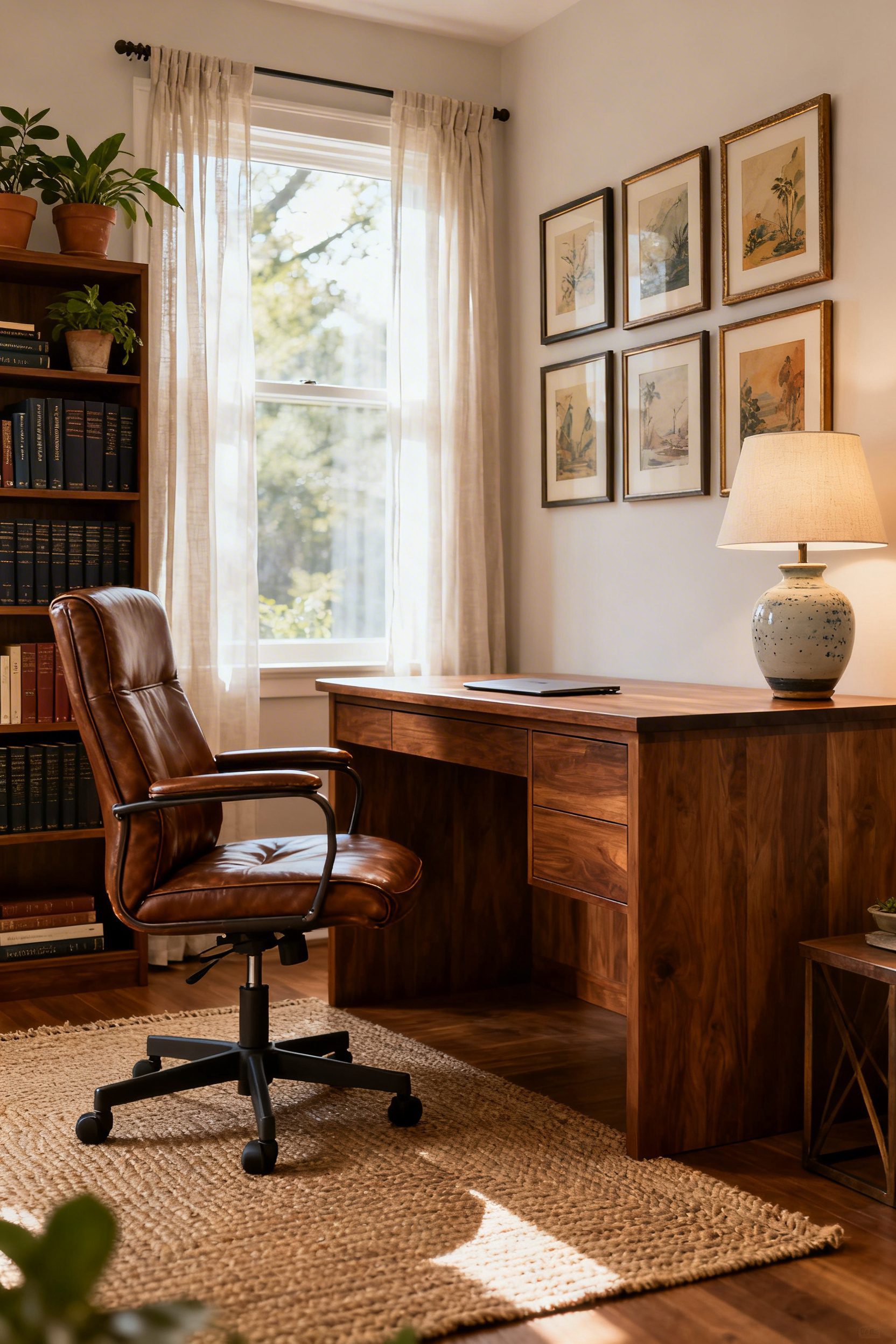
Curate a clean, waist-to-head frame with a 12 to 18 inch gap between your chair back and the wall, then anchor the scene with one large artwork hung at eye level, about 58 inches from the floor. Matte finishes prevent glare, and a neutral wall color with one saturated accent keeps auto-exposure from pulsing on camera.
Layer a slim picture ledge for rotating prints and a trailing plant to soften edges, but keep shelves no deeper than 4 inches to avoid visual clutter. Stick to three hues max, one metal, and minimal glossy surfaces for a professional, non-distracting look inspired by current office design trends.
If you need a quick polish, a fabric backdrop in oatmeal or clay on a spring rod reads tailored without feeling corporate.
For renters, removable wallpaper with a quiet pattern density, roughly 3 to 5 inch repeats, holds interest without moiré on camera.
11. Convertible Guest Room Offices
- Effort Level: Weekend DIY.
- Estimated Budget: 100-500.
- Maintenance Level: Medium (occasional laundering and cable resets).
- Best For: Small Bedrooms.
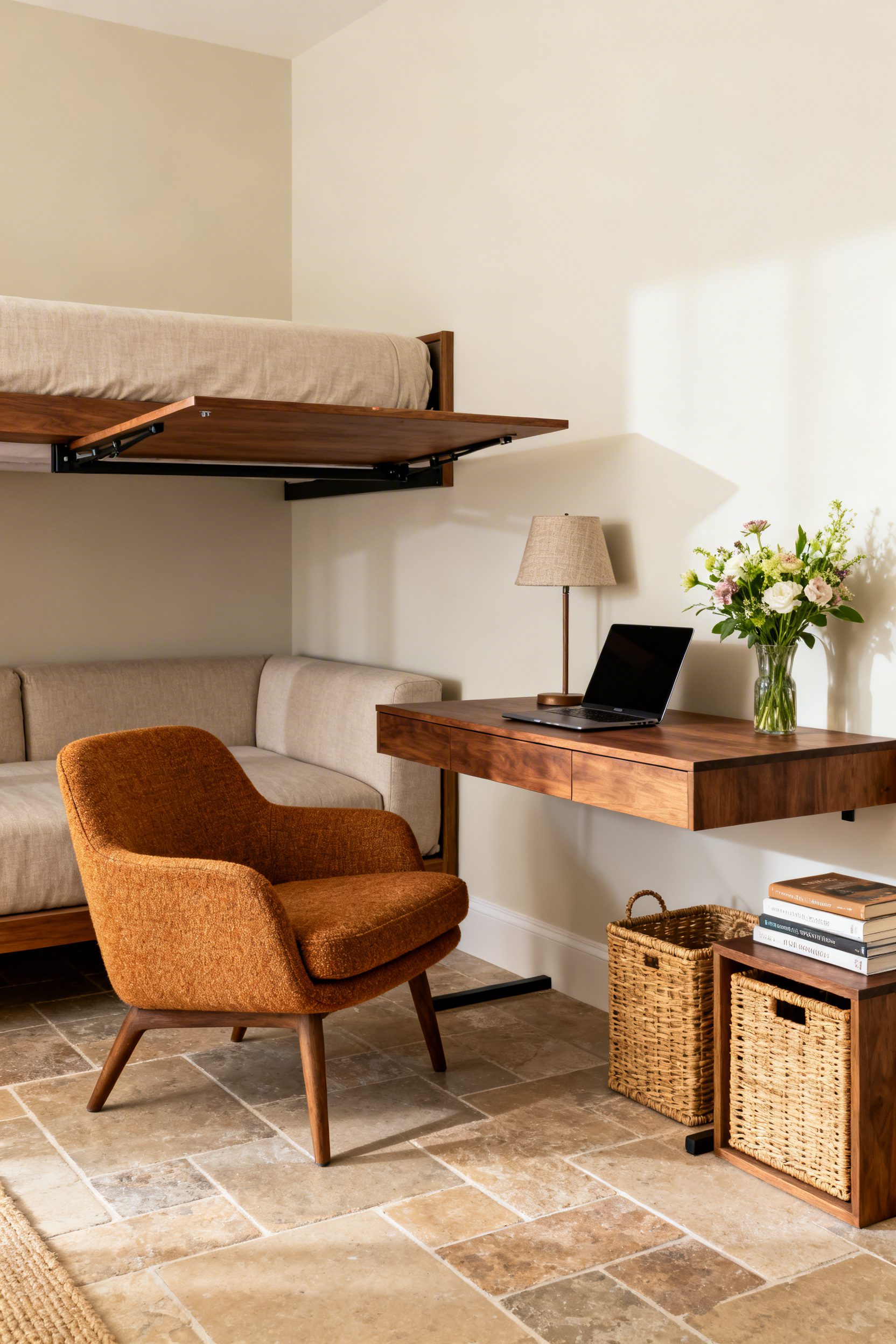
Choose a wall bed or daybed with a pull-out trundle, then float a 48-inch fold-down desk opposite to keep a 30-inch clearance path when the bed is in use. Use a cordless Roman shade for blackout sleep mode and tidy sightlines for work hours.
Mount a power strip with a 3M-backed channel under the desk, labeling ports so guest turnover is painless. Corral bedding in a lidded ottoman at the foot of the bed, and keep a slim task lamp with a 2700K to 3000K bulb for restful evenings, 4000K for desk time.
For a cohesive envelope, paint walls, door, and trim one soft mid-tone, which hides scuffs between guest stays.
If you are streamlining the whole house palette, borrow cues from your broader Home Design plan, and echo finishes with the stair detailing seen in Staircase Railing Ideas.
FAQ
A depth of 18 to 22 inches is a sweet spot, giving enough surface for a laptop and task light while leaving walking clearance when the bed is deployed. If space is tighter, consider a drop-leaf that closes to 8 inches and opens only when needed.
Use matte paint and matte frames, and position lights at 45 degrees to your face rather than directly behind you. A soft 4000K key light near your monitor balances skin tones while preventing hotspots on art or shelving.
Yes, rely on removable wallpaper, tension rods for fabric backdrops, adhesive cord channels, and freestanding shelves that align tightly to baseboards. Choose finishes that match door hardware for a pseudo-built-in effect.
Opt for a closed nightstand with a file drawer, a lidded ottoman for bedding, and a shallow wall cabinet for tech and chargers. Prioritize pieces under 12 inches deep to keep circulation smooth around the bed.