


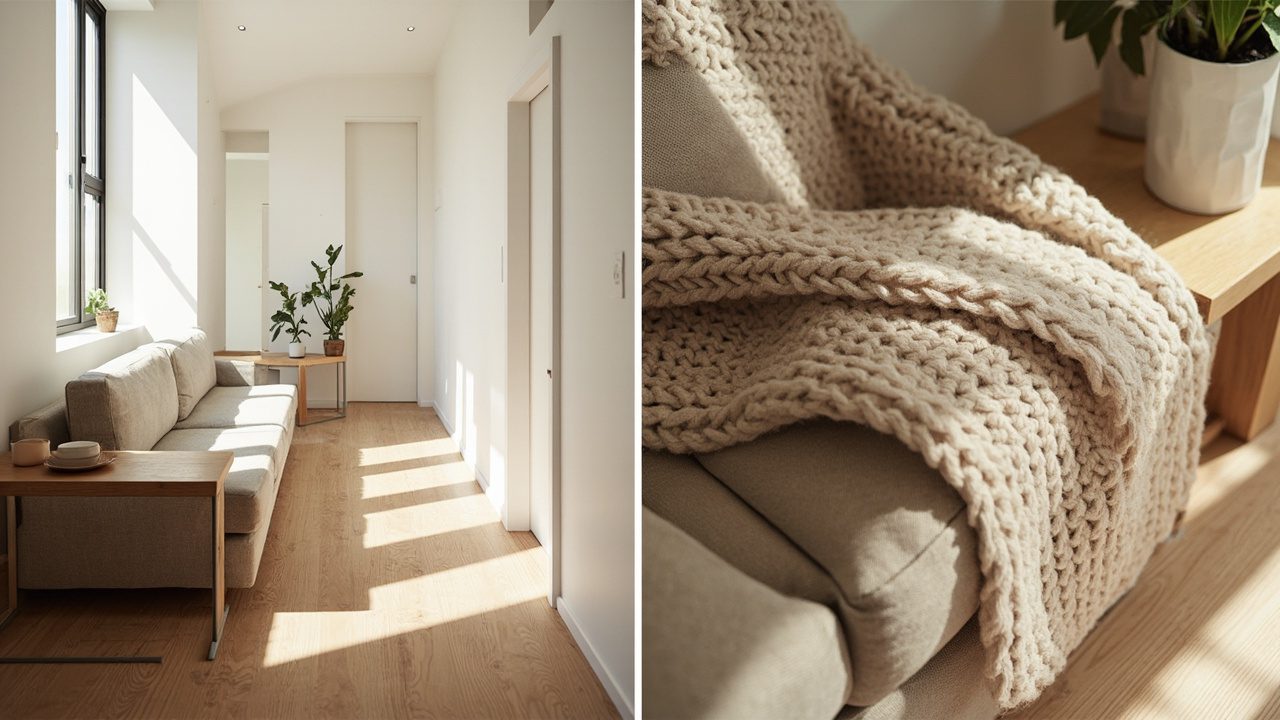
White vertical shiplap reflects light and adds gentle texture, instantly lifting a narrow room. Thoughtful touches, like a low-profile sofa and staggered shelving, prevent the space from feeling boxed in, while natural materials add warmth without bulk.
A clear visual axis, anchored with a focal point at the far end, creates depth and purpose. These 12 ideas focus on proportion, rhythm, and material choices that widen sightlines and make long rooms feel intentionally arranged and inviting.
Editor’s Pick: I recommend Coastal Shiplap Charm because the white vertical boards brighten walls and draw the eye upward, while low, streamlined furniture and natural fibers widen sightlines and create a relaxed, cohesive look.
1. Coastal Shiplap Charm
- Effort Level: Weekend refresh / Hire a Pro for wall work.
- Estimated Budget: (Under $800 for DIY shiplap, higher if hiring a carpenter).
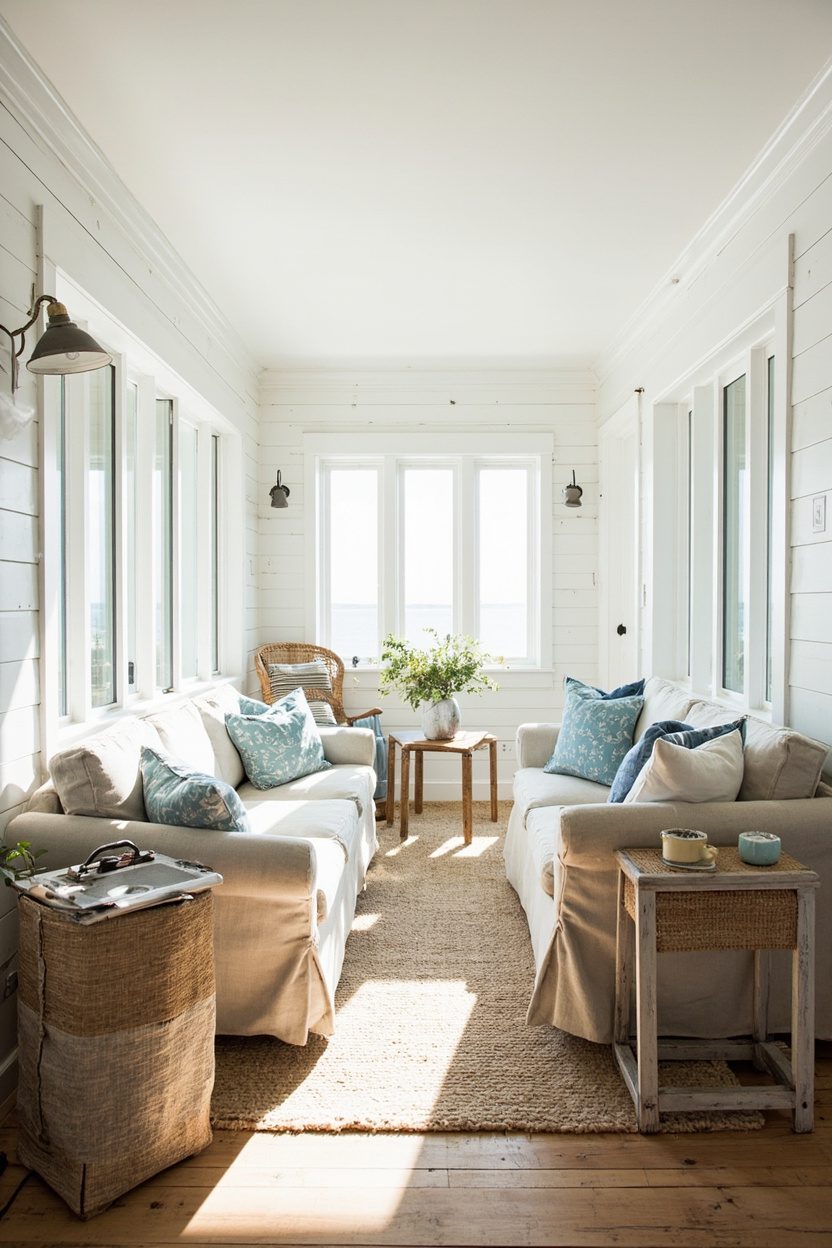
White vertical shiplap brightens and visually lifts a narrow room, turning tight walls into a textured backdrop that reads airy from a distance.
Keep moldings minimal, and paint trim the same soft white to avoid visual interruptions, which helps the wall feel continuous and expansive.
Choose a low-seated sofa in a neutral linen or cotton, around 30–34 inches high, to maintain sightlines and avoid crowding the vertical rhythm.
Introduce woven rugs and a jute runner to add warmth, keeping patterns subtle so they don’t compete with the shiplap’s linearity.
Essential Elements
- Vertical white shiplap or beadboard on long walls, painted in a warm white tone.
- Low-profile sofa, 30–34 inches high, in neutral fabric for unobstructed sightlines.
- Natural fiber rugs in narrow proportions to define seating without breaking the run of the room.
- Brass or matte black wall sconces mounted high to free up floor space and emphasize height.
2. Brick Fireplace Focus
- Effort Level: Moderate, professional masonry may be needed
- Estimated Budget: (From $1,000 for cladding to $5,000+ for full fireplace remodel).
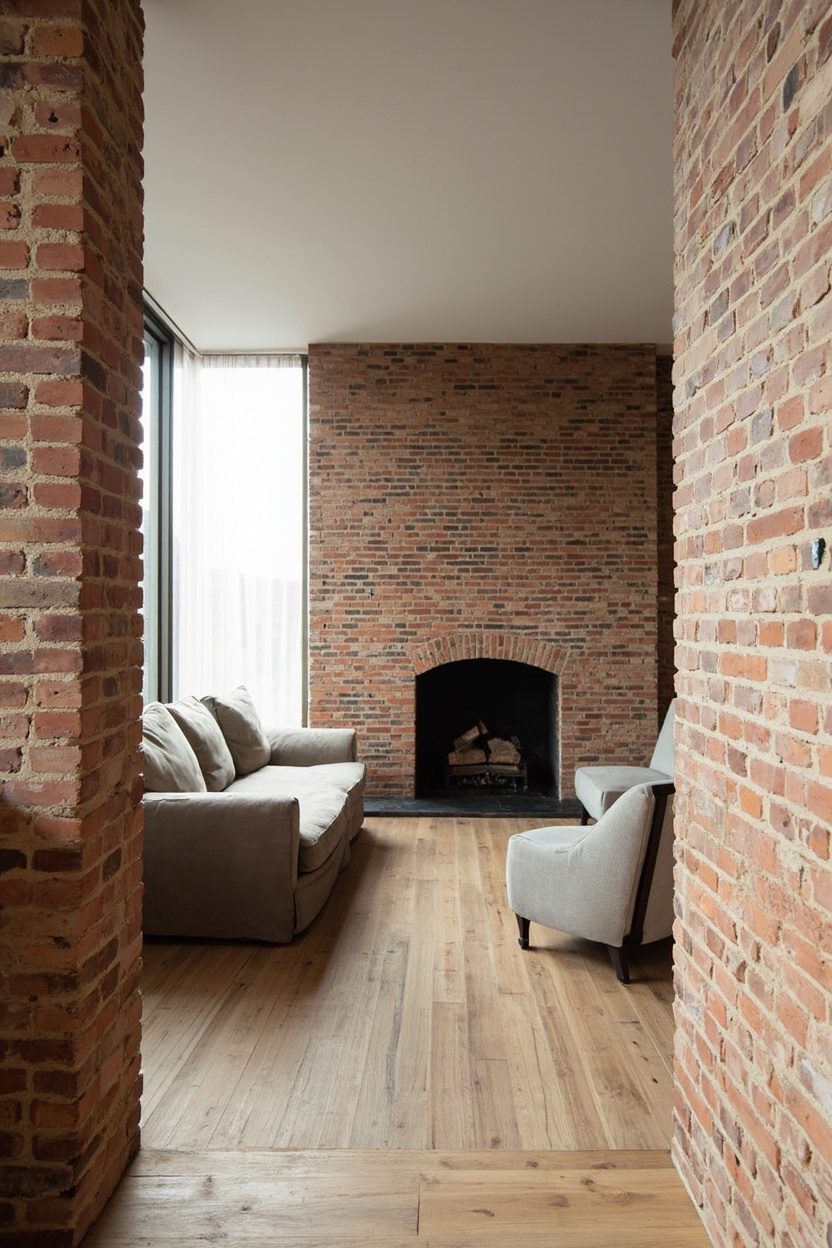
A single brick fireplace at the far end of a long room creates an anchor and draws the eye forward, shortening perceived distance and adding cozy scale.
Opt for pale mortar and a whitewashed finish to keep the brick from feeling heavy, preserving brightness while retaining texture and character.
Flank the fireplace with shallow built-in shelves or slim cabinets, no deeper than 12–14 inches, to provide storage without narrowing walkways.
A carved wood mantel in a medium tone will tie in natural textures. Choose a 6–8 inch depth to avoid overwhelming the hearth area.
Styling Blueprint
- Whitewashed brick or pale mortar to retain lightness and texture on the focal wall.
- Built-ins 12–14 inches deep to balance storage with circulation in a narrow plan.
- Medium-depth wood mantel, 6–8 inches, to add warmth without protruding into the room.
- Place seating in an offset arrangement, not blocked directly in front of the hearth, to maintain a clear central walkway.
3. Denim Sofa Pairings
- Effort Level: Shopping and styling weekend.
- Estimated Budget: (Denim-upholstered sofa $800–$2,500 depending on scale and brand).
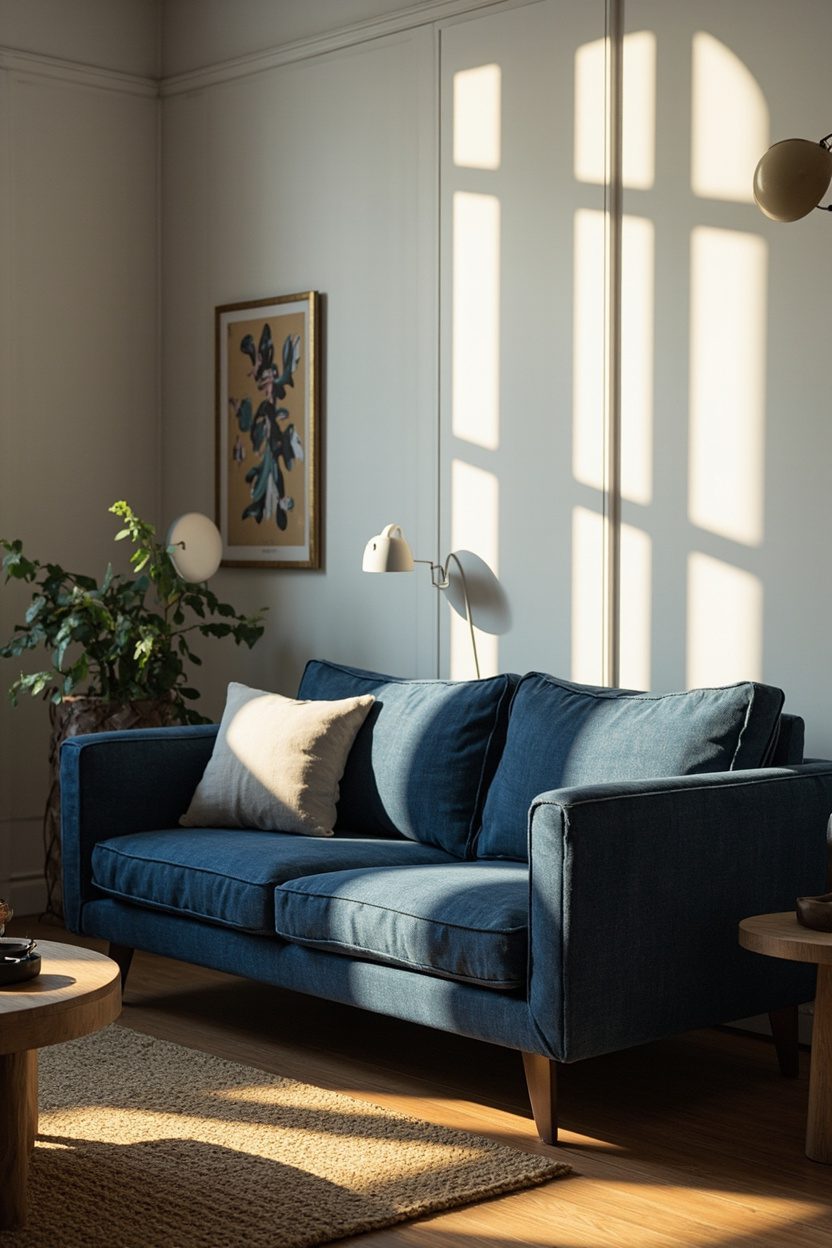
A deep denim-blue sofa gives a compact living room personality without shrinking the space, especially when paired with light walls and reflective accents.
Choose a streamlined sofa with exposed legs, ideally 5–6 inches of clearance underneath, to create an airy base and extend visual floor space.
Balance the saturated blue with soft linens, cream throw pillows, and a jute rug to keep the palette grounded and wider-seeming.
Avoid oversized coffee tables; instead, choose a slim, round or oval table to allow easy circulation and reduce visual blocking in a narrow plan.
What to Focus On?
- Denim-blue sofa with exposed legs to combine color depth and visual lightness.
- Light, neutral wall color to offset saturation and widen the room perceptually.
- Round or oval coffee table under 36 inches wide for easy flow in narrow spaces.
- Layered textiles in creams and natural fibers to soften contrast and add warmth.
4. Jute Rug Layers
- Effort Level: Afternoon styling / No pro needed.
- Estimated Budget: (Under $150) to $$ (Up to $400 for quality natural fiber).
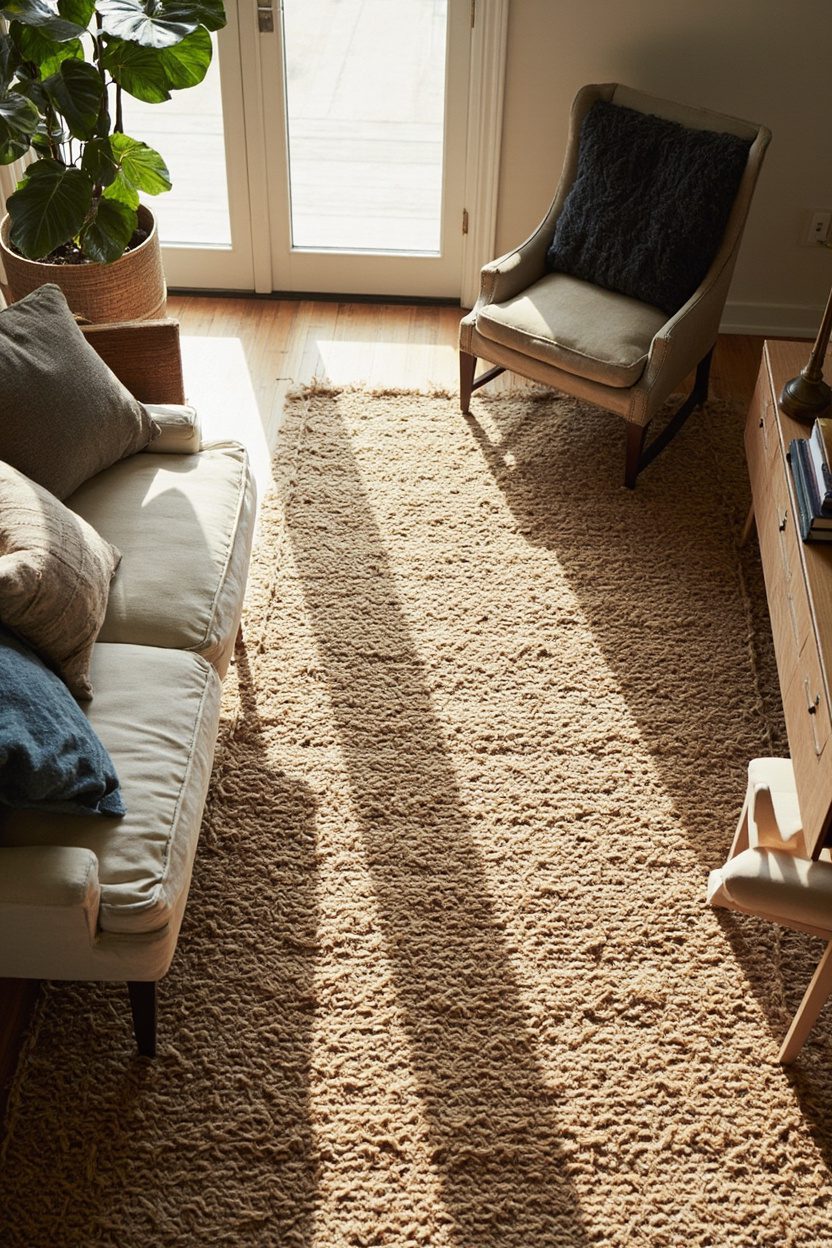
Natural jute brings texture without visual weight, which helps narrow rooms feel more grounded yet airy.
Layer a low-pile, neutral jute rug under a lighter wool or flatweave to create depth, choosing proportional sizes so the top rug sits within the larger one by 12 to 18 inches on all sides.
Stick to warm beige or golden tones for the jute, and avoid dark borders that visually cut the floor plane, a small but impactful decision detail.
For furniture placement, float the front legs of a sofa and chairs on the rug to unify the seating area and prevent a chopped-up look.
Styling Blueprint
- Choose a jute rug with an 8-12 oz per sq yd pile for durability and a flat profile.
- Layer with a 5×8 or 6×9 wool top rug, leaving 12-18 inches of jute showing around the edges.
- Keep color palette to 2-3 warm neutrals to maintain breadth and cohesion.
- Use rug pads to prevent slippage and add a subtle lift for a tailored edge appearance.
5. Bay Window Seating
- Effort Level: Weekend build or custom upholster / Hire a carpenter for bespoke work.
- Estimated Budget: (From $300 to $2,500).
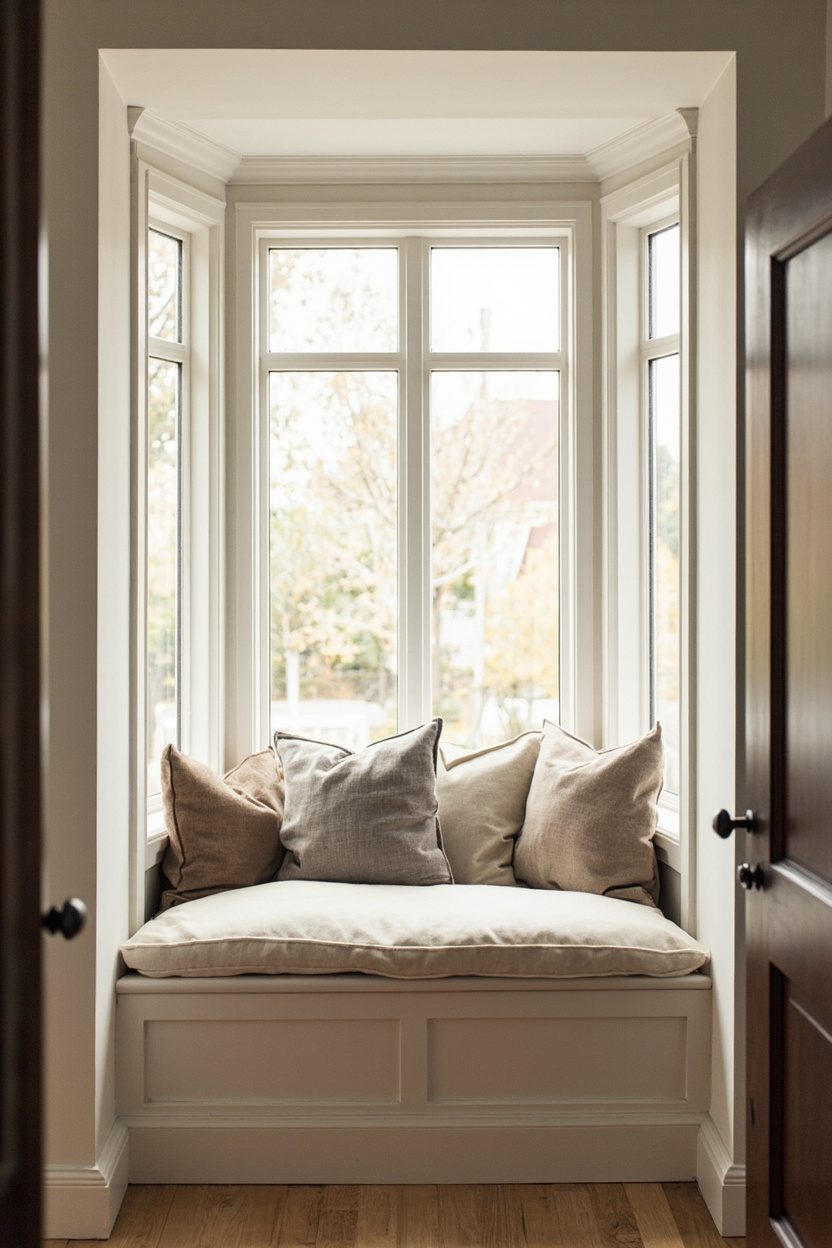
A built-in bay seat stretches the visual line of the room, drawing the eye outward and widening the perceived width of a narrow living room.
Opt for a slim-profile cushion in a light fabric, like linen-blend or crypton, and keep the seat depth to 16–18 inches to avoid eating into floor space.
Under-seat storage drawers or cabinets are a practical decision detail, giving you hidden space while keeping the top of the seat uncluttered and inviting.
Frame the seat with low-profile side tables or fluted storage to maintain sightlines and let natural light broaden the room’s feel.
What to Focus On?
- Keep cushion thickness under 6 inches to preserve sightlines and avoid a bulky appearance.
- Select a pale fabric, such as soft grey or warm white, to reflect light and expand the room visually.
- Incorporate two narrow bolsters rather than one large cushion to add scale without overpowering the bay.
- Include shallow storage drawers, 10–12 inches deep, to keep the footprint slim yet functional.
6. Velvet Statement Sofa
- Effort Level: Decision and delivery / No install required.
- Estimated Budget: (From $900 upwards for quality upholstery).
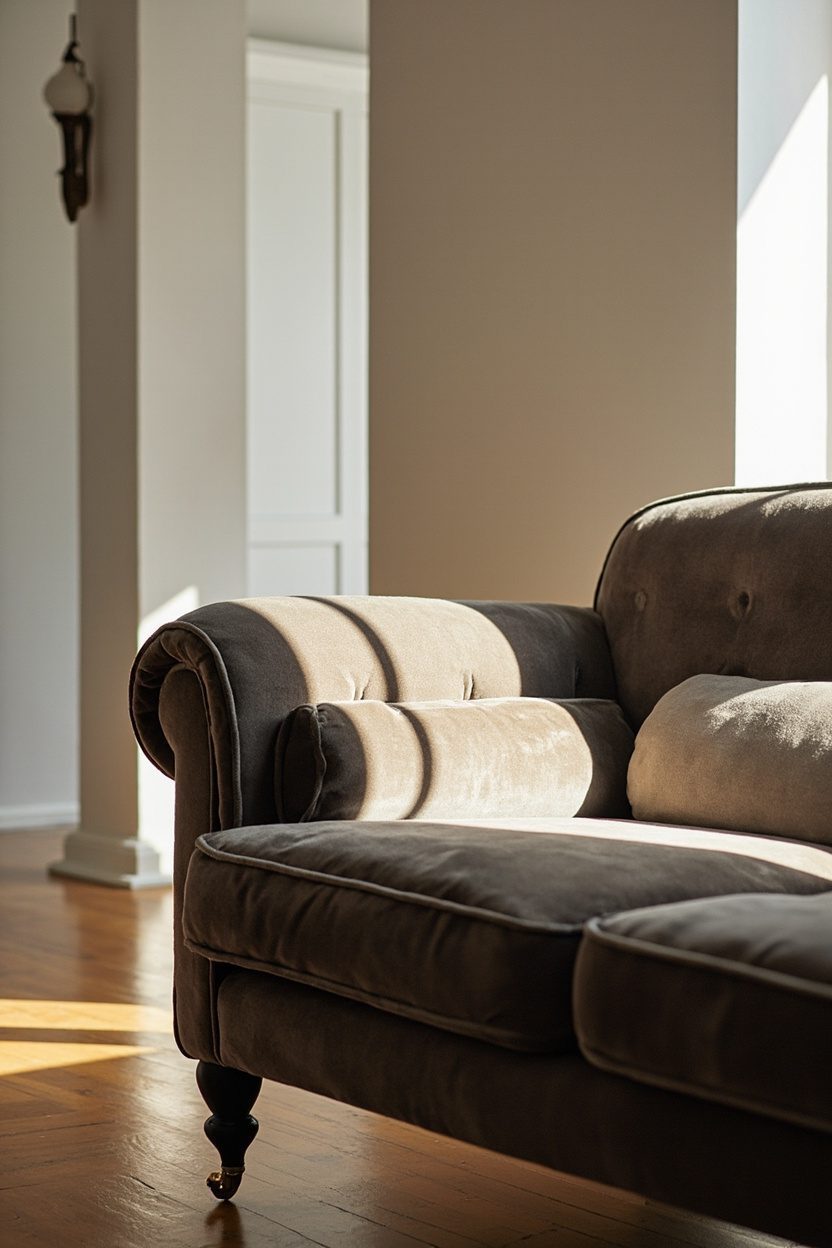
A velvet sofa in a jewel tone anchors the room, but choose a streamlined silhouette with exposed legs to keep the floor visible and make the room read wider.
Select a mid-century or slim-track arm design in a low-back configuration, so the piece feels substantial without closing the space off.
Material choice matters: go for performance velvet if you have pets or children, and pick a darker hue only if balanced with light walls and reflective accents.
Avoid oversized tufted versions that add bulk; instead, pair the sofa with narrow console tables behind it to create an illusion of breadth and allow traffic flow.
Essential Elements
- Choose a 78–86 inch length for narrow rooms to provide seating without overwhelming scale.
- Pick an exposed leg height of 5–7 inches to reveal the flooring and enhance spaciousness.
- Use a jewel tone sparingly, balanced by pale walls or a large jute rug to keep the room airy.
- Select stain-resistant velvet or a velvet blend for longevity and easy upkeep.
7. Printed Pillow Mix
- Effort Level: 1 afternoon styling.
- Estimated Budget: (Under $100).
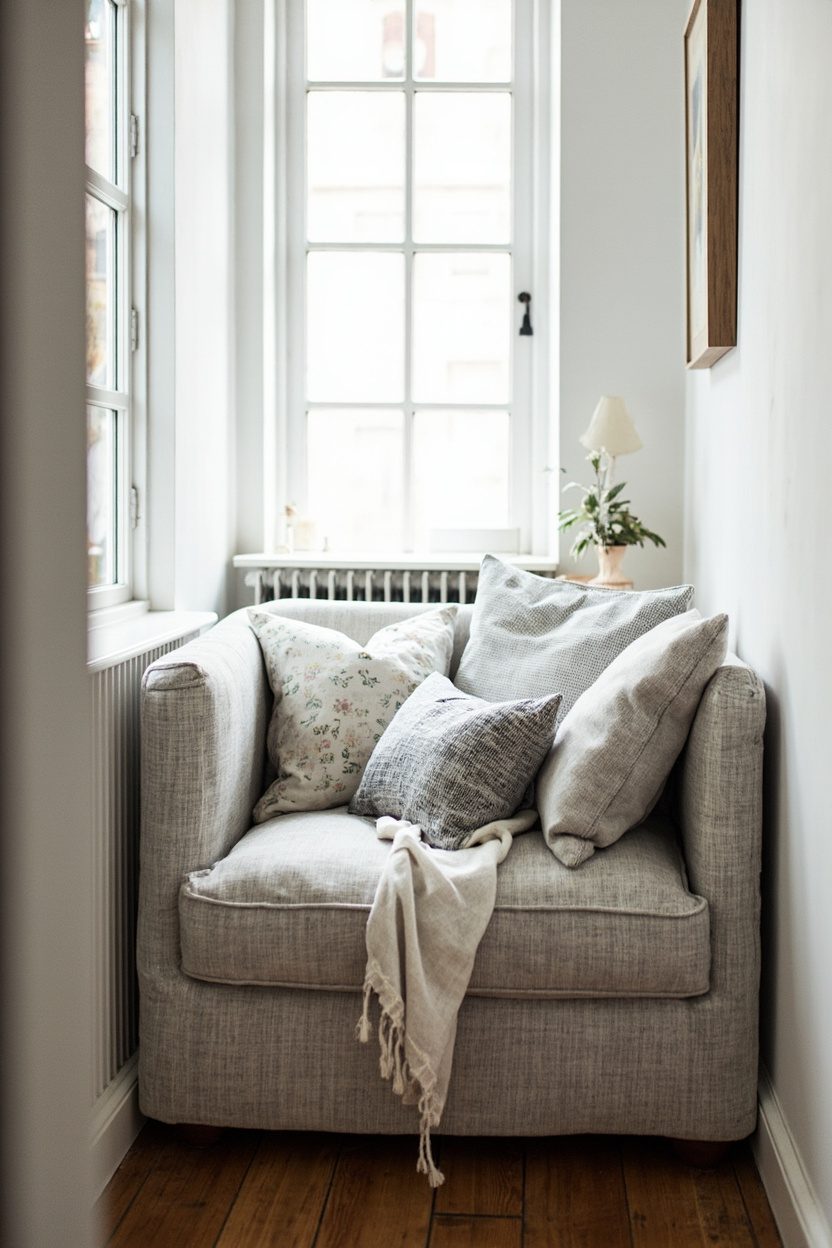
Printed pillows add personality without crowding a narrow sofa, because they cover visual space rather than take it up physical space.
Choose a cohesive palette, for example, muted denim, warm sand, and a single accent like raspberry, to keep patterns from clashing.
Scale matters: mix one large-scale print, one medium geometric, and one small textured print to create depth while maintaining balance.
Avoid too many fluffy, oversized cushions; they can push into walkways. Opt for 18-inch pillows in a 2–3 pillow arrangement on a standard 72–84 inch sofa.
Styling Blueprint
- Limit palette to three colors, one being a neutral anchor color, like beige or denim blue.
- Combine pattern scales: large floral, medium stripe, small dot or texture.
- Stick to 18-inch or 20-inch pillow inserts for narrow sofas to preserve seat depth.
- Rotate pillows seasonally, swapping one or two for a fresh look without reupholstering furniture.
8. Slim Console Storage
- Effort Level: Weekend install or buy pre-made.
- Estimated Budget: (Around $200-600).
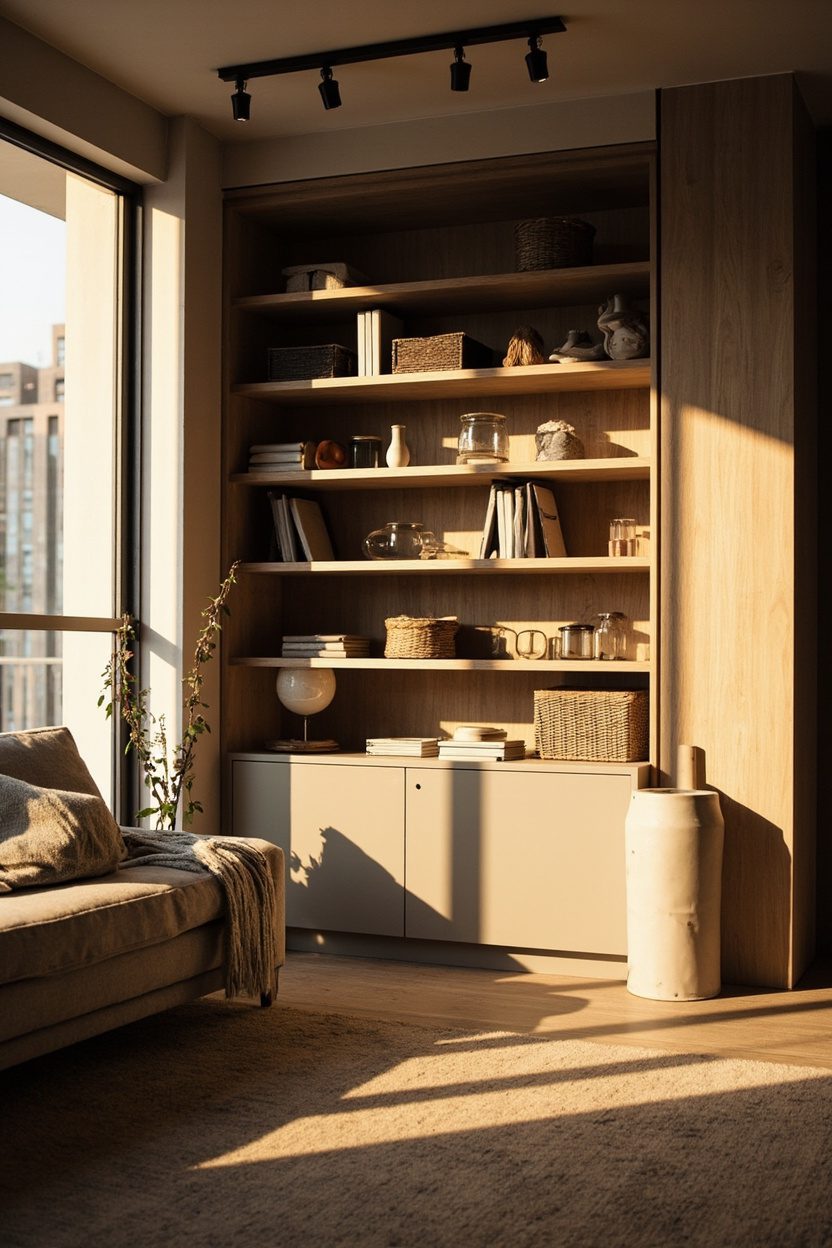
A slim console placed along the long wall gives surface for styling and hidden storage, keeping the floor plane open for movement.
Choose a console 10–14 inches deep to stay proportional in a narrow room, and pick light wood or metal legs to keep the piece visually airy.
Look for integrated drawers or baskets to stash remotes, throws, and mail, avoiding countertop clutter that makes the room feel cramped.
Mounting a slim console to the wall, rather than freestanding, increases perceived floor space and prevents it from dominating sightlines.
Essential Elements
- Depth: 10–14 inches to preserve walkway clearance and seat depth.
- Material: light wood or open metal frame to keep the look breezy.
- Storage solution: 1–2 drawers plus baskets for concealed organization.
- Placement: centered on the long wall, leave at least 30 inches clear for circulation at entry points.
9. Vertical Wall Panels
- Effort Level: 1-2 days DIY or hire a carpenter.
- Estimated Budget: $$ (Materials $150-450).
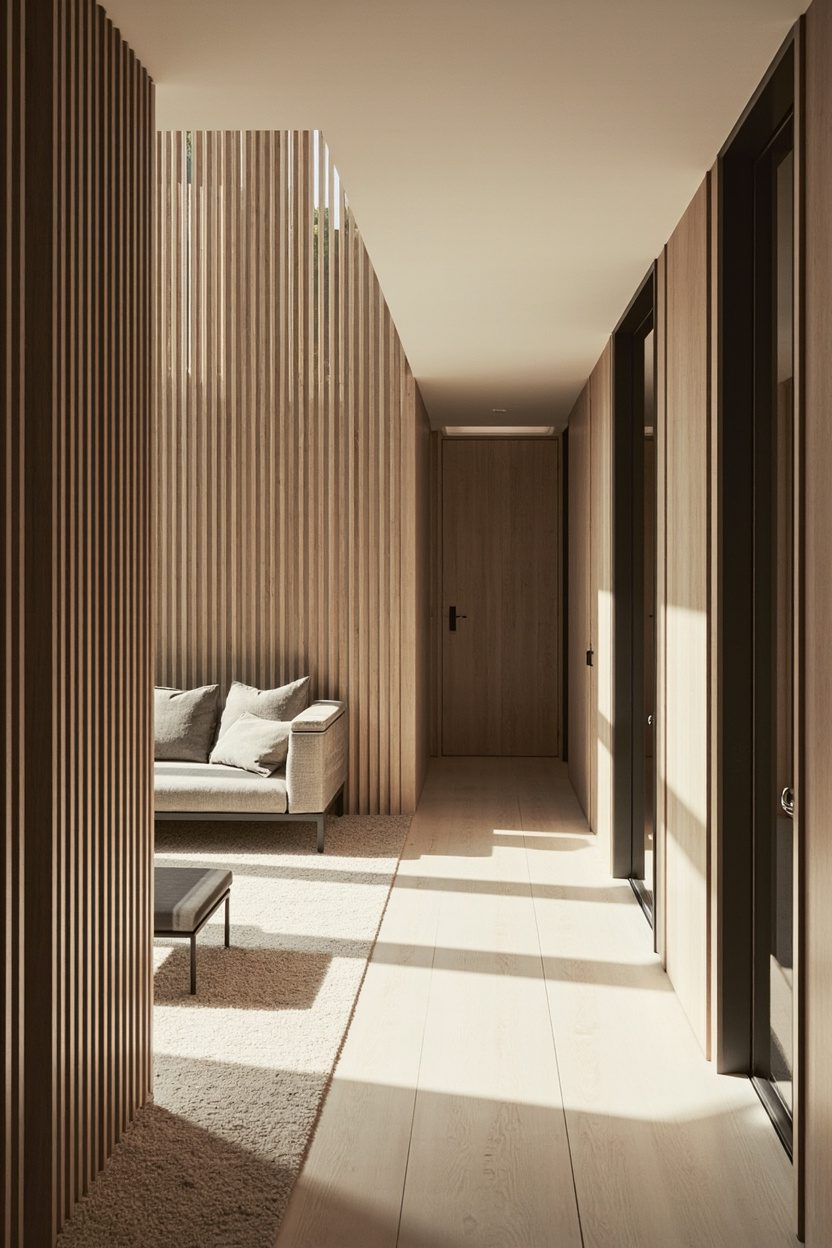
Vertical wall panels draw the eye upward, breaking the horizontal run of a long room and creating a sense of height and rhythm.
Keep panels narrow, around 2–3 inches wide with 1–2 inch spacing, to reinforce verticality without over-texturing the wall surface.
Paint panels the same color as the wall for a subtle lift, or a slightly lighter tint to reflect light, avoiding dark contrasting colors that shorten the room.
When I tried this in my own narrow living room, spacing panels too far apart made the effect jarring, so I tightened the intervals, and it immediately felt taller and more balanced.
What to Focus On?
- Panel width: 2–3 inches for a refined vertical rhythm.
- Finish: same wall color or one shade lighter for a seamless lift.
- Material: MDF or primed plywood for a smooth painted look.
- Installation: vertical from baseboard to crown for maximum elongation effect.
10. Compact Green Seating
- Effort Level: Small furniture swap / Hire upholsterer for custom piece.
- Estimated Budget: (Under $1,000).
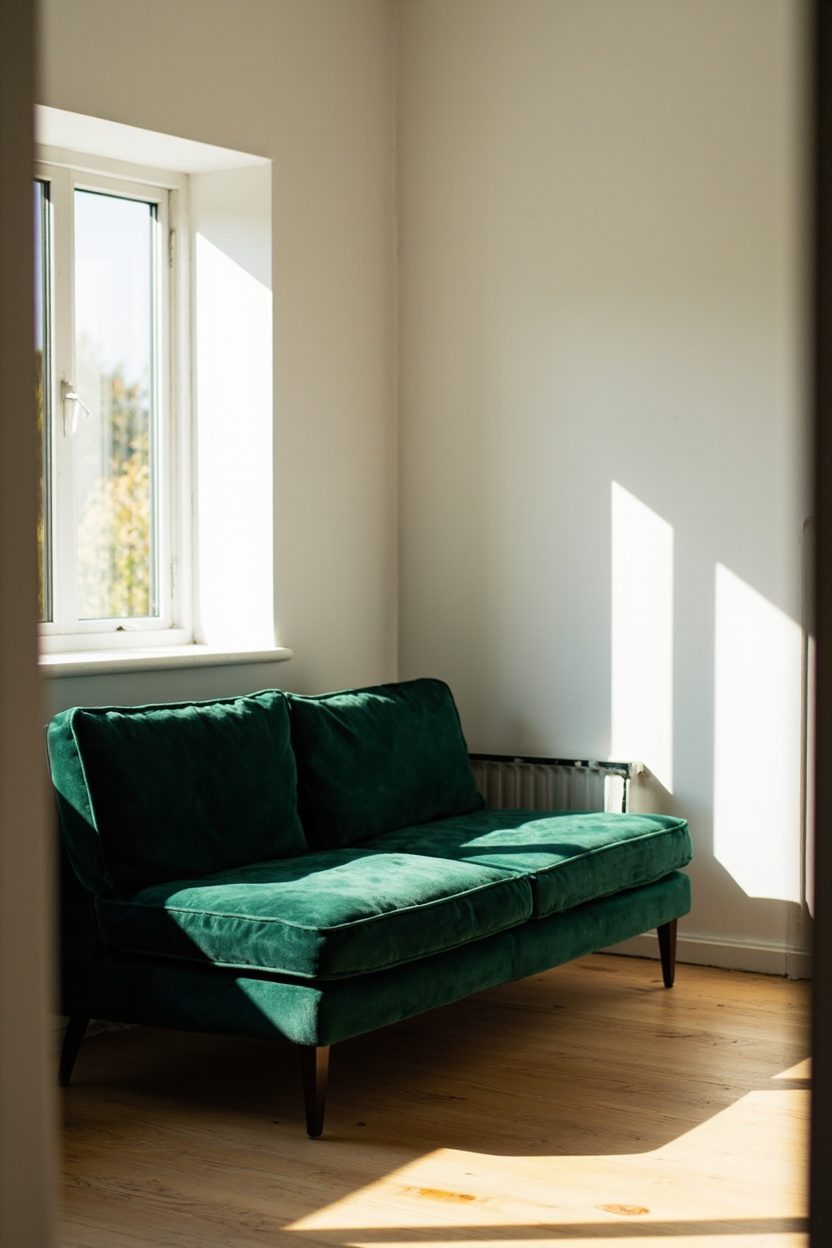
Choose a compact loveseat or a tight-seated sofa in a muted botanical green to anchor a narrow living room without overpowering it.
Opt for a lower back and slimmer arms to keep sightlines open, which helps the room feel wider and airier.
Pick a durable, stain-resistant fabric such as performance velvet or treated linen for everyday use, and select brass or black metal legs to visually lift the piece off the floor.
Place the sofa against the long wall and balance opposite with a slim console or floating shelf rather than a bulky media cabinet to maintain circulation and scale.
Styling Blueprint
- Choose low-profile arm height to preserve sightlines and make the room feel wider.
- Use narrow-scale side tables, about 14–18 inches wide, to avoid visual clutter.
- Add one patterned cushion in warm tones to create depth without busying the space.
- Keep legs exposed and finish them in metal to create a floating effect under the sofa.
11. Cafe-Curtain Windows
- Effort Level: Weekend install / DIY sewing.
- Estimated Budget: (Under $100).
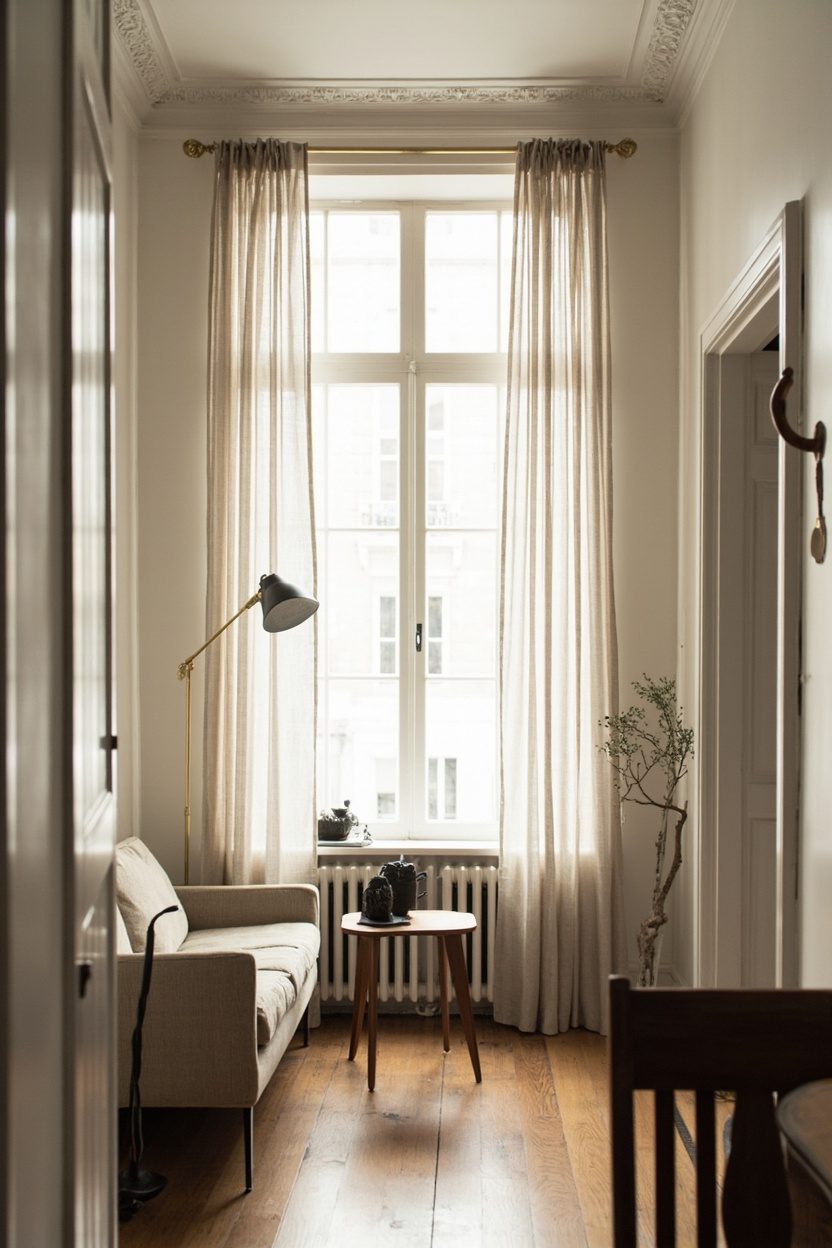
Hang cafe curtains on the lower half of tall windows to preserve privacy while keeping the upper glass fully exposed for maximum light and perceived height.
Choose lightweight, semi-sheer fabrics in warm neutrals or soft stripes to diffuse sunlight and widen the visual field along the length of the room.
Mount the rod slightly higher than the trim, but keep panels short, ending at the sill or mid-window, which draws the eye horizontally and widens the room.
For an upscale look, pair with narrow side panels in the same hue, hung close to the wall to avoid blocking glazing when open.
Essential Elements
- Select semi-sheer cotton or linen blends to soften light without heavy opacity.
- Install a slim rod 2–4 inches above the trim to emphasize height yet keep curtains short.
- Use tie-backs or simple clips to keep lower panels tidy and visually pull the room sideways.
- Coordinate curtain color with sofa or rug tones to create a continuous horizontal band.
12. Eclectic Texture Play
- Effort Level: Ongoing styling / Moderate sourcing.
- Estimated Budget: (Under $500).
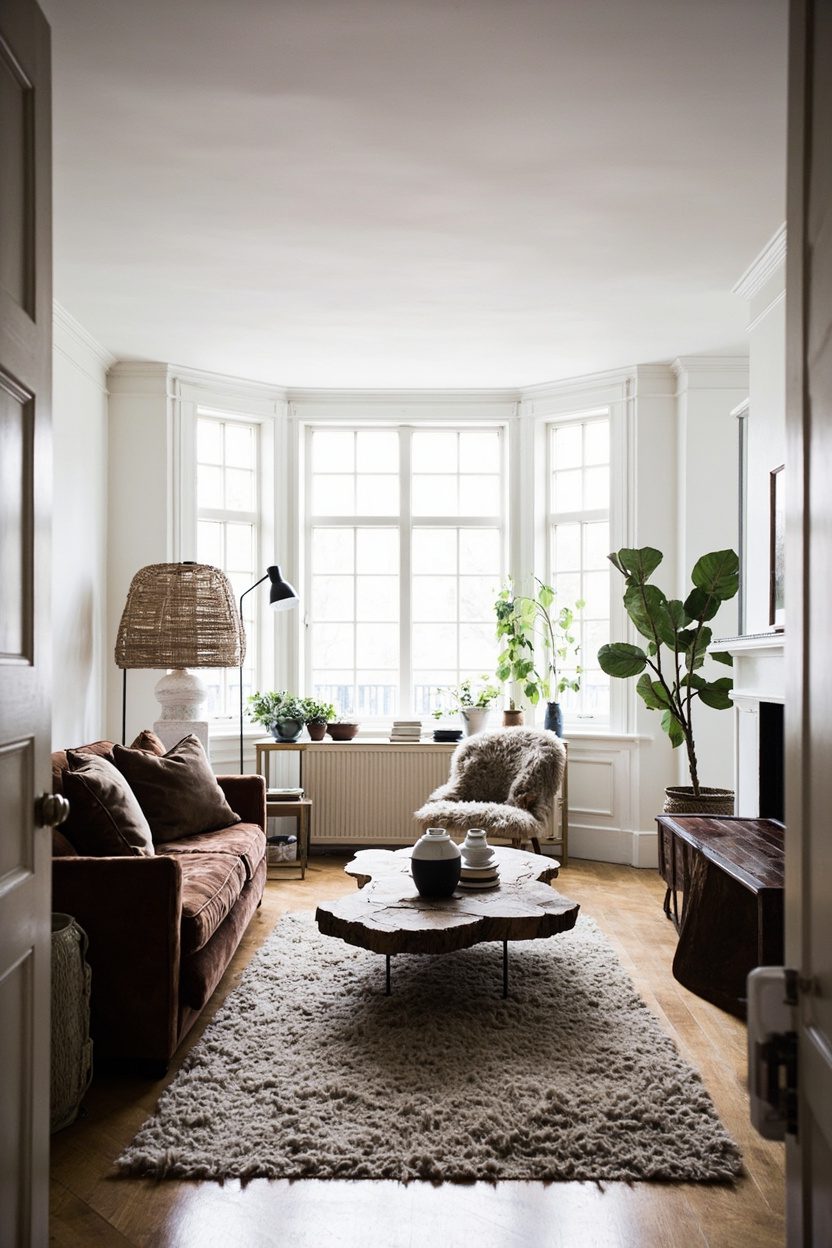
Layer different textures, such as boucle throws, woven jute rugs, and matte ceramic accessories, to add interest without narrowing the room visually.
Keep a restrained color palette, using warm neutrals and one accent color, so textures read as cohesive, horizontally stretching elements rather than competing vertical stripes.
Introduce textures at different scales, for example, a large flat-weave rug, medium knit pillows, and small metallic or glass objects, to avoid a cluttered feel in a long plan.
Place a textured runner rug down the center to define walking space, and use low poufs or slender benches in tactile fabrics to break up long sightlines thoughtfully.
What to Focus On?
- Limit colors to three to keep the texture from feeling chaotic in a narrow footprint.
- Favor flatweave rugs for visual width, adding layered small rugs for warmth if needed.
- Select low-profile seating in tactile fabrics to add coziness without bulkiness.
- Use metallic accents sparingly to reflect light and widen the space subtly.
FAQ
Choose a rug that anchors at least the front legs of seating, ideally running parallel to the room’s length to define zones. Aim for a runner or a rug that leaves 12–18 inches of floor visible around the edges to maintain a sense of spaciousness.
Yes, when used as an accent wall, ceiling, or a single piece of furniture, dark colors can create depth rather than shrinkage. Balance them with light reflecting surfaces, strategic lighting, and lighter textiles to keep the room welcoming.
Built-ins can be excellent, as long as they are shallow and low, maintaining sightlines and storage without blocking flow. Opt for open shelves mixed with closed cabinets, and keep finishes light or matched to the wall to visually recede.
Layered lighting works best, combining recessed or track lighting for even illumination, wall sconces to wash the long walls, and table lamps to create pockets of warmth. Place fixtures to emphasize horizontal planes, such as picture lights or wall sconces, along the long walls.
Final Thoughts
Designing a narrow living room is an exercise in selective restraint, where scale, horizontal emphasis, and texture work together to make a space feel both wider and more inviting.
Small, deliberate choices like low-profile seating, cafe curtains, and cohesive texture palettes can transform a long room into a balanced, welcoming retreat without major renovations.